



The Power of the Plank
Saina Nehwal recently embraced a "29-day plank challenge" after being nominated by her trainer for National Sports Day, shining a spotlight on this fundamental exercise. The plank is an isometric hold, meaning you contract your muscles without moving.
It may look simple, but it is one of the most effective exercises for building core stability, improving spinal alignment, and developing muscular endurance. It engages not just your abs, but also your glutes, back, shoulders, and hips, creating a strong foundation for nearly every movement you make. A strong core supports better posture, reduces the risk of lower back pain, and improves balance and control in everyday activities.
Your Guide to Perfect Plank Form
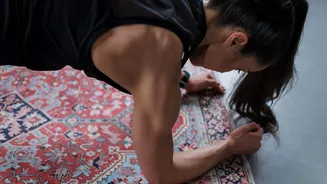
Before you start counting the seconds, master the position. It’s far better to hold a perfect plank for 30 seconds than a sloppy one for two minutes. Start by lying on the floor and placing your forearms down, ensuring your elbows are stacked directly under your shoulders. Extend your legs straight back, resting on your toes. Your body should form a straight, rigid line from your head to your heels. To achieve this, engage your core by pulling your belly button toward your spine, and squeeze your glutes slightly. This helps prevent your hips from sagging. Finally, keep your neck in a neutral position by gazing at the floor about a foot in front of you.
Common Mistakes to Avoid
Even experienced fitness enthusiasts can make mistakes that reduce the plank’s effectiveness and increase injury risk. The most common error is letting your hips sag toward the floor. This is a sign that your core has disengaged and puts unnecessary pressure on your lower back. The fix is to re-engage your abs and glutes. If you can't, it's time to rest. Another frequent mistake is raising your hips too high, which looks like a downward dog yoga pose. This makes the exercise easier but shifts the work away from your core. Also, be mindful not to crane your neck to look forward, as this strains your spine. Your head should remain in line with the rest of your body.
Modifications for Every Level
The beauty of the plank is its scalability. If a standard forearm plank feels too intense or causes discomfort, there are excellent modifications. Beginners can start with a kneeling plank, where your knees remain on the ground to reduce the load. As you build strength, you can progress to an incline plank by placing your forearms on a sturdy bench or chair. The higher the surface, the less body weight you have to support. For those seeking a greater challenge, you can try lifting one leg off the ground for a few seconds while maintaining a straight body line, or try plank jacks, where you jump your feet in and out while holding the plank position.