





The Cracks in the Production Line
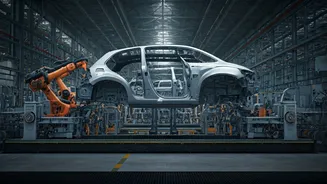
Volkswagen's troubles are multifaceted, stemming from production inefficiencies, persistent software glitches, and overly ambitious projects. The company's global production capacity stands at around 12 million vehicles, but it currently sells closer
to 9 million, leaving a massive, costly gap. This overcapacity is a structural wound that has made the company less agile. Compounding this are severe software development issues within its subsidiary, Cariad, which have led to significant delays for crucial new electric models, including those from premium brands Audi and Porsche. For instance, the flagship 'Project Trinity' EV, once slated for a 2026 launch, has been repeatedly pushed back and is now not expected until 2032. These problems have had a tangible impact, contributing to a sharp drop in profits and falling market share, especially in the critical Chinese market where local EV makers have surged ahead.
From Grand Ambitions to Grounded Reality
In response, CEO Oliver Blume is spearheading a dramatic strategic pivot, moving the company away from the grand, top-down visions of his predecessor toward a more pragmatic and cost-conscious approach. The new strategy, presented in mid-2026, is built on eight pillars designed to reduce complexity, cut costs, and simplify management. This marks a major shift from pursuing volume at all costs to focusing on value and profitability. The scale of this rethink is immense, with reports suggesting it could be one of the largest restructurings in automotive history, potentially involving the closure of several German plants and job reductions that could reach up to 100,000 positions globally through 2030.
The 'Big Strategic Rethink' Takes Shape
The core of the new strategy involves aggressive cost-cutting and simplification. The company aims for annual net cost savings of more than 600 million euros by 2030 and is targeting an operating margin of 8% to 10%. This involves streamlining the vehicle portfolio to focus on fewer, more profitable models and reducing the number of complex configurations offered to customers. Management structures are also being flattened, with board roles across its core brands being cut by about a third to speed up decision-making. On the technology front, rather than trying to develop all its software in-house—a source of major past delays—VW is now forming strategic partnerships, including a significant joint venture with U.S. EV maker Rivian and collaboration with China's Xpeng.
The Road Ahead: A Painful But Necessary Reset
This overhaul is not without risk and will face significant opposition, particularly from powerful labor unions in Germany who will fight to protect jobs and factory sites. However, management sees the changes as essential for survival in a rapidly changing global market defined by intense competition from Chinese EV brands, geopolitical tensions, and a slower-than-expected EV transition in some regions. By reducing its excess production capacity, streamlining its bloated structure, and adopting a more flexible and collaborative approach to technology, Volkswagen hopes to become more robust and competitive. The goal is to transform the industrial giant into a leaner, more agile company capable of navigating the chaotic future of the auto industry.