

The Art of Deception
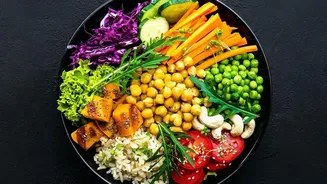
Imagine two plates of the exact same meal: a chicken fillet with rice and vegetables. On one, the food is piled in the centre. On the other, the components are arranged neatly, perhaps with the chicken fanned out and the vegetables artfully placed. Which
one seems healthier? Studies consistently show that most people will pick the artistically plated dish. This phenomenon highlights a fascinating quirk in our psychology: a simple change in presentation, with no change to the recipe, can significantly alter our perception of a food's healthiness and overall quality. It’s a concept that high-end restaurants have mastered, but the science behind it is surprisingly relevant to our everyday food choices.
The Brain on Plating: Neatness and Naturalness
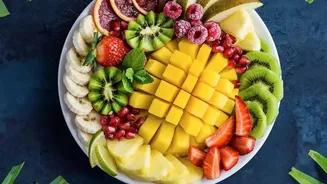
So, what’s happening in our brains? Research from the field of gastrophysics—the science of how we experience food—suggests it’s a cognitive shortcut. A study published in the 'Journal of Marketing' found that when food is presented with classical aesthetic principles like symmetry, order, and balance, we perceive it as more natural. Our brains seem to subconsciously link this visual orderliness to the patterns found in nature. Because we generally associate 'natural' with 'healthy', a beautifully arranged plate gets a health halo it might not deserve. This effect is powerful. Studies have shown that people not only believe neater food is healthier but are also willing to pay significantly more for it.
A Tale of Two Sauces
A recent study from researchers in Japan highlights just how specific these visual cues can be. Diners in a restaurant were served an identical sturgeon-fillet dish, but with one crucial difference in presentation. For one group, the sauces were drizzled artistically across the entire plate. For the other, the sauces were placed in neat, separate dabs on the side. Before anyone even tasted the food, the diners rated the dish with the separate sauce dabs as significantly healthier. The researchers theorise that a minimal, less crowded presentation gives the impression of a simpler, more controlled, and therefore healthier meal. It suggests to the diner that care was taken not just in the cooking, but in the composition, a signal our brain interprets as a sign of quality.
Beyond Health: Better Taste and Higher Value
The power of plating isn't limited to health perceptions. Multiple experiments have confirmed that we also think well-presented food tastes better. Professor Charles Spence of Oxford University has conducted studies where participants rated the exact same ingredients as more flavorful when they were arranged artfully—in one case, to mimic a Kandinsky painting. This happens because the visual appeal sets a higher expectation. When we see a dish that looks like a lot of effort went into it, our brain is primed for a more enjoyable experience. This 'expectation bias' means the perceived taste and quality of the meal get an 18% boost from art-inspired plating alone, according to one study.
Putting It to Use in Your Kitchen
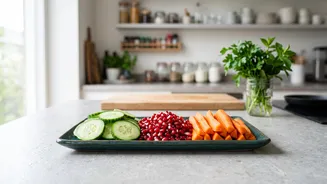
While you may not be recreating famous paintings with your salads, these principles can be used at home to make healthy eating more appealing. The hospitality industry has long known that beautiful food gets more attention, especially in the age of social media, where a photogenic dish is free marketing. But for home cooks, the applications are more personal. Trying to get your family to eat more vegetables? Instead of just putting them on the plate, try arranging them with a bit of intention. Creating a clear focal point with the main ingredient, using a bit of height, and maintaining some 'negative space' on the plate can make a simple home-cooked meal feel more special and appetizing. This small effort could be the key to transforming a reluctant eater into an enthusiastic one, proving that a little beauty goes a long way.