




Introducing Starbase Louisiana
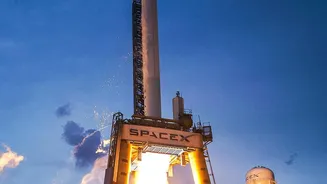
On August 25, 2026, SpaceX and Louisiana officials announced plans for 'Starbase Louisiana,' a colossal project on 125,000 acres in Vermilion Parish, near Pecan Island. This isn't just another launchpad; it's envisioned as a self-sustaining city dedicated
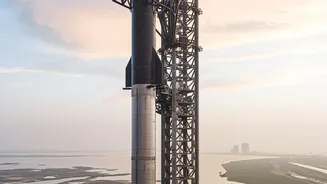
to spaceflight. The proposal includes five launch complexes, each with two pads, for a total of ten—dwarfing the company's existing facilities. The complex is also slated to have its own propellant production, power generation, a deep-water shipping channel, vehicle processing facilities, and even housing for employees. The announced investment of up to $100 billion represents one of the largest capital commitments in the state's history.
The Need for Unprecedented Scale
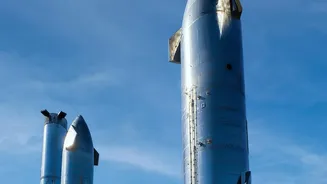
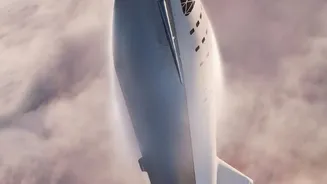
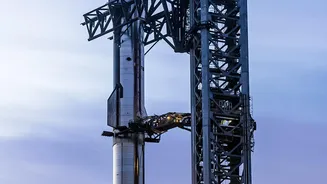
SpaceX's ambition extends far beyond its current operations. The ultimate goal for its next-generation Starship vehicle is to make spaceflight as common as air travel. To achieve this, the company needs a launch cadence measured in thousands of flights per year, a huge leap from today's pace. The company's existing Starbase in Texas and its pads in Florida are crucial but cannot support this vision alone. By bringing propellant production onsite in Louisiana, SpaceX aims to solve a massive logistics problem. A single Starship launch requires hundreds of tanker trucks for liquid oxygen, nitrogen, and methane, a bottleneck the new site is designed to eliminate. Louisiana's abundant natural gas resources were a key factor in its selection.
How It Reshapes the Network
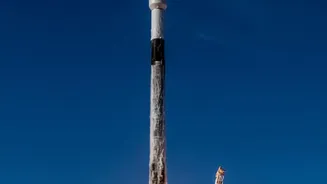
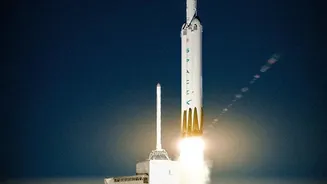
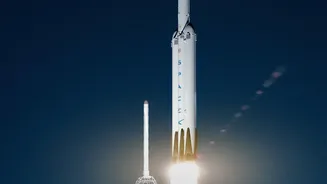
Starbase Louisiana will become the new center of gravity for SpaceX's Starship operations, fundamentally altering its launch network. Currently, the company's launch sites in Florida and California handle a mix of Falcon 9 and, eventually, Starship missions. The company recently announced the last Falcon 9 Starlink launch from Cape Canaveral, signaling a strategic shift to flying future satellite missions from Florida exclusively on Starship. The new Louisiana complex is designed for a much higher tempo, with Elon Musk suggesting an ultimate goal of over a dozen launch towers enabling more than 30 flights per day. This would make Vermilion Parish the busiest spaceport on Earth, handling the industrial-scale launch rate required for deploying the full Starlink constellation and supporting future missions to the Moon and Mars.
Louisiana's Big Bet on the Final Frontier
For Louisiana, the project is a transformational economic opportunity. The state has projected the creation of 3,000 direct jobs over the next decade with an average salary far exceeding the local average, plus an estimated 8,100 indirect jobs. Governor Jeff Landry hailed the agreement as a pivotal moment, positioning the state at the forefront of the modern space race. The development leverages Louisiana's legacy in the energy sector, repurposing skills from the oil and gas industry—like welding and pipe fitting—for aerospace manufacturing. The project is not without controversy, however, as environmental groups have raised concerns about building such a massive industrial complex on the state's famously fragile and vanishing coastline. In response, SpaceX stated it is working with state agencies to support Louisiana's coastal master plan, including marsh restoration and shoreline protection.