



The Five-Year Prediction
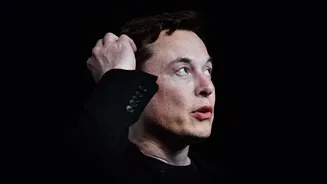
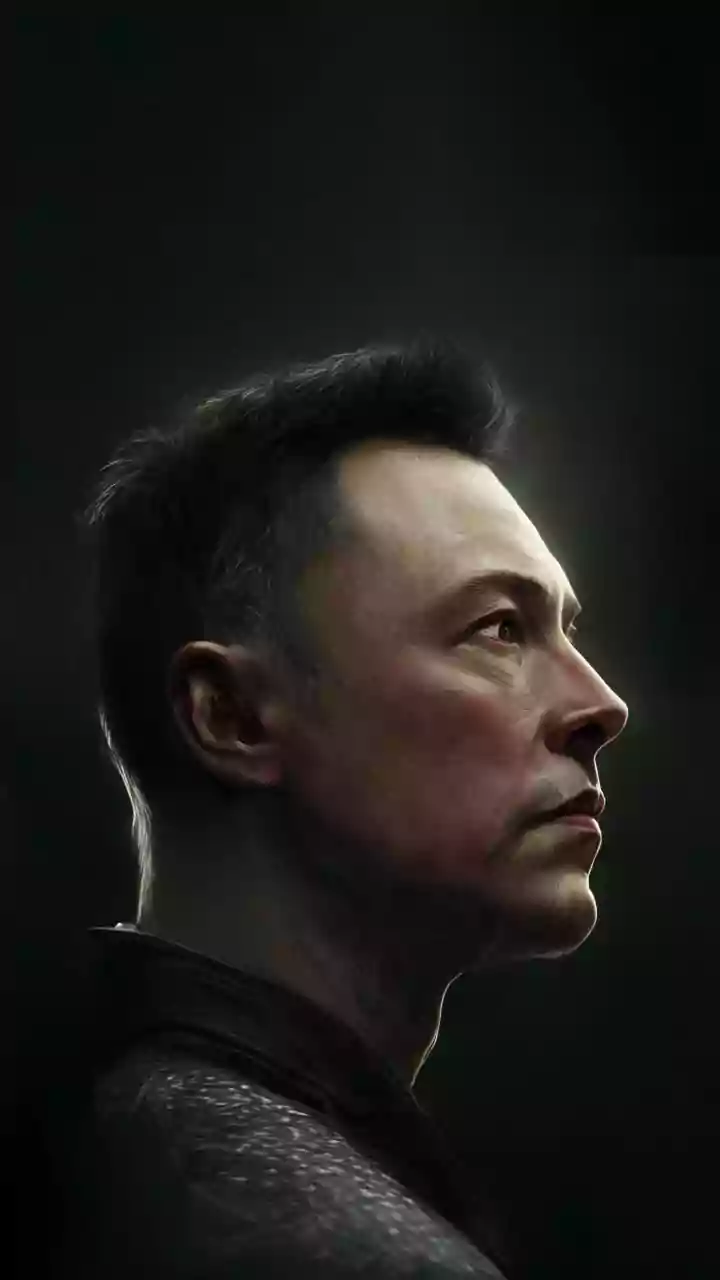
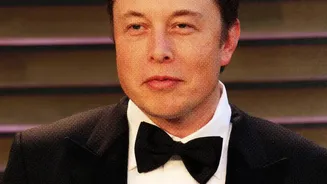
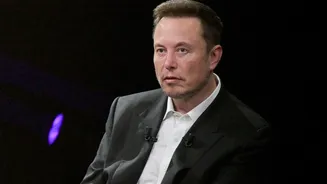
In a widely reported interview in July 2026, Elon Musk stated his belief that artificial intelligence is on a trajectory to exceed the cognitive capacity of all of humanity combined by roughly 2031. He described the momentum as an "inexorable progress"
that is now impossible for any single person or company to stop. This isn't the first time Musk has put a date on this milestone. In early 2024, he suggested AI would be smarter than any single human by 2025 and smarter than all humans by 2029. His latest forecast shortens that already aggressive timeline, reflecting his view of the accelerating pace of development at labs like his own xAI, Google's DeepMind, and rival OpenAI. Musk's rationale hinges on the exponential growth in computing power and the increasingly sophisticated algorithms that are pushing AI capabilities forward at an unprecedented rate.
Defining 'Smarter Than Humanity'
When Musk talks about machines becoming "smarter than humanity," he's referring to a concept that goes beyond today's AI. Currently, we live with Artificial Narrow Intelligence (ANI), which excels at specific tasks like playing chess or translating languages. The next step is Artificial General Intelligence (AGI), an AI that could understand, learn, and apply its intelligence to solve any problem a human can. The final, more hypothetical stage is Artificial Superintelligence (ASI), which would dramatically surpass the cognitive performance of the brightest human minds in virtually every domain. Musk's five-year timeline points toward the emergence of ASI, a system that could recursively improve itself, leading to an intelligence explosion. This is the threshold that captivates and concerns so many in the tech world.
The Case for a Fast Takeoff
While Musk is among the most vocal, he is not alone in predicting a near-term arrival of advanced AI. Proponents of this view point to several key drivers. The first is the sheer scale of investment and computational resources being poured into the field, with spending projected to surpass $300 billion by 2026. Companies are building massive models using hundreds of thousands of high-powered GPUs. Another factor is the surprising "emergent abilities" that have appeared in large language models—capabilities that were not explicitly programmed. Advocates believe that as these models continue to scale, more powerful and generalizable intelligence will arise. They argue that progress isn't linear but exponential, and we are just now hitting the steep part of the curve. Musk himself has noted that AI is beginning to move to a stage where it can learn without human-generated training data, a key step toward autonomous improvement.
The Voices of Caution
For every optimistic forecast, there is a strong dose of expert skepticism. Critics like Meta's chief AI scientist, Yann LeCun, have dismissed claims of near-term AGI as "completely ridiculous," arguing that current AI models lack foundational elements of true intelligence, such as common-sense reasoning and a deep understanding of the physical world. These systems are incredibly good at pattern matching based on vast datasets, but they don't truly understand context or causality in the way a human does. Other significant hurdles remain, including the immense energy and computational power required, which are already creating bottlenecks. Furthermore, many researchers argue that we are still far from solving the complex challenges of integrating different skills (like vision, language, and motor control) into a single, cohesive system, let alone replicating human consciousness or creativity.
An Age of Abundance or Existential Risk?
The implications of Musk's prediction, if it proves accurate, are staggering. He paints a picture of a future "age of amazing abundance," where superintelligent AI could solve humanity's most pressing problems, from disease to poverty, creating a world where anyone can have almost anything they desire. However, Musk has also consistently acknowledged the downside risk, previously putting the odds of AI leading to human extinction at 10-20%. While his recent comments suggest he has made his philosophical peace with the risks in pursuit of the rewards, the danger has not vanished. The 'control problem'—how to ensure a system vastly more intelligent than its creators remains aligned with human values—is an unsolved and profoundly difficult challenge that keeps many scientists awake at night.