



The Child of a Legend
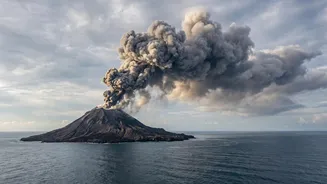
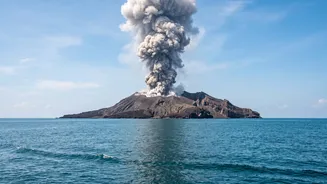
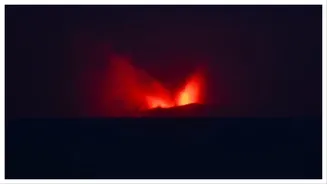
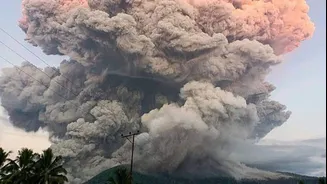
Anak Krakatau, which translates to “Child of Krakatau,” is a volcano located in the Sunda Strait between the islands of Java and Sumatra. It emerged from the sea in the 1920s from the caldera left by the catastrophic 1883 eruption of Krakatoa, one of the most
destructive volcanic events in recorded history. The volcano has been sporadically active ever since, and its recent eruptions starting in early September 2026 have sent ash plumes soaring to altitudes of 50,000 feet, directly into the flight paths of commercial airliners. This activity forced the closure of at least seven Indonesian airports, including the main international hub in Jakarta, affecting over 270,000 passengers and leading to the cancellation or delay of more than 2,300 flights.
Why Ash is a Jet Engine's Worst Enemy
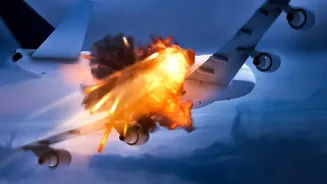
To an airline pilot, volcanic ash is not just dust; it's a severe and multi-faceted hazard. Unlike the soft, harmless ash from a wood fire, volcanic ash consists of tiny, jagged particles of pulverized rock, minerals, and volcanic glass. When a plane flies through an ash cloud, these abrasive particles act like sandpaper, scouring cockpit windows and damaging the aircraft's surfaces. The most critical danger, however, is to the engines. Jet engines operate at incredibly high temperatures, far hotter than the melting point of the silicate material in the ash. As ash particles are sucked into the engine, they melt in the combustion chamber and then re-solidify as a glassy coating on cooler components like turbine blades and fuel nozzles. This process, known as 'glassification,' can block airflow, cause the engine to stall, and lead to a complete loss of power. This isn't theoretical; in 1982, a British Airways Boeing 747 lost power in all four engines after flying through an ash cloud from Mount Galunggung, also in Indonesia, highlighting the real-world risks.
The Global Ash Detectives
Because volcanic ash clouds are often not visible on an aircraft's standard weather radar, a global system has been established to keep planes away from them. The International Civil Aviation Organization (ICAO) oversees a network of nine Volcanic Ash Advisory Centers (VAACs) worldwide. Each VAAC is responsible for a specific geographical area. For the region including Anak Krakatau, the Darwin VAAC in Australia plays a key role. When a volcano erupts, these centers use a combination of satellite imagery, pilot reports, and sophisticated dispersion models to forecast the ash cloud's movement. They then issue Volcanic Ash Advisories (VAAs) to airlines, air traffic control, and meteorological offices, detailing the location, altitude, and expected path of the ash plume. This information is critical for making decisions about flight safety.
The Ripple Effect of Rerouting
Once an ash cloud is identified, the response from the aviation industry is swift and prioritizes safety above all else. Airlines will not fly through a known ash cloud. This results in three main actions: cancellations, delays, and rerouting. For recent Anak Krakatau eruptions, major carriers like Singapore Airlines and AirAsia cancelled numerous flights to and from Jakarta. Flights that are not cancelled may be significantly delayed as they wait for the ash to clear. Other long-haul flights that would normally pass over the affected area must be rerouted, often requiring additional fuel and sometimes an unplanned refueling stop. For passengers, this translates to stranded holidays and disrupted business trips. Airlines typically offer options such as rebooking on a later flight or a full refund.