





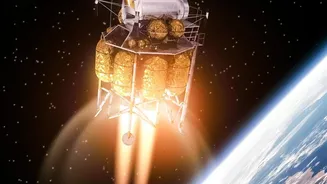
The Heart of the Mission
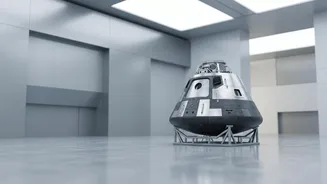
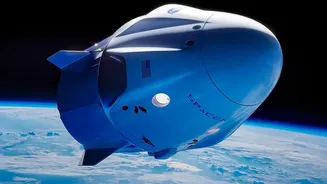
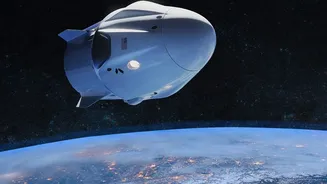
At the centre of the Gaganyaan mission is the Crew Module, the pressurised capsule designed to be home for India's astronauts in low-Earth orbit. This is the vehicle that will protect them from the vacuum of space, the extreme temperatures, and the intense
forces of re-entry. It is, in effect, a miniature habitat and a high-tech reentry vehicle rolled into one. Ensuring this module can perform its functions flawlessly is not just a technical requirement; it is the most fundamental safety guarantee for the crew. Before it can be cleared for flight, every system must be pushed to its limits on the ground, proving it can handle conditions far more extreme than anything expected during an actual mission. This rigorous process is what qualification testing is all about.
A Gauntlet of Critical Tests
The Indian Space Research Organisation (ISRO) recently announced the successful completion of three such major qualification tests, each targeting a critical moment in the mission's final phases. The first was the Float Inflation Test for the Crew Module Up-righting System (CMUS). After splashing down in the ocean, the capsule must be able to orient itself upright, even in rough seas, to ensure the crew is safe for recovery. This test validated the cold-gas inflation system designed to deploy flotation bags and achieve this. The second major trial was the Umbilical Separation Test. This ensures that the vital electrical and fluid connections between the Crew Module and the Service Module can detach cleanly and precisely before the capsule begins its fiery re-entry. A clean separation is vital for the module's stability. Finally, the third test qualified the module's structure to withstand the loads from the Apex Cover separation. This cover protects the parachute system during ascent and orbit and must be jettisoned to allow the parachutes to deploy for landing. The test confirmed the module can handle the force of this event without any structural damage.
From Blueprint to Reality
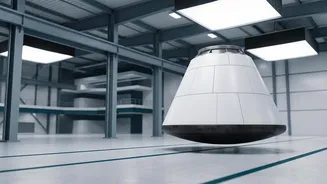
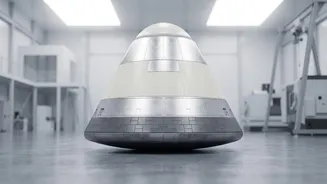
The "striking new visual" mentioned in the headline is the transition from theoretical designs to tangible, physical hardware undergoing real-world stress. Seeing the actual crew module—or a high-fidelity simulation of it—being subjected to these forces provides undeniable proof of progress. For engineers, it validates years of design work. For the public, it transforms the abstract concept of a space mission into a physical reality. These aren't computer simulations; they are tests on flight-grade hardware. For instance, during the Apex Cover test, engineers applied forces nearly 1.75 times higher than what's expected in flight, proving the design has significant safety margins. This visual evidence of a robust, well-engineered spacecraft passing gruelling trials builds confidence and makes the prospect of seeing Indian astronauts launch from Indian soil feel closer than ever.
Charting the Path to Orbit
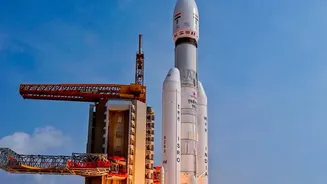
These successful qualification tests are crucial stepping stones in a long and methodical campaign. They follow other key demonstrations, such as a series of Integrated Air Drop Tests to validate the complex parachute system that will ultimately slow the capsule for a safe splashdown. With these ground qualifications complete, ISRO can proceed with greater confidence towards the next major phases of the programme: a series of uncrewed test flights. The first of these, Gaganyaan-1 (G1), is slated to launch a humanoid robot, Vyommitra, into orbit to simulate a crewed mission and collect vital data on the life support systems. While timelines can be fluid to ensure absolute safety, the current target for the first uncrewed flight is late 2026, with a crewed mission potentially following in 2027 or 2028. Each completed test clears another hurdle, paving the way for India to join the elite group of nations with independent human spaceflight capabilities.