





The Grand Plan Unveiled
The Cabinet Committee on Economic Affairs (CCEA) has given the green light to three significant railway multitracking projects. Spanning across West Bengal, Jharkhand, Odisha, Madhya Pradesh, and Chhattisgarh, this initiative is one of the largest rail infrastructure
pushes in recent years. The projects are designed to significantly increase the capacity of some of the country's most congested rail corridors. By adding new lines parallel to existing ones, the railways aim to improve efficiency, reduce travel times, and enhance the reliability of both passenger and freight services. The expansion will cover 14 districts and is expected to directly benefit a population of around 56 lakh people residing in nearly 4,790 villages.
Decoding the Three Core Projects
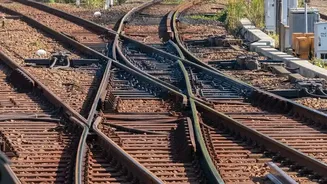
Instead of building entirely new routes from scratch, these projects focus on 'multitracking'—a strategic method to de-congest the busiest sections of the network. The plan includes three key components: the construction of a fourth line along the Kharagpur-Jharsuguda (Bagdehi) section, a fourth line for the Katni-Pendra Road section, and a third line for the Bilaspur (Uslapur)-Pendra Road route. This approach of adding a third or fourth track allows for the separation of passenger and goods trains, a critical step in speeding up both. Freight trains will no longer have to wait for passenger services to pass, and passenger trains will face fewer delays, leading to a more predictable and efficient system for everyone.
Fueling the Engine of Economic Growth
This railway expansion is fundamentally about strengthening India's economic backbone. The selected corridors are vital for transporting essential commodities from the nation's mineral-rich heartland. Materials like coal, iron ore, steel, and cement, which are crucial for industries nationwide, heavily rely on this network. The government estimates that these new lines will facilitate an additional 27 million tonnes of freight traffic annually. By creating more capacity, the project aims to lower logistics costs, making Indian industries more competitive. This initiative is a key part of the PM Gati Shakti National Master Plan, which focuses on creating integrated and efficient infrastructure to power economic activity.
Connecting People, Pilgrims, and Tourists
Beyond the economic benefits, the expansion promises a significant improvement in the daily lives of millions. For residents in smaller towns and villages, better rail connectivity means easier access to major urban centres for employment, education, and healthcare. The project will also improve access to a number of important tourist and religious destinations. These include the Taratarini Temple and a Jagannath Temple near Jharsuguda in Odisha, as well as several sites in Madhya Pradesh like the Bandhavgarh Tiger Reserve, Virateshwar Temple in Shahdol, and the Amarkantak pilgrimage site. By making these locations easier to reach, the expanded network is expected to boost local tourism and create new economic opportunities for communities in the region.
The Road Ahead: Timelines and Hurdles
Indian Railways has set an ambitious target to complete these projects by the 2029-30 financial year. However, executing infrastructure plans of this scale is not without its challenges. The biggest potential hurdle is often land acquisition. Procuring land for laying new tracks can be a complex and time-consuming process, frequently leading to delays in project timelines across India. Successfully navigating this, along with other logistical challenges like obtaining environmental clearances and coordinating with state governments, will be crucial for the timely completion of the network expansion. The success of this project hinges on smooth execution over the next few years to ensure the benefits are realised on schedule.