







The Ground Control Problem
For decades, operating a satellite has followed a familiar script: the spacecraft collects vast amounts of data, beams it all down to a ground station, and waits for human operators to analyze it and send back instructions. This model works, but it’s
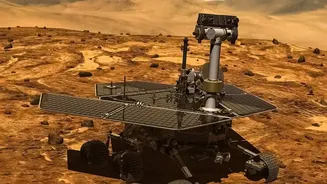
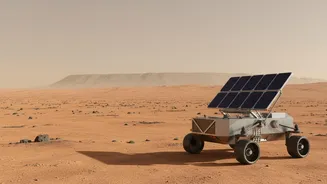
slow and inefficient. The communication delay can range from a few seconds to many minutes or even hours for deep-space missions, making real-time control impossible. This lag means a rover on Mars has to stop and wait for commands before navigating a tricky patch of terrain, and an Earth-observation satellite might send hours of useless, cloudy images, wasting precious bandwidth and time. As we launch ever-larger constellations of satellites, the number of human operators required to manage them becomes a major operational cost, limiting the scale of what's possible.
What Makes a Satellite 'Smart'?
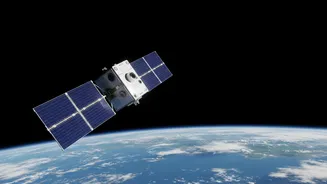
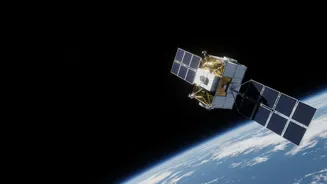
The push for smarter satellites is about giving them onboard 'brains'. This is achieved through a combination of artificial intelligence (AI), machine learning (ML), and a concept known as edge computing. In simple terms, edge computing means processing data right at its source—in this case, on the satellite itself—rather than sending it all back to Earth. Instead of a dumb camera in space, a smart satellite can analyze its own images. It can be trained to recognize specific things like ships, wildfires, or areas of flooding, and then transmit only that crucial, pre-analyzed information. This dramatically reduces the volume of data sent to the ground and cuts down the time from observation to actionable insight from hours to mere minutes.
The Obvious Benefits of Autonomy
The advantages of this approach are immense. For time-sensitive events like natural disasters, a satellite that can identify damage and alert authorities immediately is far more valuable than one that requires ground-based analysis. Autonomous systems can also pilot spacecraft, dodging space debris or adjusting their own orbits to maintain optimal coverage without waiting for human commands. This not only improves safety in an increasingly congested low-Earth orbit but also makes missions more reliable. For deep-space exploration, where communication delays are a fundamental law of physics, autonomy is not just an optimization but a necessity. It enables rovers and probes to navigate alien worlds and conduct science with a level of efficiency that was previously impossible, all while reducing operational costs for the companies and agencies running the missions.
The Human-in-the-Loop Imperative
So if autonomous satellites are so beneficial, why not hand over the keys completely? The answer lies in the immense risks. Space is a high-stakes environment where a single error can lead to the catastrophic loss of a billion-dollar asset or endanger other spacecraft. AI systems, while powerful, can behave in unpredictable ways, and the prospect of a compromised or malfunctioning satellite making its own decisions is a serious concern. Cybersecurity is a major challenge; a hacked autonomous satellite could theoretically threaten an entire constellation. This has led to a consensus in the industry that human oversight is non-negotiable. The goal is not to remove humans from the process but to change their role from constant pilots to skilled supervisors. As in aviation, where autopilots handle routine flight but a human pilot remains in ultimate command, spacecraft need what is called a 'human-in-the-loop' or 'human-on-the-loop' system.
Striking the Perfect Balance
The future of spacecraft operations is a partnership. AI will handle the tedious, high-volume tasks: filtering data, performing routine health checks, and making minor navigational adjustments. It might recommend a course of action, but the final, critical decision—especially in unexpected or high-stakes situations—will still rest with a human operator on the ground. Organizations like the US Air Force Research Laboratory are already testing these hybrid systems in orbit, using AI to control a satellite's orientation while being monitored. This approach, known as supervised autonomy, combines the speed and efficiency of machine learning with the accountability and nuanced judgment of human intelligence. It ensures that as our eyes in the sky become smarter, they also remain responsible.