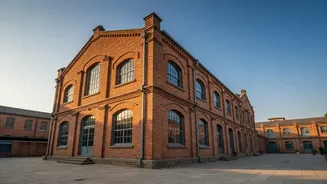









The Village of Mills
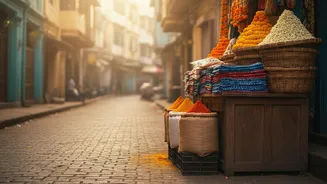
To understand the king, you must first understand his kingdom. The story of Lalbaugcha Raja begins not in a palace, but in 'Girangaon'—the village of mills. In the early 20th century, Central Mumbai areas like Lalbaug and Parel were the engine room of the city,
crowded with over 130 textile mills. This industrial heartland drew migrants from across Maharashtra, who found work in the mills and life in the cramped but close-knit 'chawls'. Life was hard, community was everything, and faith was a constant companion. The Ganpati festival, popularized by Lokmanya Tilak as a tool for social unity against British rule, became an integral part of this working-class culture. It was more than a religious event; it was a platform for community gathering, expression, and solidarity.
A Vow and a Beginning
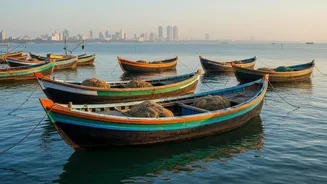
The direct history of Lalbaugcha Raja started with a crisis. In 1932, the marketplace at Peru Chawl, where many local fishermen and vendors earned their living, was shut down. Facing economic uncertainty, the community made a vow, or 'navas', to Lord Ganesha: if they were granted a permanent place for their market, they would establish an idol in his honour. Their prayers were answered. A new plot of land was secured, and in 1934, out of gratitude, the Lalbaugcha Raja Sarvajanik Ganeshotsav Mandal was founded. The first idol was modest, fittingly dressed in the attire of the Koli fishermen who had prayed for it. It was a Ganpati of the people, born from a collective promise made by a community dependent on divine grace and their own resilience.
The One Who Fulfills Wishes
From its inception, the idol became known as the 'Navsacha Ganpati'—the one who fulfills wishes. This reputation resonated deeply within a community constantly grappling with hardship. For the mill workers facing grueling conditions and the vendors praying for a steady livelihood, the Raja was not a distant deity but a powerful ally. The belief grew that any sincere prayer offered to the King of Lalbaug would be answered. As stories of fulfilled vows spread, so did the idol's fame. The two queues that form today—one for a general glimpse ('mukha darshan') and a much longer one to touch the idol's feet ('charan sparsha')—are a testament to this enduring belief in the deity's power to intervene and grant wishes.
From Mill Strikes to Global Icon
The decline of Mumbai's textile industry, especially after the Great Strike of 1982, was a devastating blow to Girangaon. Over 250,000 workers lost their jobs, and the social fabric of the area was torn apart. Yet, as the mills fell silent, the devotion to Lalbaugcha Raja only grew stronger. The festival became a powerful anchor to a fading identity. The children and grandchildren of the mill workers, now scattered across Mumbai and the globe, maintained their connection to the deity of their ancestors. The festival transformed from a purely local affair into a pilgrimage. The modest working-class Ganpati had become a global icon, a symbol of a community's enduring faith through profound economic and social upheaval. The Kambli family, who have been sculpting the idol since 1935, even patented the iconic design, a first for a Ganpati idol.
A Legacy in Plain Sight
Today, Lalbaugcha Raja is a multi-crore spectacle, attracting celebrities, politicians, and industrialists alongside millions of ordinary devotees. Yet, its soul remains firmly rooted in its working-class origins. The immense discipline of the queues, the volunteering spirit of the locals, and the unwavering faith all echo the community solidarity forged in the chawls and mills of old Girangaon. The festival is a living museum of memory, where the grandeur of the present is built on the foundation of past struggles. Each year, when the towering idol is unveiled, it serves as more than a religious icon; it is a powerful reminder of Mumbai's history, a tribute to the resilience of its working-class communities, and a symbol of a faith that was, and remains, the city's ultimate source of strength.