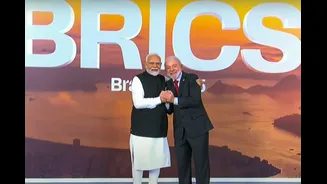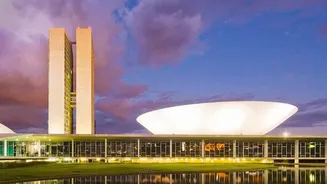







As Brazilians head to the polls, the political narrative is dominated by domestic issues. Yet, halfway across the world, a burgeoning economic partnership with India has quietly become a cornerstone of President Lula's case for re-election.
A Partnership Forged in Growth
At the heart
of President Luiz Inácio Lula da Silva's foreign policy is a vision of a multipolar world where developing nations chart their own course. For Brazil, the most tangible proof of this strategy's success is its relationship with India. In recent years, bilateral trade between the two giants of the Global South has not just grown; it has exploded. The trade flow surpassed the $15 billion mark, a testament to a deliberate effort on both sides to deepen economic ties. This isn't just a talking point for diplomats; it translates into tangible economic activity. For Lula's government, this figure is a powerful argument that looking beyond traditional partners in North America and Europe yields significant dividends, bolstering Brazil's economy and its international standing.
The Strategic 'South-South' Axis
The India-Brazil connection is more than a simple trade relationship; it's a strategic alignment. Both nations are key members of forums like BRICS and IBSA (India, Brazil, South Africa Dialogue Forum), which advocate for the interests of developing countries. Lula has consistently used these platforms to champion 'South-South cooperation'. His political message is that Brazil's destiny is intertwined with other major emerging economies, not as a junior partner to Western powers, but as an equal. The thriving trade with India serves as a powerful symbol of this philosophy in action. It allows Lula to campaign on a platform of restored Brazilian influence and a foreign policy that actively diversifies its economic dependencies, a message that resonates with voters wary of global economic volatility.
What Powers the Trade Engine?
The composition of India-Brazil trade reveals a complementary economic relationship. Brazil has become a crucial supplier of crude oil, vegetable oils, and raw materials for Indian industries. This helps India diversify its energy and food supply chains. In return, India exports refined petroleum products like diesel, auto components, and, crucially, pharmaceuticals to the vast Brazilian market. The supply of affordable, high-quality generic drugs from India is particularly important for Brazil's public health system. This exchange is a win-win: Brazil secures its industrial inputs, while Indian manufacturing and pharmaceutical sectors gain access to Latin America's largest economy. This two-way street helps Lula argue that his global outreach directly supports key sectors back home.
From Trade Data to a Political Narrative
In a tight election, every element of a leader's record is scrutinized. Lula and his supporters can point to the Indian partnership as a clear success. They can frame it as a story of job creation, new markets for Brazilian goods, and enhanced energy security. By fostering this relationship, Lula positions himself as a global statesman who can deliver domestic results. He contrasts his approach with that of his political opponents, whom he often portrays as being too focused on traditional alliances that offer diminishing returns. The message is simple: a vote for Lula is a vote for a globally-respected Brazil that leverages new friendships to build economic resilience. The India file is a prime exhibit in this political case.
Challenges and the Road Ahead
Despite the positive momentum, the relationship is not without its hurdles. Both countries maintain complex regulatory environments and trade barriers that can frustrate businesses. The Mercosur-India Preferential Trade Agreement, while beneficial, is still considered limited in scope by many analysts who believe its expansion is long overdue. Furthermore, political opposition within Brazil sometimes questions the economic benefits of focusing so heavily on distant partners. For the India-Brazil partnership to become a truly decisive factor, the benefits need to be felt more broadly across the economy. However, the existing foundation is strong, built on shared democratic values and a mutual ambition to play a larger role on the world stage.