





A Unique Geographic Position
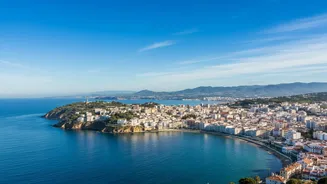
Ceuta's primary significance comes down to its location. The autonomous city, with a population of around 85,000, sits on a small peninsula connected to Morocco and separated from mainland Spain by the 17-kilometer-wide Strait of Gibraltar. Along with its sister
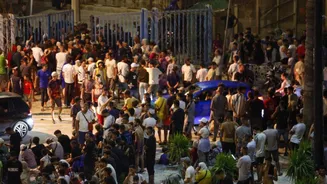
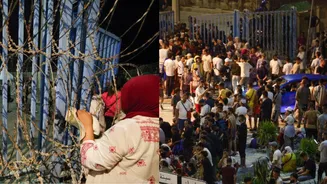
city Melilla, it forms the only land borders between the European Union and an African country. For migrants from Africa, reaching Ceuta means reaching EU territory without having to undertake the perilous sea crossing to mainland Europe. Its geography offers multiple potential routes for entry: scaling the heavily fortified border fences, swimming around the coastal breakwaters, or attempting a sea crossing in a small boat.
A Legacy of Colonial History
Ceuta's status as a European city in Africa is a product of centuries of history. Portugal captured the city in 1415, a move that marked the beginning of European colonial expansion in the region. It passed to Spanish control in the 17th century and remained so even after Spain recognized Morocco's independence in 1956. Spain considers Ceuta an integral part of its national territory, just like the Canary Islands. However, Morocco has never recognized Spanish sovereignty, referring to it as an occupied territory and a remnant of colonialism. This long-standing territorial dispute adds a layer of political complexity to every issue concerning the city.
The Potent Lure of Economic Disparity
The border separates not just two countries, but two vastly different economic worlds. The wealth gap between Europe and Africa acts as a powerful magnet. Many migrants, particularly from Morocco and sub-Saharan Africa, are driven by high unemployment, low wages, and a lack of opportunities in their home countries. They see Ceuta, and by extension Europe, as a place to build a future that seems impossible at home. This economic desperation fuels repeated attempts to cross the border, despite the significant risks involved. The stark contrast in prosperity is visible from the border itself, making the lure of Europe tangible and immediate.
'Fortress Europe's' Front Door
Because it is an external EU border, Ceuta is one of the most heavily fortified frontiers in the world. The 6.4 km land border is comprised of parallel 6-meter-high fences topped with barbed wire, watchtowers, and a network of cameras and sensors. These fortifications were built by Spain to stop smuggling and irregular migration. Yet, despite these measures, determined individuals and groups regularly attempt to breach the fences, often resulting in injury and sometimes death. The very existence of such a formidable barrier underscores its significance as a primary entry point that European authorities are desperate to control.
A Volatile Political Fault Line
The flow of migrants into Ceuta is often intertwined with the complex and sometimes tense diplomatic relationship between Spain and Morocco. Morocco plays a crucial role in policing its side of the border, often with financial support from the EU. However, on several occasions, analysts have suggested that Moroccan authorities have relaxed border controls, leading to sudden, massive influxes of people into Ceuta. These events have been interpreted as a way for Morocco to exert political pressure on Spain, often related to other diplomatic disputes, such as the status of Western Sahara. This turns migration into a political tool, making Ceuta a constant flashpoint in bilateral and EU-Morocco relations.