







The Old File Cabinet Brain
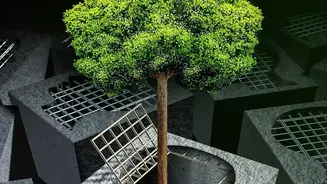
For a long time, the dominant metaphor for memory was the library or the file cabinet. An experience happened, it was converted into a memory (encoded), and then stored away. When you needed to remember it, your brain would retrieve the file, leaving
it unchanged. This process of storing a memory for the long term is known as consolidation. Once consolidated, a memory was thought to be stable and permanent, like a book on a shelf. This model was simple and intuitive, but it couldn't fully explain the oddities of memory: why some fade, why they change over time, or why we can recall the same event differently depending on our current mood.
The Plot Twist: Remembering Rewrites the Past
Recent breakthroughs are painting a very different picture. Memory isn't a static recording; it's an active and creative reconstruction. A key concept transforming the field is "reconsolidation". Research shows that every time you recall a memory, it doesn't just get played back. The act of remembering makes the memory temporarily fragile and malleable again. For a window of a few hours, the memory can be updated with new information or emotions before it's stored again. A study from Rice University found that how you access information can change how the brain represents it next time. For example, thinking about your dog by focusing on its breed might neurally strengthen different connections than thinking about its role in your family. Remembering is not passive playback; it is an act of rewriting.
Separating What from Where
One of the most significant recent discoveries explains how the brain manages this complex process without corrupting every memory. A 2026 study from the University of Bonn revealed that the brain stores the content of a memory—the "what”—separately from its context—the "where and when". Specific neurons, sometimes called "concept cells," respond to a particular person or object, regardless of the situation. A different set of neurons tracks the context. When you successfully recall an event, these two sets of neurons fire in sync, briefly linking up to reconstruct the complete memory. This explains our ability to recognise a friend whether we see them at a coffee shop or a business meeting; the brain retrieves the stable "what" (your friend) and combines it with the appropriate "where" (the location).
Keeping Memories Stable Amidst Change
If memories are constantly being updated, how do we maintain a stable sense of the past? Research from the University of Toronto suggests the medial prefrontal cortex (mPFC) plays a crucial role. While the hippocampus is busy updating its mental maps with new experiences—a process called remapping—the mPFC acts as an anchor. It maintains a stable, overarching framework that integrates new details without completely overwriting the old ones. This helps create a coherent, evolving memory rather than a series of disconnected snapshots. Understanding this teamwork between brain regions could be vital for addressing age-related memory decline, where the ability to integrate new information without losing the old is often compromised.
The Future of Memory
This new understanding of memory as a dynamic, reconstructive process has profound implications. It helps explain phenomena like false memories and why our recollection of an event can change over time. It also opens new avenues for treating conditions like PTSD, where traumatic memories are a core symptom. By understanding the reconsolidation window, therapists hope to help patients update painful memories with new emotional context, reducing their power. Other research is exploring the molecular timers that decide which memories are kept long-term and which are allowed to fade, potentially offering ways to boost memory in aging brains. Even the fundamental building blocks are being re-examined, with some studies showing the brain deliberately uses amyloid proteins—often associated with diseases like Alzheimer's—as a tool to form lasting memories.