

What is the Rocket Revolution?
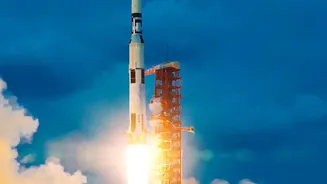
For decades, space launch was a one-and-done affair. Rockets, costing hundreds of millions of dollars, were used a single time to propel a payload into orbit before their expensive components were discarded, burning up in the atmosphere or sinking into the ocean.
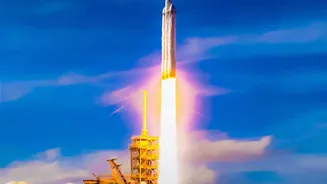
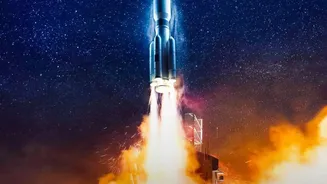
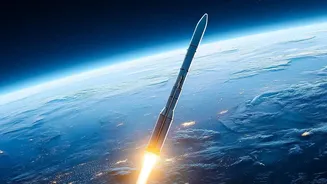
The 'Rocket Revolution' is the fundamental shift away from this disposable model. At its heart is reusability: the ability to launch a rocket, recover its most expensive parts—primarily the first-stage booster—and fly them again. This seemingly simple concept has been a massive engineering challenge, requiring precision guidance systems, heat shields, and controlled landings from the edge of space. The success of companies like SpaceX with its Falcon 9 has proven the model works, turning what was once science fiction into a routine part of the modern space industry.
The New Economics of Spaceflight
The primary impact of reusable rockets is a dramatic reduction in the cost of reaching space. By reusing boosters multiple times, launch providers can slash the price of a single mission. Some estimates suggest reusability can cut launch costs by more than half, from over $60 million for a traditional expendable rocket to under $30 million for a reused one. This price drop is democratizing space. It's no longer a domain exclusive to superpowers and their massive government agencies. Commercial companies can now afford to deploy large satellite constellations for internet and Earth observation, while startups, universities, and developing nations have a more affordable pathway to orbit for research and commercial ventures. This increased affordability and launch frequency is stimulating a vibrant new space ecosystem.
A Global Race for Reusability
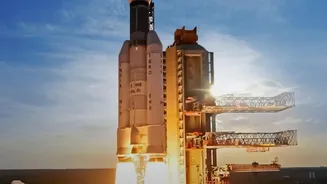
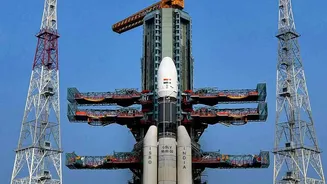
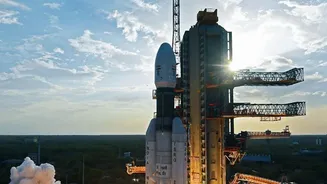
While SpaceX has been the most visible pioneer, the race to develop reusable launch systems is a global one. In the United States, Blue Origin is developing its New Glenn rocket with a reusable first stage. Rocket Lab is also working on recovering and reusing its Electron rockets. Beyond the US, China has made reusable technology a priority, with its state-owned CASC successfully recovering a booster and several private startups like i-Space and LandSpace developing their own reusable vehicles. India's space agency, ISRO, is also pursuing this critical technology through its Reusable Launch Vehicle Technology Demonstrator (RLV-TD) program. Unlike the vertical-landing rockets of SpaceX, ISRO's concept involves a winged vehicle that lands on a runway like an aircraft, with successful landing experiments already conducted. This global competition is accelerating innovation and pushing the boundaries of what's possible.
More Than Just a Cheaper Ride
The rocket revolution is about more than just cost savings; it's enabling entirely new possibilities in space. The ability to launch more frequently supports the deployment and maintenance of massive satellite mega-constellations, which promise global high-speed internet. It makes ambitious scientific missions to the Moon, Mars, and beyond more feasible by reducing the transportation budget. Furthermore, reusability has significant sustainability benefits. By reducing the number of rocket stages discarded with each launch, it helps mitigate the growing problem of space debris and lessens the environmental impact of manufacturing new new hardware for every mission. It also opens the door to future concepts like satellite servicing, repair, and refueling in orbit, creating a more circular and sustainable space economy.