



The Two Faces of Cinnamon
What most of us know and use as cinnamon is typically Cassia cinnamon. It is the common, affordable variety found in nearly every supermarket. Primarily grown in China, Vietnam, and Indonesia, Cassia is known for its strong, spicy, and somewhat pungent
flavour. On the other hand, there is Ceylon cinnamon, also known as “true cinnamon” (Cinnamomum verum). Hailing from Sri Lanka and Southern India, Ceylon has a more delicate, sweet, and complex flavour with subtle floral and citrus notes. While both come from the bark of Cinnamomum trees, they are distinct species with different properties.
The Key Difference: What is Coumarin?
The most significant difference between the two cinnamons lies in a naturally occurring chemical compound called coumarin. Coumarin is responsible for the sweet scent in many plants, but it can be harmful in large doses. The primary concern with high coumarin intake is potential liver toxicity, particularly with prolonged consumption. While both cinnamon types contain coumarin, their levels vary dramatically. Cassia cinnamon contains a significant amount, with some tests showing it can be up to 1% of its weight. Ceylon cinnamon, by contrast, contains only trace amounts, often 250 times less than Cassia. One study found Cassia samples contained between 2,650 and 7,017 mg of coumarin per kilogram, while Ceylon cinnamon was below the level of detection.
Why Coumarin Content Matters for Your Health
For the average person who only sprinkles a little cinnamon on their food occasionally, the coumarin in Cassia is unlikely to pose a risk. However, for those who consume cinnamon regularly in larger quantities—perhaps for its potential health benefits or simply out of love for the spice—the type of cinnamon becomes crucial. European health authorities have set a tolerable daily intake for coumarin at 0.1 mg per kilogram of body weight. For an adult, this means that a single teaspoon of some high-coumarin Cassia powders can exceed the daily recommended limit. This is why some health bodies, like Germany's Federal Institute for Risk Assessment, specifically recommend Ceylon cinnamon for frequent or heavy users. People with existing liver conditions should be especially mindful and may be advised to avoid high-coumarin Cassia.
How to Tell Them Apart
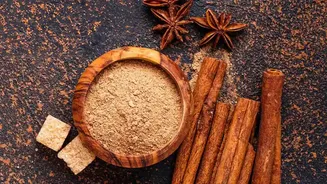
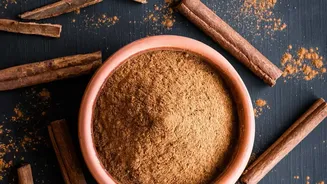
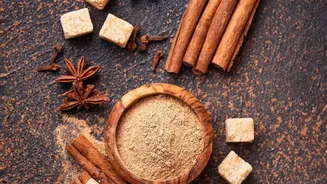
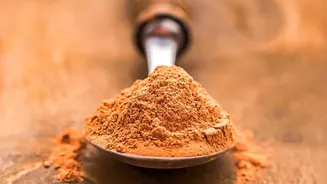
While telling the powdered versions apart can be difficult without a label, the stick form offers clear visual clues. Ceylon cinnamon sticks, or quills, are light tan and composed of many thin, fragile, paper-like layers rolled together like a cigar. They are soft and can be crumbled easily. Cassia cinnamon sticks are much harder, thicker, and darker reddish-brown. They typically consist of a single, hollow, curled layer of bark and are tough to break. When it comes to the powder, colour can be a hint—Ceylon is a lighter tan, while Cassia is a deeper reddish-brown. However, the most reliable way to know what you are buying is to check the label. If it simply says "cinnamon," it is almost certainly Cassia. Products made with true cinnamon will be explicitly labelled as "Ceylon cinnamon."
Flavour, Price, and Which to Choose
The choice between Ceylon and Cassia also comes down to taste and budget. Cassia’s bold, spicy kick holds up well in robustly flavoured dishes like curries, stews, and many baked goods. Ceylon’s milder, more nuanced sweetness is perfect for delicate desserts, beverages like chai tea, or for dusting over fruit, where its flavour can shine without overpowering. You will also notice a significant price difference. Ceylon cinnamon is more labour-intensive to harvest and is grown in a more limited region, making it considerably more expensive and harder to find than the widely available Cassia. For most people, using Cassia in moderation is perfectly fine. But if you are a daily cinnamon user or are taking it for health reasons, investing in Ceylon is the safer and recommended choice.