





The Land and Energy Dilemma
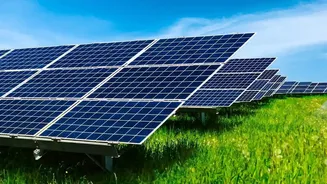
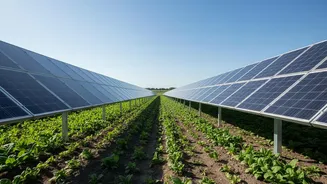
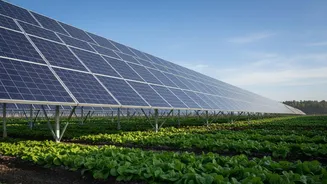
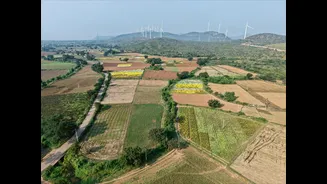
India has set ambitious goals to expand its renewable energy capacity, aiming for 500 gigawatts from non-fossil fuel sources by 2030. While this transition is vital for energy security and climate action, it comes with a significant footprint. Conventional
solar and wind farms require vast tracts of land, often leading to conflicts over agricultural, forest, and community-owned spaces. Estimates suggest that meeting earlier, more modest renewable targets would have required an area roughly the size of Himachal Pradesh, raising concerns that scaling up could displace farms and damage fragile ecosystems. This tension between green energy and land rights has become a major chokepoint in India's climate journey.
A Floating Solution Takes Shape
Instead of competing for scarce land, India is turning to its thousands of reservoirs and lakes. The strategy involves deploying large arrays of solar panels on buoyant platforms, a technology known as floating solar photovoltaics (FSPV), or 'floatovoltaics'. This approach is land-neutral, immediately resolving acquisition conflicts. Recognizing this potential, the government recently approved the Pradhan Mantri Surya Sarovar Yojana, a major scheme to develop 5,000 megawatts of floating solar capacity. This initiative aims to transform underutilised water surfaces into clean power hubs, dramatically increasing the country's current floating solar capacity of around 700 MW.
More Than Just Generating Power
The scheme's brilliance lies not just in what it creates, but in how it balances the grid. The plan mandates that these floating solar projects be paired with energy storage systems. This directly tackles the intermittency of solar power; energy generated during the sunny afternoon can be stored and discharged during evening peak demand. One of the most effective ways to do this at scale is with pumped-hydro storage, which uses surplus electricity to pump water to a higher reservoir, releasing it later through turbines to generate power. This turns the reservoir into a giant, long-lasting mechanical battery, using nothing more than water and gravity to ensure a stable, reliable power supply.
The Co-Benefits of Water-Based Solar
Placing solar panels on water offers several additional advantages. The water has a natural cooling effect on the panels, which can increase their energy generation efficiency by up to 15% compared to land-based systems that can overheat in the sun. Furthermore, the panel arrays act as a physical cover over the water surface, which significantly reduces evaporation. In a water-stressed country like India, this conservation of water in reservoirs used for irrigation and drinking is a major bonus. Maintenance can also be easier, as the water environment leads to less dust accumulation on the panels compared to arid, land-based sites.
Navigating the Challenges Ahead
Despite the immense potential, this strategy is not without its hurdles. The upfront cost for floating solar installations is typically higher than for ground-mounted ones due to the need for specialized, corrosion-resistant floats, anchors, and waterproof cabling. There are also technical complexities in designing systems that can withstand wave movement and fluctuating water levels in reservoirs. While considered less impactful than land-based projects, researchers are still studying the long-term effects of covering large water surfaces on aquatic ecosystems and water quality. However, by providing financial assistance and funding for feasibility studies, the new government scheme aims to de-risk these projects for developers and accelerate adoption.