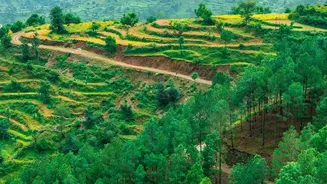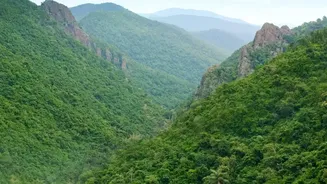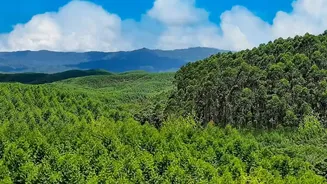








A stark new report from the United Nations warns that the world is dramatically failing to meet its forest restoration targets. This isn't just an environmental issue; it's a critical threat to our climate, food security, and way of life.
A Global Promise Falling Short
The latest 'State
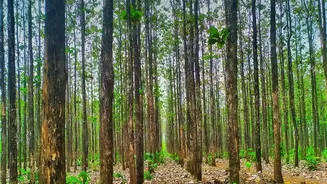
of the World's Forests' report from the UN's Food and Agriculture Organization (FAO) delivers a sobering message: despite global pledges to restore over one billion hectares of degraded land, action has not kept pace with commitments. In reality, only about a fifth of that area is actually undergoing restoration. The report highlights that since 1990, the world has lost a staggering 489 million hectares of forests, an area far greater than the size of India. While the rate of outright deforestation has slowed slightly, land degradation continues at an alarming pace, threatening the vital services these ecosystems provide.
Why Are We Failing?
The gap between ambition and reality is caused by several persistent challenges. A primary obstacle is a massive funding shortfall. Forestry teams on the ground report that a lack of consistent financing hinders their ability to secure land, hire staff, and plan long-term projects. Furthermore, there is often a lack of coordinated government policy, with agricultural or infrastructure expansion working directly against conservation goals. The report also points to the difficulty in scaling up successful projects, the high costs of verification for programs like carbon credits, and insufficient technical training for on-the-ground teams. Simply put, the political will and financial investment do not currently match the scale of the crisis.
The High Cost of Inaction
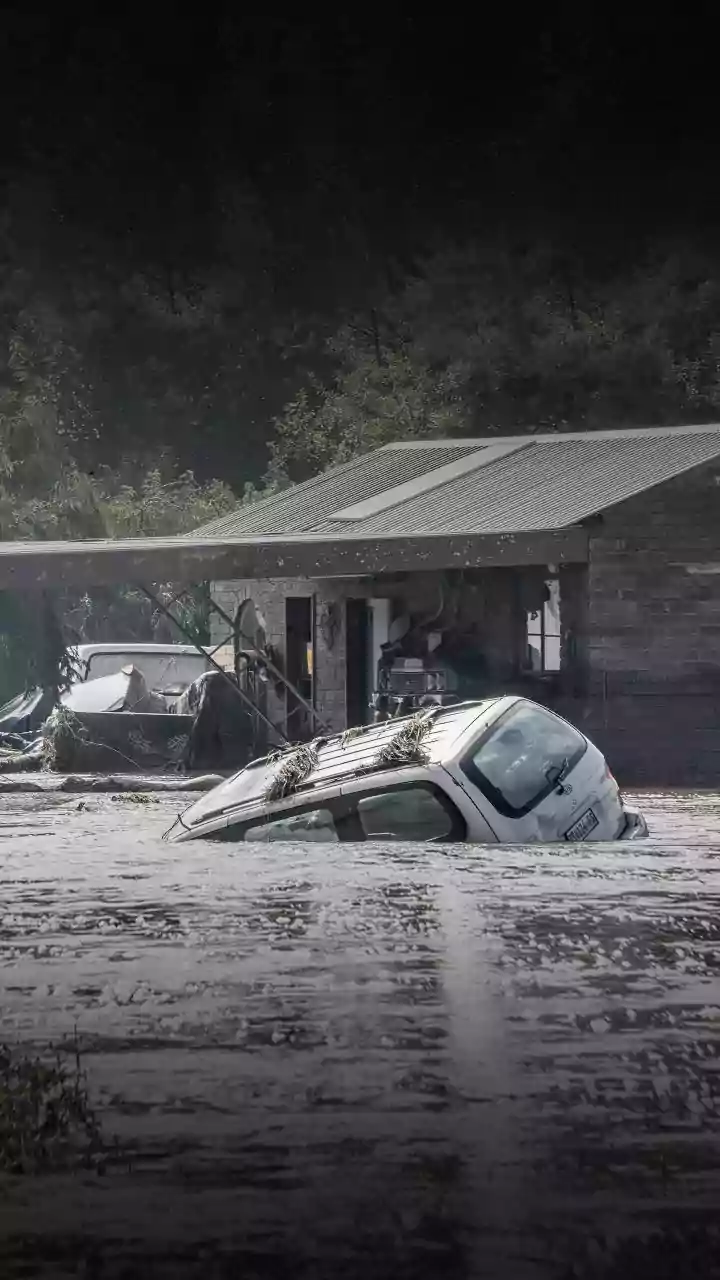
The consequences of failing to restore our forests are severe and far-reaching. Forests are home to 80% of the world's land-based biodiversity, regulate rainfall patterns, and are crucial carbon sinks that absorb emissions. Their continued degradation accelerates climate change, increases the risk of extreme weather events like floods and droughts, and disrupts the water cycle. For India, this is particularly critical. Changes in forest cover can impact the monsoon, affect the health of Himalayan glaciers that feed major rivers, and increase human-wildlife conflict as animals lose their habitats. Economically, the failure to restore degraded ecosystems carries an annual cost estimated to be in the trillions of dollars globally.
What This Means for India
While India has its own ambitious goals for increasing forest cover, the pressures identified in the UN report are acutely felt here. Rapid urbanisation, the demand for agricultural land to feed a growing population, and large-scale infrastructure projects all compete with forest conservation. The loss of forests threatens not only iconic species like tigers and elephants but also the livelihoods of millions of people in rural and tribal communities who depend directly on forests for food, fuel, and income. The report's warning is a crucial reminder that India’s ecological and economic security is intrinsically linked to the health of its forests. Protecting these ecosystems is essential for water security, agricultural productivity, and climate resilience.
A Path Forward, If We Act Now
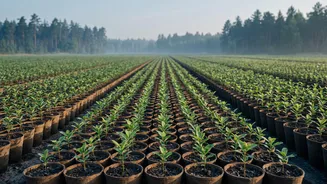
The UN report is not just a warning; it is also a call to action. It outlines several pathways to accelerate progress, emphasizing that restoration can generate enormous benefits, with every dollar invested potentially yielding up to 30 dollars in economic and social returns. Key recommendations include a massive increase in financial investment, creating coherent policies that align conservation and economic goals, and strengthening the rights of local and Indigenous communities, who are often the most effective stewards of the land. The report stresses that restoration is more than just planting trees; it involves integrated landscape management that can include agroforestry and natural regeneration. The FAO Director-General stated that the "window for action is narrowing," urging governments to treat forest restoration as a strategic investment in a sustainable future.