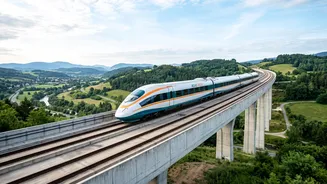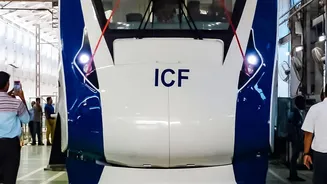







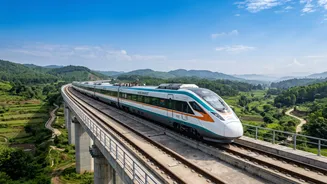

India's push for high-speed regional connectivity is gaining momentum, and the latest frontier is the bustling corridor north of Delhi. A plan to extend the Namo Bharat network to Karnal promises to transform travel for millions in Haryana.
A New Lifeline for Regional Mobility
The Delhi-Panipat-Karnal
corridor is a proposed addition to India's burgeoning Namo Bharat network, previously known as the Regional Rapid Transit System (RRTS). These semi-high-speed rail lines are designed to connect urban centres across the National Capital Region (NCR), offering a fast, reliable, and sustainable alternative to road travel. Following the successful launch of the Delhi-Ghaziabad-Meerut corridor, attention has turned to other critical routes. This northern corridor aims to link Delhi with the key Haryana cities of Sonipat, Panipat, and now, Karnal, integrating them more closely with the capital's economic engine. The project is managed by the National Capital Region Transport Corporation (NCRTC), the agency responsible for implementing this ambitious vision of a seamlessly connected NCR.
The Route: Connecting Key Hubs
The planned 136.3-kilometre line will originate from Sarai Kale Khan in Delhi, which is being developed as a massive multi-modal hub connecting multiple Namo Bharat lines, metro stations, and the Hazrat Nizamuddin railway station. From there, the route will primarily run parallel to National Highway 44. A total of 22 stations are proposed for the corridor. Key stops in Delhi will include Kashmere Gate, Burari Crossing, and Mukarba Chowk, providing interchange opportunities with the Delhi Metro. The line will then enter Haryana, serving major population and industrial centres like Kundli, Murthal, Gannaur, Samalkha, and several locations within Panipat before terminating in Karnal. Panipat is slated to have four stations, while Karnal will have five, including stops at Gharaunda and near the new bus stand.
Cutting Travel Time from Hours to Minutes
The most significant impact for daily commuters will be a drastic reduction in travel time. The Namo Bharat trains are designed to operate at speeds of up to 160 km/h. This means the journey from Delhi to Panipat, which currently takes over two hours by road, could be completed in about an hour. The trip to Karnal, often a nearly four-hour ordeal, is expected to be reduced to just 90 minutes. This speed and efficiency will not only ease the burden on daily commuters but also stimulate economic activity. Experts predict a surge in real estate development around the stations and increased investment in industrial and commercial projects in Sonipat, Panipat, and Karnal, which will become more attractive places to live and work.
Project Status and Approvals
The Delhi-Panipat-Karnal corridor has cleared several critical hurdles. The Haryana Cabinet formally approved the project in March 2026, committing to its share of the funding for the estimated ₹33,051 crore venture. More recently, in late 2026, the National Highways Authority of India (NHAI) granted crucial permissions for using land along NH-44 for construction. With approvals from the Haryana government and key central bodies in place, the project is now awaiting final sanction from the Union Cabinet. In anticipation, the NCRTC has already begun preliminary work, such as soil testing and utility shifting, on some stretches of the route, indicating that the project is advancing. The target for completion is currently set for 2030.
Beyond Just a Train Line
This corridor is more than just a transportation project; it's a tool for planned urban development. By providing reliable public transport, it aims to reduce congestion and pollution on one of India's busiest highways. Furthermore, the Haryana government is leveraging its Transit-Oriented Development (TOD) policy, which encourages higher-density, mixed-use construction around transit hubs. This will help concentrate growth in a planned manner, preventing urban sprawl and creating vibrant community centres around the new stations. The interoperability of the Namo Bharat network means that passengers will eventually be able to travel seamlessly from Karnal to Meerut or Alwar without changing trains at Sarai Kale Khan, truly integrating the entire NCR.