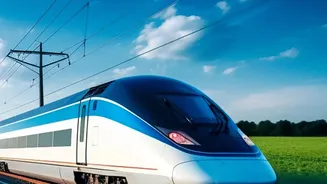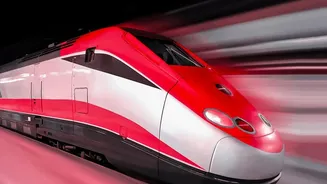





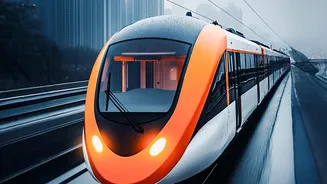
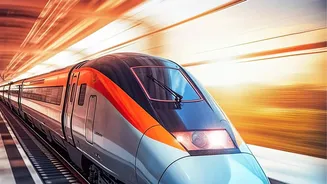
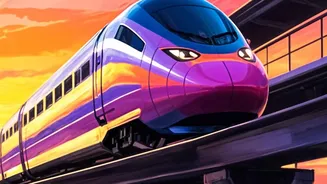
The Vision for a High-Speed North
The project, officially part of the larger Delhi-Varanasi High-Speed Rail Corridor, has received a significant push, with Prime Minister Narendra Modi approving the plan. Overseen by the National High Speed Rail Corporation Limited (NHSRCL), this corridor
is one of several high-priority routes identified to modernise India's passenger rail network. Recent updates confirm that the Detailed Project Report (DPR) for the Delhi-Varanasi section has been submitted to the Ministry of Railways, marking a critical step toward turning this vision into reality. The plan is to develop the network in phases, with the Delhi-Varanasi section being the first.
Connecting Key Economic and Cultural Hubs
The proposed route is designed to connect some of North India's most vital cities. Starting from Delhi, the line will pass through major Uttar Pradesh hubs including Agra, Kanpur, Lucknow, and Prayagraj, before terminating in Varanasi. The inclusion of industrial centres like Kanpur and the administrative capital of Lucknow is strategic, aiming to foster greater economic integration and provide a massive boost to commerce. Some proposals even suggest extending the corridor to Ayodhya and eventually all the way to Guwahati in the Northeast, creating a vast network spanning northern and eastern India.
Slashing Travel Times Dramatically
The most significant impact for passengers will be the staggering reduction in travel times. The journey from Delhi to Kanpur, which currently takes several hours by train, is expected to be completed in just 1 hour and 45 minutes. Similarly, the travel time between Delhi and Lucknow is projected to be a mere 2 hours and 12 minutes. The entire Delhi to Varanasi trip could take as little as 3 hours and 33 minutes. These indicative timings, shared by the Railway Minister, highlight the potential to make inter-city travel faster than some domestic flights when accounting for check-in and security procedures.
The Economic Ripple Effect
Beyond passenger convenience, the bullet train corridor is anticipated to be a powerful engine for economic growth. By connecting major industrial, commercial, and tourism circuits, the project is expected to stimulate trade, boost tourism, and attract new investments along the route. Enhanced connectivity could lead to real estate development around the new high-speed stations and create new business opportunities for local economies. Officials have emphasised that the project will benefit not just large businesses but also small-scale entrepreneurs and the MSME sector by improving access to markets.
Current Status and the Path Forward
With the DPR for the Delhi-Varanasi section now with the Ministry of Railways, the next step involves securing final approvals, including from the Union Cabinet. The NHSRCL has already invited bids for designing key civil structures, indicating that preliminary work is moving forward. While a definitive timeline for completion is yet to be announced, officials have stressed the importance of timely progress. The project is also being positioned as a flagship 'Make in India' initiative, with a focus on using domestically manufactured components and expertise.