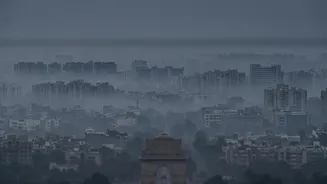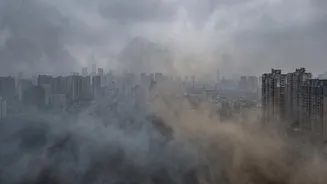








What Exactly Is In Delhi's Smog?
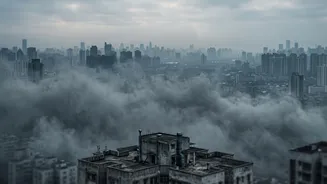
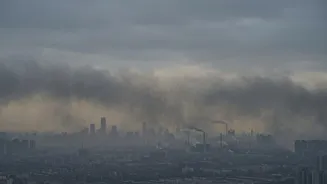
Delhi's smog is a toxic cocktail of pollutants. The most dangerous among them are fine particulate matter known as PM2.5. These particles, 30 times smaller than a human hair, come from vehicle exhaust, industrial emissions, construction dust, and the open
burning of waste and crop residue. This mixture also contains other carcinogenic substances like benzene, toluene, nitrogen oxides, and heavy metals. During winter, cold, stagnant air traps these pollutants close to the ground, creating the dense, hazardous smog that blankets the city for weeks.
From Breathing to Cellular Damage
The danger of PM2.5 lies in its microscopic size. Unlike larger particles that get trapped in the nose and throat, PM2.5 can bypass the body's natural defences and travel deep into the lungs, lodging in the sensitive alveolar regions. From there, they can even enter the bloodstream, circulating throughout the body. This invasion triggers a constant state of inflammation and oxidative stress, where the body's ability to detoxify and repair itself is overwhelmed. Over time, this chronic inflammation damages lung tissue and can cause lasting harm to the respiratory and cardiovascular systems.
The Scientific Link to Lung Cancer
The connection between air pollution and cancer is no longer a theory; it is a medical fact. The International Agency for Research on Cancer (IARC), a part of the World Health Organization, classifies outdoor air pollution and PM2.5 specifically as a 'Group 1 carcinogen'. This places polluted air in the same high-risk category as asbestos and tobacco smoke. Research shows that chronic exposure to PM2.5 can cause DNA damage and induce genetic mutations in lung cells. Recent studies have uncovered a specific mechanism: these pollutant particles can promote the growth of pre-existing, otherwise dormant, mutated cells (like those with an EGFR mutation), pushing them to become cancerous.
The New Face of Lung Cancer: Non-Smokers at Risk
Perhaps the most alarming trend in Delhi is the dramatic rise in lung cancer cases among non-smokers. Studies from leading Delhi hospitals reveal a seismic shift in patient profiles. In the late 1990s, around 90% of lung cancer patients were smokers. By 2018, that figure had dropped to 50%, meaning half of all patients were non-smokers. This trend is even more stark in younger patients; one study found that 70% of lung cancer patients under 50 were non-smokers. Doctors are increasingly seeing a specific type of cancer called adenocarcinoma, which is more commonly associated with non-smokers and has been linked to pollution. This data strongly suggests that for many in Delhi, the risk from breathing the air now rivals the risk from smoking.
How Can Residents Reduce Their Risk?
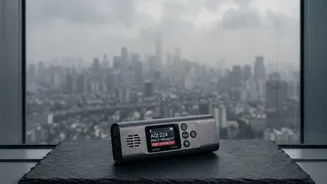
While solving Delhi's air pollution crisis requires large-scale policy changes, individuals can take steps to mitigate their personal exposure. Monitoring the Air Quality Index (AQI) daily is crucial to know when to avoid outdoor activities. Using high-quality N95 or N99 masks when outdoors on high-pollution days can filter a significant percentage of harmful PM2.5 particles. At home, using air purifiers with HEPA filters, especially in bedrooms, can create a 'clean air sanctuary'. It's also advised to keep windows closed during peak pollution hours and to avoid strenuous exercise outdoors when the AQI is in the 'poor' or 'severe' categories.