

What is Tempering?
Known as tadka, phodni, or chaunk across India, tempering is the art of blooming whole or ground spices in hot oil or ghee. This technique doesn't just cook the spices; it unlocks their essential oils and infuses the fat with their deepest aromas and flavours.
This fragrant oil then becomes the foundation of the dish. A few seconds in hot oil can transform mustard seeds from bitter specks into nutty pops, and lentils from hard grains to crunchy morsels. This process is the flavour engine of upma, defining its character before the semolina even enters the pan.
Tamil Nadu's Classic Tiffin
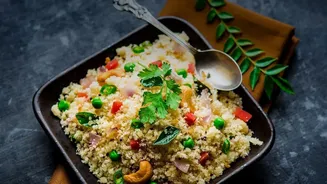
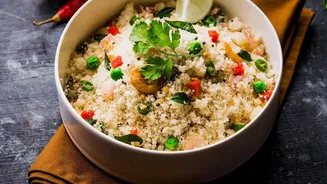
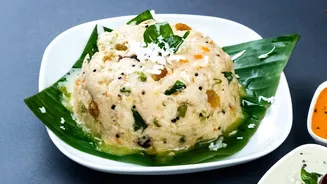
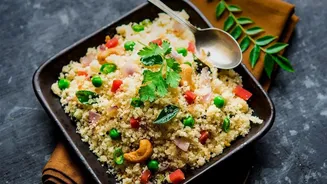
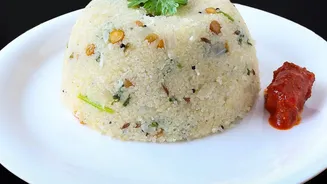
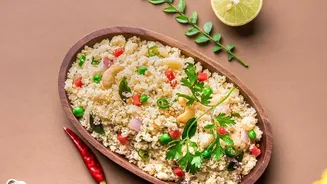
The quintessential Tamil Nadu-style upma is a masterclass in texture and subtle flavour. Its tempering is defined by the generous use of lentils. In hot oil, mustard seeds are first allowed to splutter, followed by urad dal (split black gram) and chana dal (split chickpeas). These are fried until golden brown, providing a delightful crunch that contrasts with the soft semolina. Curry leaves, green chillies, and ginger are added for aroma and a gentle heat. This tempering focuses on creating a savoury, nutty base with pops of crunch in every bite, making it a beloved tiffin staple.
Karnataka's Spicy Khara Bath
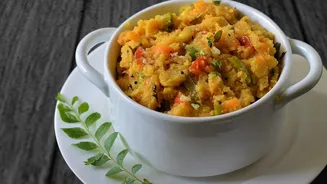
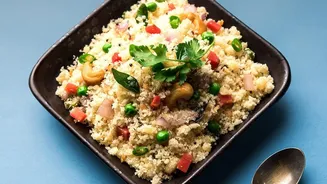
Travel to Karnataka, and upma transforms into the vibrant and spicy Khara Bath. Here, the tempering is more complex and foundational to its unique taste. It often starts similarly, with mustard seeds and lentils, but is quickly enriched with finely chopped onions, tomatoes, and a mix of vegetables like carrots and capsicum. The game-changer is the addition of a special spice blend, often a version of Vangi Bath powder or a similar masala, which introduces notes of coriander, cinnamon, and cloves. This turns the upma from a simple savoury dish into a full-bodied, spicy, and tangy meal, often served alongside its sweet counterpart, Kesari Bath.
Maharashtra's Savoury-Sweet Upit
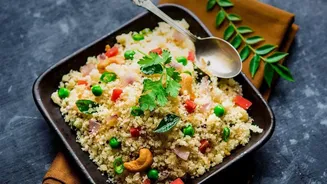
In Maharashtra, the dish is known as 'Upit' or, more descriptively, 'phodnicha upma' (tempered upma). The Maharashtrian 'phodni' often prioritises onions, which are sautéed until soft and translucent, creating a sweet foundation. Mustard seeds, cumin, green chillies, and sometimes peanuts for crunch are common. A key differentiator is the subtle addition of a pinch of sugar, which balances the savouriness of the salt and the heat of the chillies. This creates a distinct sweet-and-savoury profile that is characteristic of the region's cuisine, proving how a small tweak in the tempering can create a whole new experience.
Andhra's Pesarattu-Upma Combination
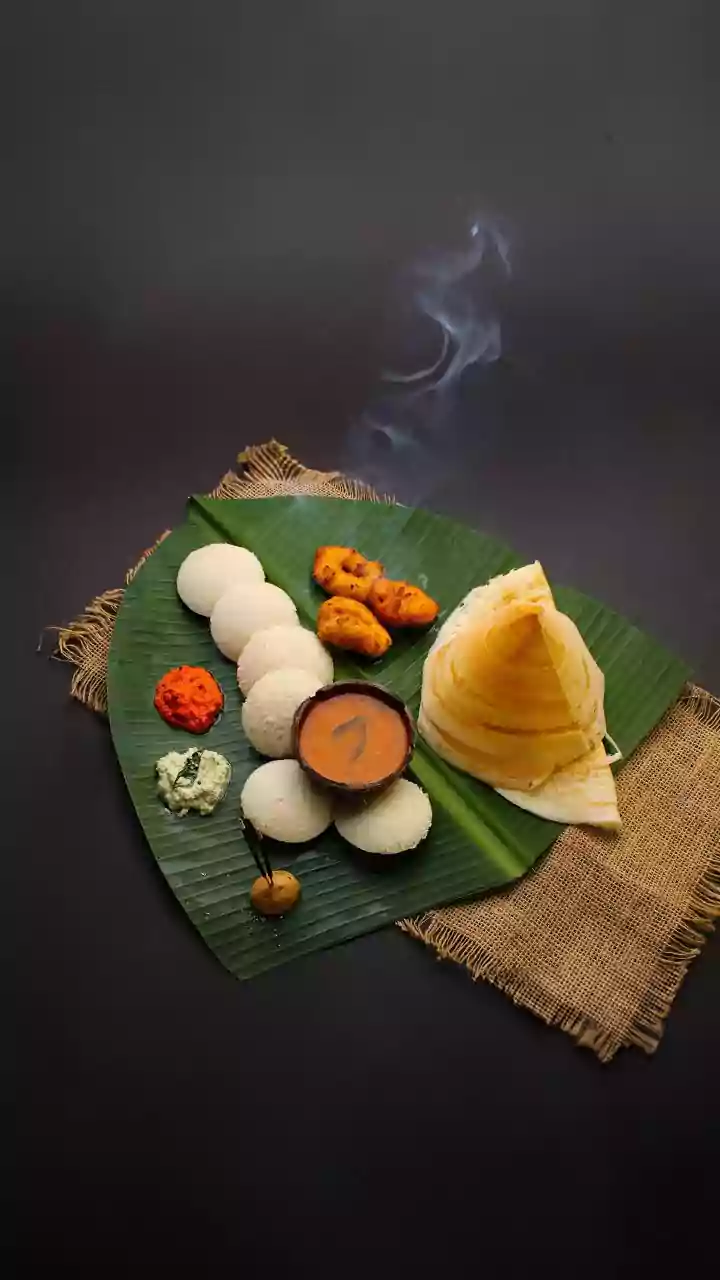
Andhra Pradesh offers a truly unique way to enjoy upma: stuffed inside a dosa. But not just any dosa—a Pesarattu, made from green moong dal. The upma prepared for this is typically simpler, with a basic tempering of mustard seeds, lentils, curry leaves, and chillies, so as not to overpower the earthy flavour of the dosa. The magic here is not just in the tempering of the upma itself, but in the combination. The soft, savoury upma provides a wonderful textural contrast to the slightly crisp Pesarattu, creating a wholesome and protein-packed breakfast that is a celebrated dish across the state.
The Chettinad Special: Arisi Upma
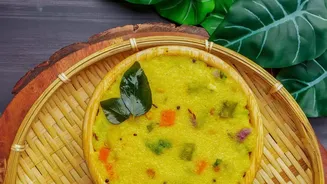
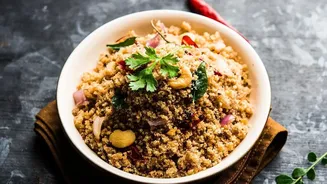
Moving away from semolina, Arisi Upma is a traditional Tamil delicacy, particularly from the Chettinad region, made with coarse rice rava. Its flavour profile is distinct, thanks to both the grain and its specific tempering. Coconut oil is the preferred fat, lending a rich aroma. The tempering includes mustard seeds, lentils, and dried red chillies, but the defining spices are black peppercorns and cumin seeds, which are sometimes ground along with the rice and toor dal. Grated coconut is often added towards the end, resulting in a hearty, fluffy texture and a rustic flavour that is deeply aromatic and peppery.