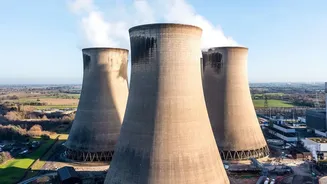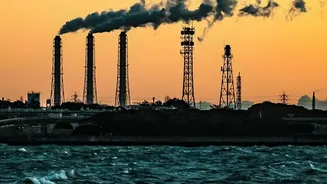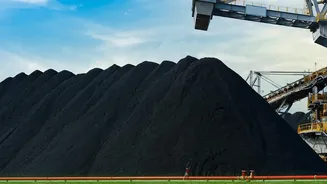







The Scale of the Coal Expansion
Recent data reveals a dramatic surge in India's plans for new coal mines. In just one year, the proposed new mining capacity has nearly doubled, rising to 638 million tonnes per annum (Mtpa). This expansion is so significant that it accounts for almost
the entire recent increase in the global pipeline for new coal projects. The push is concentrated largely in the eastern states of Jharkhand and Odisha. This is not just a theoretical plan; the government aims to produce around 1.15 billion tonnes of coal in the 2025-26 fiscal year and has plans to operationalize over 20 new mines to meet its targets. This commitment to coal comes at a time when many other nations are moving away from the fossil fuel, making India a key driver of the world's future coal production.
The Unyielding Demand for Energy
The primary driver behind this coal push is India's immense and growing appetite for energy. As the world's fastest-growing major economy, the country's electricity demand is surging, driven by industrial activity, rising household consumption, and increasingly severe heatwaves that necessitate more cooling. In 2026, electricity demand is forecast to rebound by 7%, and peak demand has already hit record highs, straining the grid. For policymakers, coal represents a domestically available and seemingly reliable source of baseload power to ensure energy security and support economic growth. The government views robust coal production as essential for self-sufficiency, aiming to reduce reliance on expensive imported fuels like oil and natural gas, which are subject to volatile global markets. Coal currently fuels over 70% of India's electricity generation, and from this perspective, expanding domestic production is a pragmatic choice to power the nation's development.
A Collision Course with Climate Goals
This expansion, however, puts India in a difficult position regarding its climate commitments. The country has pledged to achieve net-zero emissions by 2070 and has set ambitious near-term targets to boost non-fossil fuel capacity by 2030. Approving a vast new network of coal mines, which have operational lifespans of many decades, threatens to lock in high levels of carbon emissions, making the 2070 goal significantly harder and more costly to reach. Beyond carbon emissions, the new mines carry severe environmental and social costs. Coal mining is linked to deforestation, the degradation of soil and water resources, and air pollution that poses serious health risks to nearby communities. The expansion also risks a massive increase in methane emissions, a potent greenhouse gas, which could more than double by 2030 without intervention.
The Renewable Energy Dilemma
While doubling down on coal, India is also making huge strides in renewable energy. The country is a global leader in the expansion of solar power, with renewable sources like solar and wind growing rapidly. In 2025, for the first time, all of India's incremental electricity demand was met by clean sources. However, renewables currently face challenges with intermittency—solar and wind don't generate power 24/7—and the need for massive investments in grid modernization and energy storage solutions like batteries. While the cost of solar power has fallen, making it highly competitive, ensuring a stable grid that can handle fluctuating renewable inputs while meeting skyrocketing peak demand remains a major technical and financial hurdle. The government's strategy appears to be a dual-track approach: use coal to guarantee energy security now, while simultaneously building out the renewable infrastructure that will hopefully dominate in the future.