



The Fiery Birth of New Land
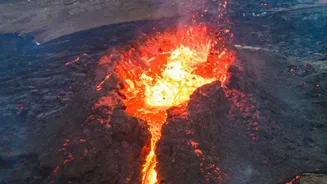
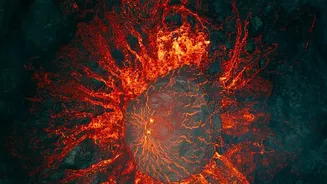
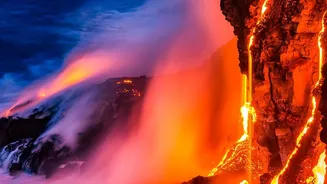
The process begins when lava, often from a coastal volcano like Kīlauea in Hawaii, reaches the ocean. The immense temperature difference between the molten rock and the cool seawater triggers a violent reaction. Water flashes into steam, creating billowing,
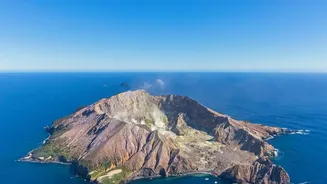
acidic clouds known as 'laze' or lava haze. The lava itself cools rapidly, shattering and fragmenting into everything from large blocks to tiny glass-like shards. These fragments accumulate on the seabed, building up a steep, unstable underwater slope called a lava delta. With continued lava flow, this delta can eventually break the ocean surface, creating a 'lava bench' or extension of the coastline. This is how volcanic islands like the Hawaiian archipelago have grown over millions ofyears.
A Legal No-Man's Land?
Imagine your beachfront property suddenly has a few extra acres of fresh, black rock extending into the sea. Is it yours? The answer is almost universally 'no'. In most legal systems, new land created by volcanic action is not a private windfall. In the United States, specifically Hawaii, a series of court cases have established that these 'lava extensions' belong to the state, held in public trust for all its people. A landmark 1977 case involved a couple who assumed ownership of 7.9 acres of new land that formed adjacent to their property, even paying taxes on it before the state ultimately asserted its ownership. Similarly, after the 2021 eruption in La Palma in the Canary Islands, the Spanish government officially registered the newly formed coastal land as state property. While the original private land buried under the lava still technically belongs to the owner, its value plummets, and any new land created past the original coastline becomes public domain.
From Barren Rock to Life
A fresh lava flow is a sterile, barren environment, but it doesn't stay that way for long. The process of life returning is called primary succession. It begins with the hardiest of 'pioneer species'. Wind and birds bring the first seeds and spores. Lichens and mosses, which can grow on bare rock, are often the first to colonize, beginning the crucial process of breaking down the rock and creating the first pockets of soil. As these pioneers die and decompose, they add organic matter to the accumulating volcanic fragments, enriching the infant soil. This allows ferns and other hardy plants to take root. Over many decades, and in wetter climates sometimes within 150 years, this process can lead to the development of a lush forest, transforming the black rock into a vibrant ecosystem.
Built to Last? The Unstable Foundation
While the creation of new land feels permanent, it is often incredibly fragile in its early stages. The lava deltas are built on loose piles of fragmented rock and sand on a steep underwater slope. These structures are notoriously unstable and can collapse without warning, sliding into the sea and disappearing as quickly as they were formed. This process is a natural part of coastal transformation. A recent example of this constant change occurred in late September 2026, when the 550-year-old Hōlei Sea Arch in Hawaii Volcanoes National Park collapsed into the Pacific Ocean, a change attributed to long-term erosion and instability from past earthquakes. This demonstrates that the same forces that create new landforms are also constantly working to reshape or reclaim them. The coastline is never static; it is a dynamic battleground between creation and erosion.