





A Collision of Four Tectonic Plates
The primary reason for Japan's intense seismic activity is its location at a complex junction of four major tectonic plates. The Earth's crust is not one solid piece, but a jigsaw puzzle of massive slabs that are always in motion. Japan is situated where
the huge Pacific and Philippine Sea plates push under the continental Eurasian and North American plates. This process, known as subduction, is far from smooth. As the denser oceanic plates dive beneath the continental plates, immense stress and pressure build up over years. When this stored energy is suddenly released, the ground shakes violently, resulting in an earthquake. This constant, powerful geological process is the fundamental source of the country's tremors.
Life on the 'Ring of Fire'
Japan's volatile position is part of a much larger system: the Pacific Ring of Fire. This enormous, horseshoe-shaped belt stretches for about 40,000 kilometres around the Pacific Ocean and is home to roughly 90% of the world's earthquakes and over 75% of its active volcanoes. This 'ring' isn't a physical object, but rather the boundary where the massive Pacific Plate interacts with numerous other smaller plates. The constant grinding and subduction along these boundaries make the entire region incredibly active. For Japan, being a prominent nation within the Ring of Fire means that seismic and volcanic events are not just a risk, but a core part of its natural environment.
From Tremors to Tsunamis and Volcanoes
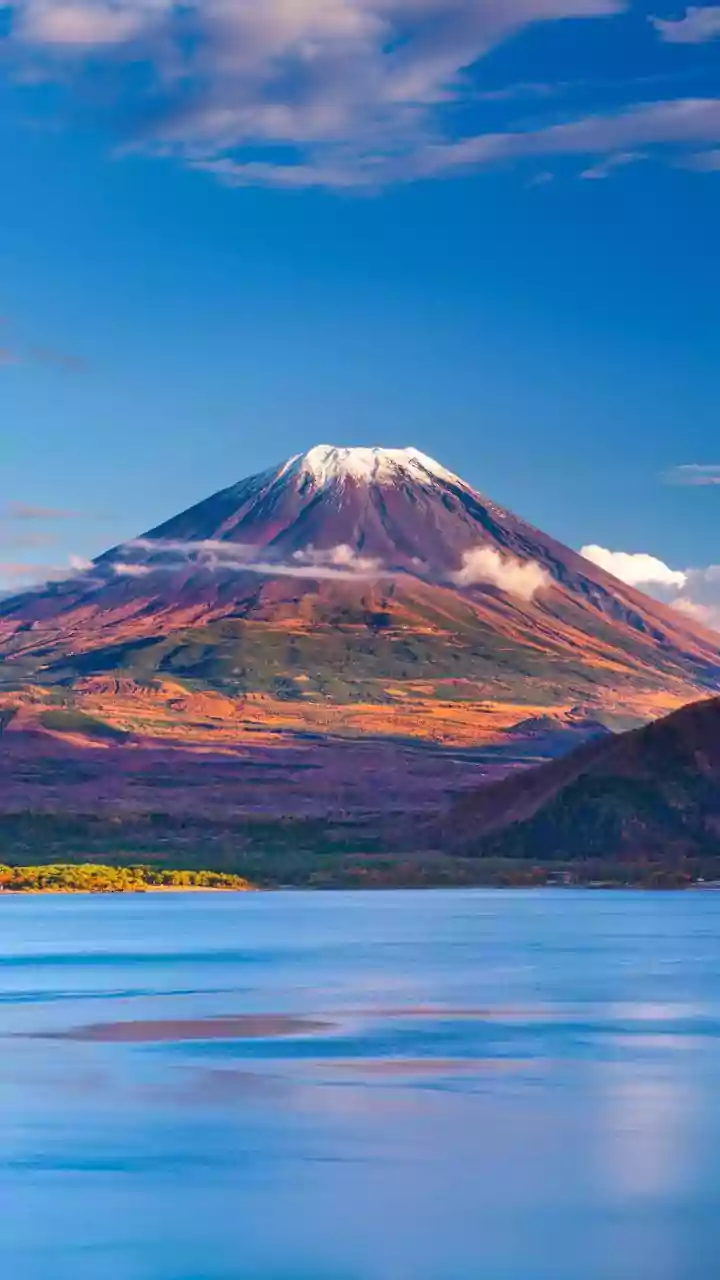
The consequences of Japan's geography extend beyond the shaking ground. The same tectonic forces are responsible for two other major natural phenomena associated with the country: tsunamis and volcanoes. Many of Japan's most powerful earthquakes occur offshore, where one plate subducts beneath another. This sudden movement can displace a massive volume of water, creating powerful waves that travel across the ocean and can devastate coastal areas, as seen in the 2011 Tōhoku earthquake. Furthermore, as the oceanic plate descends, it melts, creating magma that rises to the surface. This process has blessed Japan with over 100 active volcanoes, which have shaped its mountainous landscape but also pose an ever-present eruptive threat.
Adapting to an Unshakeable Reality
Since eliminating earthquakes is geographically impossible, Japan has become the world's leader in resilience and adaptation. The nation has turned the constant threat into a driver of innovation. Strict building codes, first introduced over a century ago, are continually updated to ensure that modern structures can withstand powerful shaking. Many buildings are designed to sway, while others are built on massive rubber pads or shock absorbers—a technique called base isolation—that separate the structure from the moving ground. Complementing this engineering is a deeply ingrained culture of preparedness. A sophisticated early-warning system sends alerts to phones seconds before a major quake hits, and regular drills are conducted in schools and offices nationwide, ensuring the population is always ready.