
A Tale of Two Textures
At first glance, jalebi and fafda could not be more different. Fafda is a crunchy, salty snack made from gram flour (besan), seasoned with turmeric and carom seeds, and then deep-fried into long, crisp strips. It’s quintessentially savoury. Its partner,
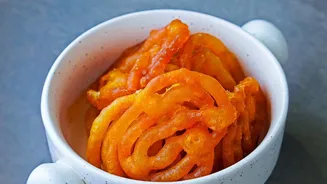
jalebi, is a celebrated sweet. A fermented batter is piped in concentric circles into hot oil and fried until crisp, then immediately plunged into a thick, sugar syrup. The result is a treat that is simultaneously crunchy, chewy, and saturated with sweetness. Eaten together, the salty, earthy crunch of the fafda provides the perfect counterpoint to the sweet, syrupy jalebi, creating a breakfast experience that engages the entire palate.
A Beloved Gujarati Tradition
While enjoyed in many parts of India, the pairing of Jalebi-Fafda is deeply rooted in Gujarat. It is more than just a popular breakfast; it is a cultural ritual, especially during the festival of Dussehra (also known as Vijayadashmi). On this morning, it is a common sight to see long queues outside ‘farsan’ (snack) shops from as early as 4 am. The tradition is tied to the end of the nine-day Navratri festival, which often involves a period of fasting. Breaking the fast with gram flour-based foods is customary, making fafda an ideal choice. The jalebi represents the sweetness of celebration and victory. Mythological lore even connects the dish to Lord Rama, who is said to have enjoyed jalebi (then called 'Shashkuli') to celebrate his victory over Ravana, and his devotee Hanuman, who favoured gram-flour snacks.
The Science of a Perfect Pairing
Our love for combining sweet and salty flavours isn't just cultural; it's biological. Sweetness signals energy-rich carbohydrates, triggering a pleasure response in our brains. Saltiness, on the other hand, points to essential minerals our bodies need to function. When consumed together, they create a phenomenon chefs call 'flavour layering'. The salt works to enhance the sweetness while also suppressing any bitterness, creating a more intense and satisfying taste experience. This dynamic keeps our taste buds engaged and prevents 'sensory-specific satiety'—the feeling of getting tired of one flavour. This is why combinations like salted caramel, or in this case, Jalebi-Fafda, feel so irresistibly complete.
A Pattern Across India
The principle of balancing sweet, sour, salty, and spicy is a cornerstone of Indian cuisine, reflecting an ancient Ayurvedic philosophy of incorporating six essential tastes (rasas) for a balanced meal. Jalebi-Fafda is just one famous example. In Maharashtra, the savoury flattened-rice dish Poha is often served with a sprinkle of sugar and a squeeze of lemon, hitting sweet, salty, and sour notes at once. Many North Indian homes serve savoury parathas with a side of sweet mango pickle or a sweet lassi. In the South, a complex sambar can have notes of tangy tamarind and a hint of sweetness from jaggery to balance the spice. This intentional contrast is a defining characteristic that makes the cuisine so dynamic. In fact, one study found that unlike Western cuisines that often pair ingredients with similar flavour compounds, Indian food excels at combining ingredients that have no flavour overlap, creating a uniquely complex profile.