







Why 'Rebound' Can Be Misleading
On the surface, any growth is positive. However, context is crucial. Before the pandemic, the world economy's average growth rate was typically above 3.5%. A projection of 2.5% to 2.8% for 2026-2027, as forecast by institutions like Moody's Analytics,
is therefore not a return to normalcy but an arrival at a new, slower pace. The International Monetary Fund (IMF) and World Bank also point to a period of subdued growth. The long-term average from 1961 to 2025 was around 3.45%, making a sub-3% environment a significant downshift for the global economic engine. This sluggishness isn't a temporary blip but reflects deeper, more persistent challenges that are reshaping global prospects.
Headwinds Holding Back Growth
Several powerful forces are combining to act as a brake on the global economy. Geopolitical conflicts, particularly the war in the Middle East, have driven up energy prices and disrupted vital shipping routes, increasing business costs worldwide. This has contributed to persistent inflation, forcing central banks in many countries to keep interest rates higher for longer, which in turn dampens investment and consumer spending. Adding to this is growing trade fragmentation and policy uncertainty, as friction between major trading partners creates a more unpredictable environment for international commerce. These factors create a difficult balancing act for policymakers, who must navigate supporting growth without reigniting inflation.
A 'K-Shaped' World Economy
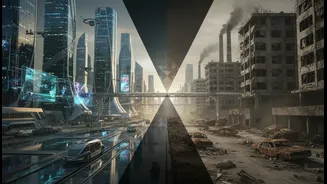
This slow-growth environment is not affecting all countries equally. Analysts at Moody's describe the current situation as a "K-shaped" world economy, where some sectors and nations race ahead while others fall behind. The primary driver of the upward-pointing arm of the 'K' is the boom in Artificial Intelligence. Countries and companies deeply integrated into the AI technology value chain—from semiconductor manufacturing to data centre investment—are seeing a surge in activity. This tech-led momentum is helping to offset some of the broader economic weakness. In contrast, economies heavily reliant on imported energy and with limited participation in the tech boom are experiencing a significant slowdown, a group that includes many vulnerable, low-income nations.
What It Means for India
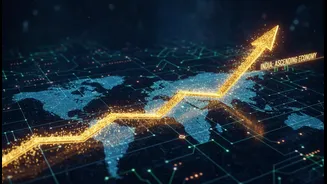
India is forecast to remain a standout, continuing as one of the world's fastest-growing major economies. However, it is not entirely immune to global currents. A slower world economy means weaker external demand, which can impact India's crucial export sectors, including IT services and manufactured goods. Moody's Analytics notes that even as it outperforms others, India "will lose a step, too" in a global slowdown. The IMF's projections for 2027 show India's growth at a robust 6.7%, but the country's ambition to become a high-income economy by 2047 depends on sustained high growth and increasing its share of global trade. Therefore, while domestic demand provides a strong cushion, global headwinds present a significant challenge that requires careful policy management.
The Human Cost of Slow Growth
Beyond the macroeconomic numbers, a prolonged period of sluggish global growth has real-world consequences. It makes the fight against poverty more difficult, especially in developing economies where per capita income gains are already uneven and insufficient. Slower growth can translate into fewer job opportunities, stagnant wages, and continued pressure on the cost of living for households around the world. For more than a quarter of emerging market and developing economies, per capita incomes still remain below their 2019 levels, highlighting the lasting scars of recent shocks and the challenge of catching up in a less forgiving global environment.