


More Than Just Light
When you think of a high-performance car, your mind likely goes to engine roars, sleek aerodynamics, and eye-watering acceleration. But manufacturers are now investing heavily in an element that appeals more to emotion than motion: ambient interior lighting.
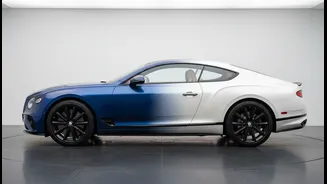
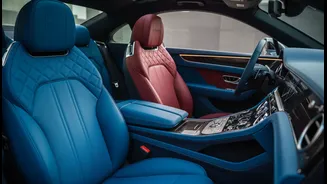
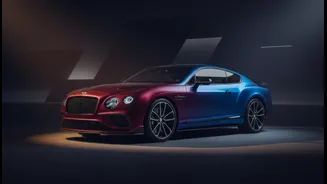
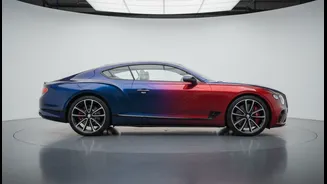
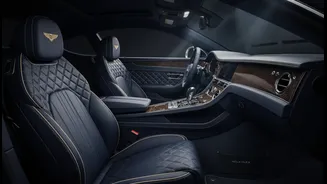
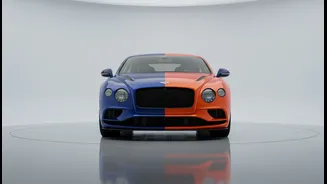
This isn't just about a few dim LEDs in the footwells. We're talking about sophisticated, multi-zone systems offering millions of colours, often curated into preset 'moods'. Bentley's Mulliner division, for instance, recently announced exclusive design themes for its Supersports models that include distinctive interior colour schemes like 'Dragon', 'Electric', and 'Brodgar' to match the car's exterior. This isn't an isolated gimmick. The market for automotive interior ambient lighting is projected to grow into a multi-billion dollar industry, with an expected compound annual growth rate of over 13% through 2034. This technology has moved from a novelty to a key feature in differentiating premium vehicles.
The Psychology of Colour
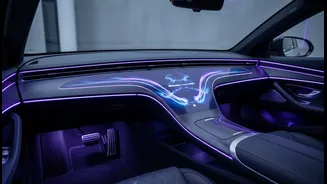
So, why the sudden focus on painting the cabin with light? It comes down to psychology. Carmakers understand that driving is an emotional experience. The colour of the light inside a car can genuinely affect the driver's mood and perception. A cool blue or green can have a calming effect, potentially reducing stress in heavy traffic. In contrast, a vibrant red or orange can increase alertness, which might be desirable for a spirited night drive. Luxury brands are leveraging this science to deepen the connection between driver and car. These lighting systems are often integrated with the vehicle's drive modes. Select 'Sport' or 'Track' mode, and the cabin might glow an aggressive red. Switch to 'Comfort' or 'Efficiency', and it might shift to a tranquil blue. It’s a subtle but powerful way to reinforce the car's current character and enhance the overall driving experience.
From Buttons to Experiences
This trend is part of a larger shift in automotive interior design. As physical buttons and knobs are replaced by large touchscreens and 'smart surfaces', the cabin is becoming a clean, minimalist space. Ambient lighting helps to add personality and warmth back into these modern interiors. It can highlight design lines, create an illusion of spaciousness, and provide visual feedback. Some systems can even pulse to the beat of your music or provide safety alerts, such as flashing red on a specific door panel if a cyclist is approaching. This transforms lighting from a passive decorative element into an active, functional part of the car's user interface. Brands like Mercedes-Benz now offer up to 64 selectable colours, while others, like Genesis, have a 'Mood Curator' that combines lighting, fragrance, and even massage settings to create a holistic sensory experience.
The Future is Personal
As technology advances, expect this trend to become even more sophisticated. We are moving towards fully interactive and responsive interiors. Future systems might use interior cameras to detect a driver's mood and adjust the lighting proactively. Voice commands could allow for on-the-fly customization, letting you dial in the exact colour and intensity you desire. The integration with other vehicle systems will also deepen, with lighting potentially working in concert with navigation to provide upcoming turn signals or with driver assistance systems to highlight potential hazards. What started as a premium feature in the highest echelons of the market, like with Porsche and McLaren, is now trickling down into mid-range vehicles, signalling that a customizable, experience-focused cabin is becoming a standard consumer expectation. The message from the industry is clear: the personality of a car is no longer defined solely by its performance metrics, but by its ability to connect with the driver on a personal, emotional level.