






The Ground Beneath Your Feet
The most immediate difference when practicing Tai Chi outdoors is the ground itself. A flat, polished studio floor is predictable. Grass, soil, or sand is not. This unevenness is not a drawback; it’s a powerful teacher. Your body must make constant, tiny
adjustments to maintain balance, which significantly strengthens the stabilizing muscles in your ankles, legs, and core. This process enhances proprioception—your body's innate awareness of its position in space. Improved proprioception is crucial for preventing falls, a benefit that becomes increasingly valuable as we age. Each step on natural terrain forces you to be more mindful and rooted, deepening the connection between your mind and body in a way a smooth floor cannot replicate. The very act of adapting to the earth’s subtle contours builds a more resilient and intuitive sense of balance.
An Immersion of the Senses
An Immersion of the Senses Indoor practice encourages focus by limiting distractions. Outdoor practice, however, transforms those 'distractions' into a multi-sensory experience that enhances mindfulness. Instead of a silent room, you have the rustle of leaves, the sound of birdsong, and the feeling of a gentle breeze. These natural sounds are inherently restorative and can help calm the nervous system, lowering stress hormones like cortisol. Breathing fresh air allows for deeper, more expansive breaths, improving oxygen circulation. The warmth of the sun on your skin not only feels pleasant but also provides a natural dose of Vitamin D, essential for bone and muscle health. This constant sensory conversation with the environment doesn't pull your focus away from the form; it pulls you deeper into the present moment, turning your practice into a form of active meditation where you are in harmony with the world around you.
A Fundamental Shift in Mindset
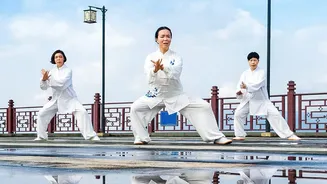
The philosophy of Tai Chi is rooted in Taoism, which emphasizes harmony with the patterns of nature. Practicing outdoors is a direct expression of this principle. It fosters a mindset of adaptability and acceptance. Indoors, the environment is controlled. Outdoors, you might have to adjust your stance for a stray root, hold your balance against a sudden gust of wind, or find focus amidst the sounds of a nearby park. This unpredictability trains mental flexibility. You learn to move with the elements rather than resisting them, which is a core tenet of Tai Chi. This experience of connecting with the 'ambient chi' or universal energy of your environment is something practitioners feel is much stronger outdoors. It's a shift from performing a sequence in a vacuum to having a living, breathing partner in your practice: nature itself.
When Indoors Still Makes Sense
Despite the profound benefits of outdoor practice, the studio or your living room still holds immense value. For beginners, an indoor space provides a controlled environment to learn the fundamentals of form and posture without the added challenge of uneven ground or weather. It offers consistency; you can practice anytime, regardless of rain, extreme heat, or cold. This reliability is key to building a regular habit. An indoor setting can also be preferable for those with severe balance issues or injuries, allowing them to focus on movement safely. Ultimately, the two are not mutually exclusive. Many find that practicing indoors helps refine their technique, while practicing outdoors deepens their experience and connection to the art.