



The 30-Gram Illusion
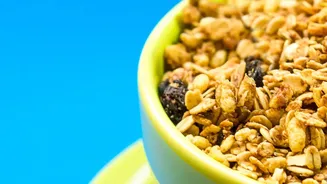
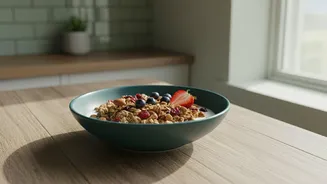
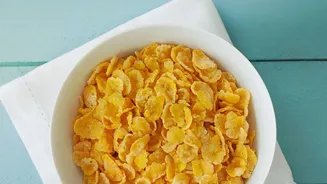
Pick up almost any box of breakfast cereal in India, and you will find the nutritional information is based on a serving size of around 30 grams. But what does 30 grams of flakes or muesli actually look like? For most people, it is a surprisingly small
amount, barely covering the bottom of a standard bowl. Studies have shown that most adults pour themselves portions that are significantly larger, sometimes double or even triple the recommended serving size, without even realising it. This discrepancy isn't just a minor detail; it is the foundation of a widespread nutritional misunderstanding. The portion you see pictured in the vibrant image on the front of the box is often far more generous than the 30-gram serving the nutrition facts are based on, creating a disconnect between what we see and what the numbers say.
When the Numbers Don't Add Up
This serving size gap has a massive impact on the calories, sugar, and sodium you consume. A label might proudly state a serving contains only 8 grams of sugar, which might seem reasonable. However, if your real-world portion is closer to 90 grams, you have just consumed 24 grams of sugar—nearly the entire recommended daily limit for an adult woman, all before your day has truly begun. This is what experts call the serving size trap. Food companies use these unrealistically small portions to make the calorie and sugar counts appear more appealing to health-conscious shoppers. It’s a marketing strategy that relies on the fact that few of us will pause our morning routine to do the multiplication required to figure out the true nutritional cost of our breakfast bowl.
The 'Health Halo' Distraction
Cereal boxes are masters of persuasion, using inviting terms like “Made with Whole Grains,” “Source of Fibre,” or “Fortified with Vitamins.” These phrases create a “health halo” around the product, making us feel good about our choice. We assume that a cereal with such claims must be a healthy option. However, these positive attributes can distract from less desirable facts. Often, sugar is one of the first few ingredients listed on the back, meaning it is a primary component by weight. In India, the Food Safety and Standards Authority of India (FSSAI) has rules about labelling, but it is still up to the consumer to look past the attractive claims on the front and examine the full ingredient list and nutrition table on the back.
How to Be a Smarter Cereal Shopper
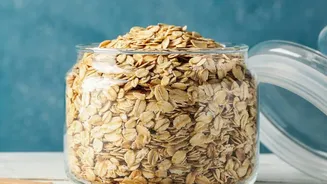
Navigating the cereal aisle doesn't have to be a losing game. The key is to become a label-reading expert. First, ignore the 'per serving' column and look directly at the 'per 100g' information. This allows you to compare different cereals on a level playing field, regardless of their manipulated serving sizes. A good rule of thumb is to be wary of any product with more than 15 grams of sugar per 100 grams. Second, read the ingredients list. Ingredients are listed in descending order by weight, so if sugar or one of its many aliases (like corn syrup, malt, or sucrose) is near the top, it's a high-sugar product. Finally, try this simple experiment at home: use a kitchen scale to measure out 30 grams of your favourite cereal. Seeing how small the portion is can be a powerful reality check and help you adjust your perception of a 'normal' serving.