






A Shift in Strategy: Test Near, Land Far
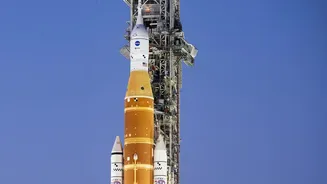
For years, the plan was for the mission known as Artemis III to mark humanity's return to the lunar surface. However, in a strategic pivot to reduce risk, NASA has repurposed this crucial flight. Now slated for 2027, Artemis III will be an ambitious 14-day
dress rehearsal in low-Earth orbit. Instead of heading to the Moon, a crew of four astronauts will test the critical hardware and procedures needed for a future landing. This 'practice run' is designed to validate the complex systems and maneuvers—especially rendezvous and docking—in a safer environment before attempting them hundreds of thousands of miles from home. NASA officials have called it one of the most complicated launch campaigns ever attempted, involving three different heavy-lift rockets. The actual lunar landing is now targeted for the Artemis IV mission in 2028.
The Lander Auditions: Blue Origin and SpaceX
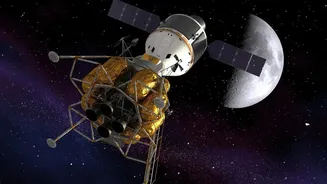
The centerpiece of the Artemis III mission is the in-space testing of two different lunar lander designs from commercial partners Blue Origin and SpaceX. First, a test version of Blue Origin's 'Blue Moon' lander will launch on its New Glenn rocket. The Artemis III crew, flying in NASA's Orion capsule, will then launch and perform a rendezvous and docking with it. The crew will enter the Blue Moon lander to test its life support, environmental controls, and other subsystems over two days. After undocking, the next phase begins. SpaceX will launch a test version of its Starship, which will also meet and dock with the Orion capsule. This second test will be shorter, around two hours, and astronauts will not enter the Starship. Instead, the focus will be on validating the docking mechanics and understanding how the two massive spacecraft operate when connected.
Why Two Landers?
NASA's decision to move forward with two commercial partners for the Human Landing System (HLS) is a strategic hedge. By fostering competition and having dissimilar redundancy, the agency increases the likelihood that at least one system will be ready and reliable for the 2028 landing timeline. Both Blue Origin's Blue Moon and SpaceX's Starship are undergoing intense development, and Artemis III will provide invaluable real-world data on their performance. The results of these orbital tests will directly inform NASA's decision on which lander will get the honor of carrying astronauts to the lunar surface on Artemis IV. However, the agency has maintained that it expects both providers to be making landing missions by the end of 2028, suggesting a long-term strategy involving multiple commercial services.
More Than Just Landers: Suits and Systems
A successful lunar mission requires more than just a ride there. Artemis III will also be a critical proving ground for other essential equipment. The crew will conduct evaluations of their new Orion Crew Survival System suits. These are the lightweight pressure suits worn inside the capsule during critical mission phases. Furthermore, development continues on the new generation of spacesuits for moonwalking, known as the AxEMU (Axiom Extravehicular Mobility Unit), being developed by Axiom Space. These suits are designed for far greater mobility and flexibility than their Apollo-era predecessors, allowing astronauts to bend, kneel, and handle tools more effectively. These new suits have undergone extensive testing in underwater environments that simulate lunar gravity, preparing them for the harsh realities of the Moon's south pole.