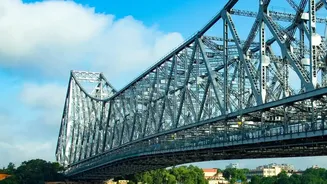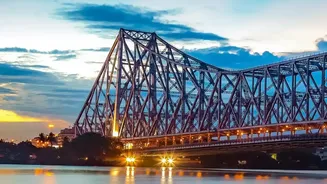


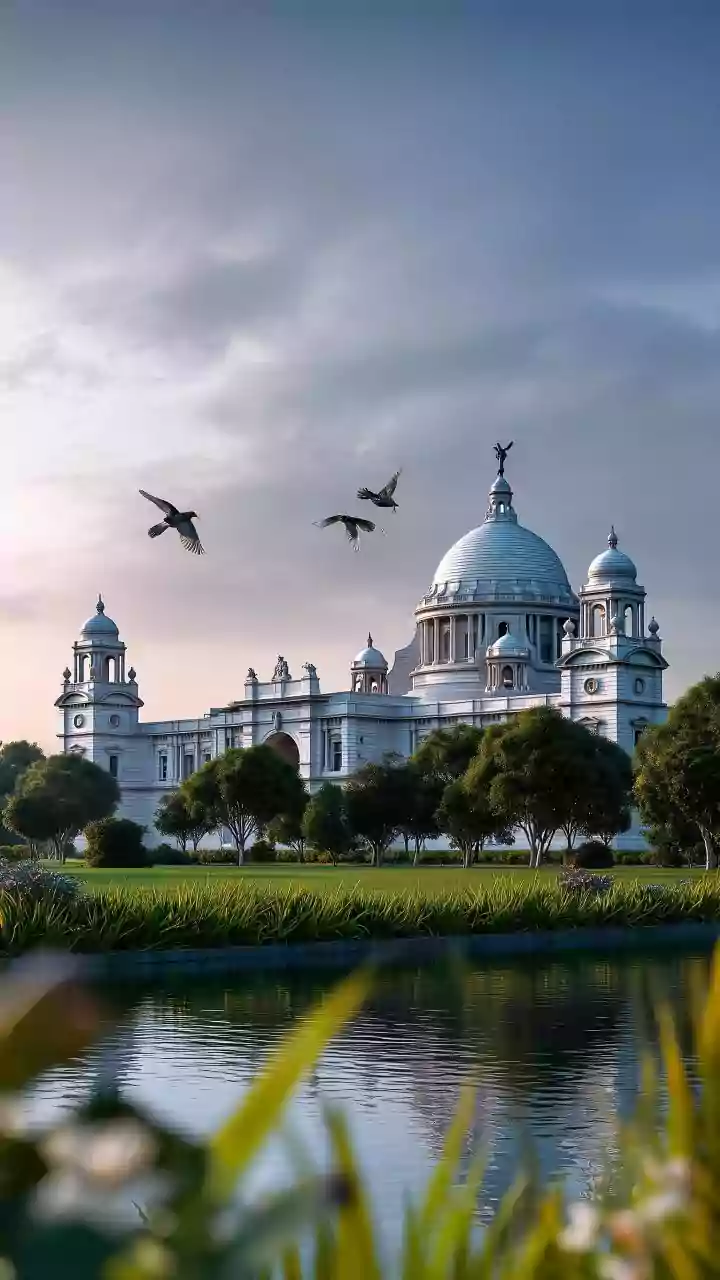



Long before it was Kolkata, it was Calcutta, the grand capital of British India. This legacy birthed the nickname 'London of India,' a title rooted in majestic architecture, a bustling river, and a history that still echoes through its streets.
The 'Second City of Empire'
To understand
why Kolkata earned its famous nickname, one must travel back to when it was the epicentre of British rule in India. From 1772 to 1911, Calcutta served as the capital of British India, making it one of the most important administrative and commercial hubs in all of Asia. The British deliberately shaped the city to be a 'home away from home', engineering a tropical counterpart to their own capital. This ambition was reflected in its urban planning, which featured wide roads and grand European-style buildings that mirrored the aesthetics of London. This architectural and administrative resemblance, combined with its status as the 'Second City of the British Empire,' cemented its reputation as the 'London of India'.
The Heart of Power: B.B.D. Bagh
The core of this colonial identity was Dalhousie Square, now officially known as B.B.D. Bagh. This area was the administrative and commercial centre of British India, what was once called 'White Town'. It was, and still is, a district of imposing structures. The Writers' Building, a formidable red-brick edifice, originally housed clerks for the East India Company before becoming the seat of government. The magnificent General Post Office (GPO), with its towering dome, the Gothic-style High Court, and the former Governor's House, Raj Bhavan, all contributed to an atmosphere of imperial power. These buildings, showcasing a mix of Neoclassical, Gothic Revival, and Victorian styles, were designed not just for function but as symbols of imperial might, creating a landscape that felt distinctly European.
The River That Built a City
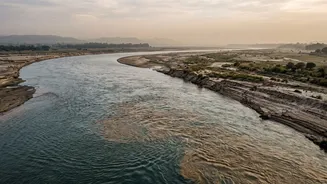
Much like London is defined by the Thames, Kolkata's story is inseparable from the Hooghly River. The river was the city's lifeline, a crucial artery for trade that connected it to the rest of the world. The banks of the Hooghly were once lined with trading posts from various European powers, including the British, French, and Portuguese. Its numerous ghats—the stepped embankments leading down to the water—were bustling hubs of commerce, religion, and daily life. From these ghats, goods were loaded and unloaded, making the riverfront the engine of the colonial economy. The river's strategic importance for trade was a direct parallel to the Thames, further strengthening the 'London of India' comparison.
From Neglect to Revival
For many decades in the post_colonial era, the grand riverfront and its historic ghats fell into neglect. The once_proud warehouses and river_facing mansions decayed as the city's economic focus shifted away from the port. However, recent years have seen a concerted effort to reclaim this heritage. Beautification projects, beginning around 2011, have transformed stretches of the riverfront, particularly between Prinsep Ghat and Babughat, into landscaped gardens with illuminated pathways and fountains. These efforts, driven by government bodies and private partnerships, aim to restore the ghats and develop the riverfront as a space for recreation and tourism, allowing residents and visitors to reconnect with the city's foundational waterway.
A Modern City with a Colonial Echo
Today, Kolkata is a vibrant, modern metropolis with an identity all its own. The yellow Ambassador taxis and the historic tram network—the only one of its kind still operating in India—add to an old_world charm that feels unique to the city. The 'London of India' nickname primarily reflects a specific historical period, but the architectural legacy of that era remains a defining characteristic. While the grand colonial buildings still stand, they now form the backdrop for a city brimming with its own distinct Bengali culture, from its world_renowned literary scene to its spectacular Durga Puja celebrations. The name is a nod to its past, but the soul of Kolkata is something it has forged itself.