






An Audacious Dream from ISRO Alumni
In 2018, the Indian space sector was almost entirely the domain of the Indian Space Research Organisation (ISRO). But two of its own scientists, Pawan Kumar Chandana and Naga Bharath Daka, saw a different future. Inspired by the rise of private space companies
abroad, they believed India was ready for its own commercial space revolution. They envisioned a company that could make space access as simple and frequent as booking a flight. With this bold mission, they resigned from their secure jobs at ISRO and founded Skyroot Aerospace in Hyderabad. Their goal was monumentally ambitious: to design, build, and launch rockets into orbit, a feat no private Indian company had ever accomplished.
The Search for Financial Fuel
Building rockets is what experts call a 'deep tech' or 'hard tech' industry. It requires immense capital for research, development, and testing, with long timelines and enormous risks. A single failed test can erase years of work and millions in funding. In 2018, with the private space sector not yet formally opened by the government, finding investors was nearly impossible. Most venture capitalists preferred software and internet businesses that promised quicker, safer returns. Skyroot's founders were pitching a high-risk, hardware-intensive dream in a sector that was, for all practical purposes, still closed for private business. They needed a believer, someone willing to take a leap of faith on their vision long before any institutional funds would.
The ₹10 Crore Vote of Confidence
That crucial first believer was Mukesh Bansal, the entrepreneur behind Myntra and Cult.fit. In a move that now seems visionary, Chandana and Daka reached out to Bansal via a cold message on LinkedIn in 2018. Bansal was struck by their passion and the scale of their ambition. He became the company's first and, for a time, only angel investor, putting in what amounted to roughly ₹10-12 crore (around $1.5 million at the time) through various early funding rounds. This initial investment came nearly two years before the Indian government formally liberalised the space sector in 2020, making Bansal’s bet an act of significant foresight and trust in the founders' capabilities.
From Blueprints to a Historic Liftoff
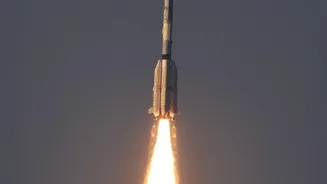
That seed funding was the essential catalyst that allowed Skyroot to move from concept to creation. The capital was used to build their core team of engineers, develop proprietary rocket engine technologies, and begin the rigorous process of testing subsystems for their Vikram series of rockets. This early work laid the foundation for every subsequent success. It led to the development and successful launch of Vikram-S in November 2022, India’s first-ever privately built rocket to reach space on a suborbital flight. This mission, named 'Prarambh' (The Beginning), was a critical technology demonstrator, proving that their designs worked and paving the way for their ultimate goal: an orbital launch.
The Trajectory to Orbit and Beyond
The initial ₹10 crore was the spark that ignited a firestorm of investor interest. Following the policy changes in 2020 and the success of Vikram-S, Skyroot went on to raise significant funding, including a massive $51 million Series B round in 2022 and another $60 million in 2026, which elevated the company to unicorn status with a valuation over $1 billion. This cascade of funding, all stemming from that initial vote of confidence, culminated on July 18, 2026, when Skyroot's Vikram-1 rocket successfully reached orbit, making India only the third country with a private company capable of orbital launches. The investment didn't just help Skyroot pursue a rocket; it helped them build an entire industry.