


Why Go Dynamic?
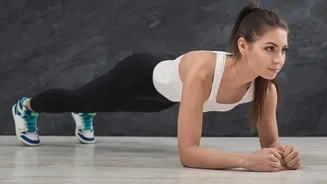
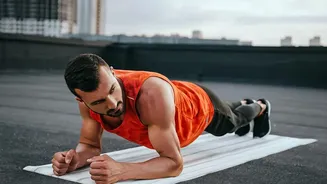
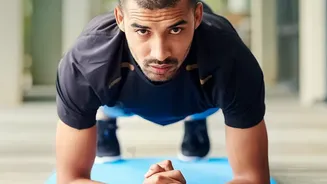
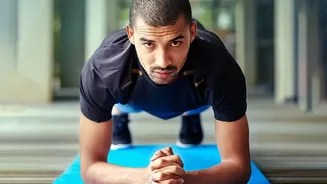
The classic static plank is an isometric exercise, brilliant for building endurance and learning to brace your core. However, once you can hold a plank for 60 seconds, simply holding it for longer yields diminishing returns in strength. Dynamic planks,
which involve moving your limbs while maintaining a stable torso, offer a significant upgrade. They train your core for functional stability—the kind you need for sports and daily life, like carrying groceries or lifting a child. This movement creates instability, forcing your deep stabilising muscles to work harder to prevent your body from rotating or collapsing. The result is greater muscle activation, improved coordination, and a more engaging workout that feels less like watching the clock.
1. Plank Jacks
This move injects a welcome dose of cardio into your core work, elevating your heart rate while challenging your stability. It’s a perfect combination of a plank and a jumping jack.
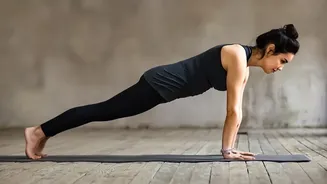
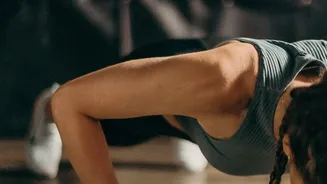
How to do it: Start in a high plank position, with your hands directly under your shoulders and your body forming a straight line from head to heels. Your feet should be together. Keeping your core tight and your upper body still, jump your feet out to the sides, wider than your hips. Quickly jump them back to the starting position. The key is to prevent your hips from bouncing up and down or sagging toward the floor; your torso should remain as rigid as possible. Start with 20-30 seconds and build from there.
2. Spiderman Plank
Named for the wall-crawler's signature move, the Spiderman Plank is exceptional for targeting the obliques and improving hip mobility. This exercise forces your core to fight rotation as you move your leg forward.
How to do it: Begin in a standard plank position, either on your forearms or hands. Engage your core to keep your back flat. Slowly bring your right knee forward and out to the side, aiming to touch your right elbow. The goal is to move your leg without letting your hips pike up or twist. Pause for a moment, then return your leg to the starting plank position in a controlled manner. Repeat on the left side, alternating sides with each repetition. Focus on a slow, deliberate tempo to maximise muscle engagement.
3. Side Plank with Hip Dips
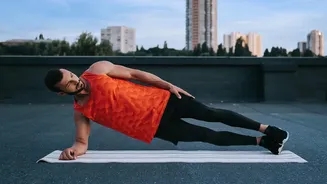
The standard side plank is a champion for oblique strength, and adding a hip dip makes it even more effective by working the muscle through a full range of motion. This small movement creates a big burn along the side of your waist.
How to do it: Lie on your right side, propping yourself up on your right forearm with your elbow directly beneath your shoulder. Stack your feet and lift your hips so your body forms a straight line from your head to your ankles. Place your left hand on your hip. From this stable position, slowly lower your right hip until it almost touches the floor, then use your obliques to lift it back up to the starting position, and even slightly higher. Complete all reps on one side before switching to the other.
4. Plank Walkout
The plank walkout is a full-body movement that challenges not only your core but also your shoulder stability, back strength, and hamstring flexibility. It seamlessly transitions from a standing position into a plank and back again.
How to do it: Start by standing with your feet hip-width apart. Hinge at your hips and place your hands on the floor, keeping your legs as straight as possible. Slowly walk your hands forward, one at a time, until you reach a solid high plank position. Your hands should be under your shoulders and your core braced. Pause for a second in the plank, ensuring your hips haven't sagged. Then, slowly walk your hands back toward your feet and return to a standing position.
5. Renegade Row
For a more advanced challenge, the renegade row incorporates weights to build back strength while demanding intense anti-rotational core control. This is a true full-body exercise that requires significant stability.
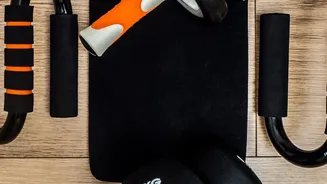
How to do it: You'll need a pair of hexagonal dumbbells for stability. Place them shoulder-width apart on the floor and assume a high plank position, gripping the dumbbells. Widen your feet for a more stable base. Brace your core and glutes to keep your hips square to the floor. Without rotating your torso, pull the right dumbbell up toward your ribcage, leading with your elbow. Squeeze your back muscles at the top, then slowly lower the dumbbell back to the floor. Repeat on the left side. The goal is to eliminate any rocking or twisting of the hips.