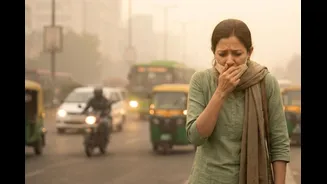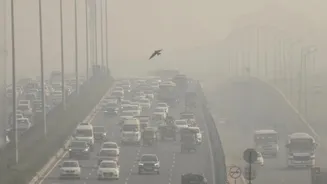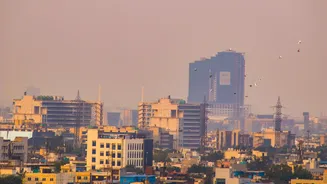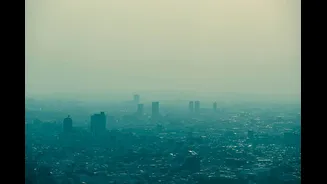







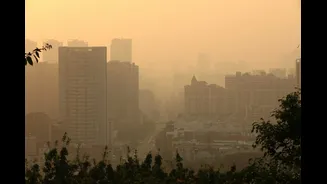

As a thick, grey haze settles over Delhi this November, the familiar sting in the eyes and cough are just the beginning. The most dangerous threat is invisible: fine particulate matter that leads to devastating long-term health consequences.
The Invisible Invader: PM2.5
Every year,
as winter approaches, Delhi’s air quality deteriorates to alarming levels. On November 11, the city's Air Quality Index (AQI) was in the 'very poor' category at 303, with some monitoring stations recording particulate matter (PM2.5) concentrations far exceeding safe limits. These fine particles, with a diameter of 2.5 micrometres or less (about 30 times smaller than a human hair), are the main culprits behind the city's health crisis. They come from vehicle emissions, industrial processes, construction dust, and seasonal stubble burning. Because of their minuscule size, they bypass the body’s natural defences like nasal hair and can penetrate deep into the lungs. But their journey doesn't stop there.
A Threat Beyond the Lungs
While we associate air pollution with respiratory issues, the most severe damage from PM2.5 occurs when these particles enter the bloodstream. Once they pass through the lung's thin alveolar walls, they circulate throughout the body, triggering systemic inflammation and oxidative stress. This process is like having tiny, toxic agents continuously provoking your body's internal systems. This widespread inflammation is the root cause of a host of chronic diseases that may not manifest for years, affecting nearly every organ, including the heart, brain, and more.
The Catalogue of Chronic Disease
Long-term exposure to PM2.5 is not just a risk factor; it's a direct contributor to some of the most serious non-communicable diseases. The World Health Organization (WHO) and numerous studies have established strong links between chronic exposure and several deadly conditions. These include an increased risk of ischemic heart disease, heart attacks, and strokes, as the particles can lead to the hardening of arteries. The constant inflammation and damage also significantly raise the chances of developing chronic obstructive pulmonary disease (COPD) and lung cancer, even in non-smokers. Emerging research further connects prolonged exposure to neurological disorders like dementia and Alzheimer's, cognitive decline, and even Type 2 diabetes.
Who Is Most Vulnerable?
While no one is immune, certain groups bear a disproportionate burden. Children are especially at risk because their lungs are still developing, and they breathe more air relative to their body weight. Exposure can lead to reduced lung function growth, leaving them with weaker respiratory systems for life. The elderly, particularly those with pre-existing heart or lung conditions, are highly susceptible to acute events like heart attacks and strokes triggered by high pollution days. Pregnant women exposed to toxic air face higher risks of adverse birth outcomes, including pre-term birth and low birth weight, impacting the health of the next generation before it even begins.
More Than a Seasonal Nuisance
The annual spike in pollution is often viewed as a temporary inconvenience, but the health impact is cumulative and permanent. Hospitals in Delhi report a 60%70% rise in patients with respiratory issues during these high%pollution periods, but the underlying damage is being done year-'round.' Even when the AQI is 'moderate' or 'poor,' continuous exposure contributes to the body's inflammatory load. Experts warn that Delhi’s baseline pollution is higher than in previous years, making these seasonal spikes even more dangerous. The long-'term health of an entire population is at stake,' as chronic exposure is essentially a slow-'motion public health emergency.