


Two Missions, One Shared Goal
Scientists have announced the first-ever joint analysis of solar eruptions using data from India's Aditya-L1 and the European Space Agency's (ESA) Proba-3 missions. This collaboration marks a significant step forward in our quest to understand the sun's
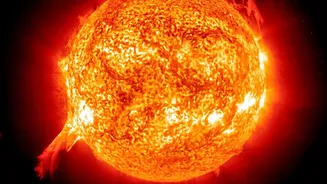
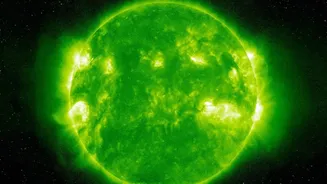
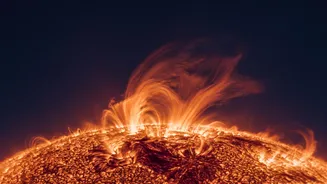
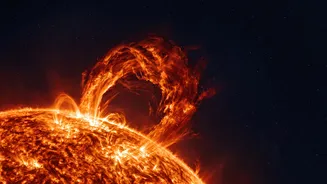
turbulent outer atmosphere, the corona. A study led by researchers at the Indian Institute of Astrophysics (IIA) in Bengaluru, alongside international partners, examined two coronal mass ejections (CMEs) that occurred in September 2025. By combining the observations from two independent, state-of-the-art spacecraft, scientists are gaining a more complete picture of how these massive explosions of plasma and magnetic fields are born and evolve. Until now, observing the very earliest moments of a CME close to the sun's surface has been incredibly challenging. This new, coordinated approach provides deeper insights than either mission could achieve alone, heralding a new era of collaborative solar physics.
India’s Sentinel at L1
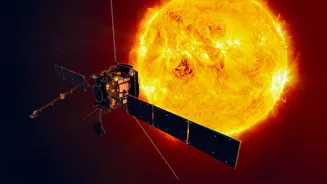
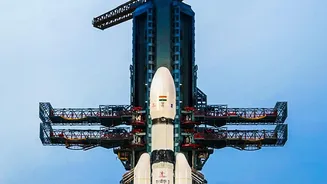
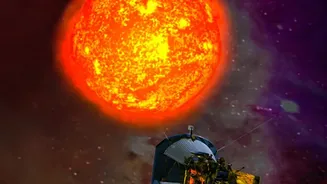
At the heart of this partnership is ISRO's Aditya-L1, India’s first dedicated solar observatory. Launched in September 2023, it is strategically positioned at the first Lagrange point (L1), about 1.5 million kilometres from Earth, where it has an uninterrupted view of the sun. Its key instrument for this study is the Visible Emission Line Coronagraph (VELC). Developed by the IIA, VELC is an internally occulted coronagraph, meaning it blocks the blinding light from the sun's disk to reveal the faint, super-hot corona. VELC is unique because it performs spectroscopy, analysing the properties of the light from the corona to measure its temperature, velocity, and density. For this joint study, VELC's ability to observe the inner corona, from about 1.05 to 1.5 times the solar radius, provided crucial data on the initial stages of the eruptions.
Europe’s Artificial Eclipse in Space
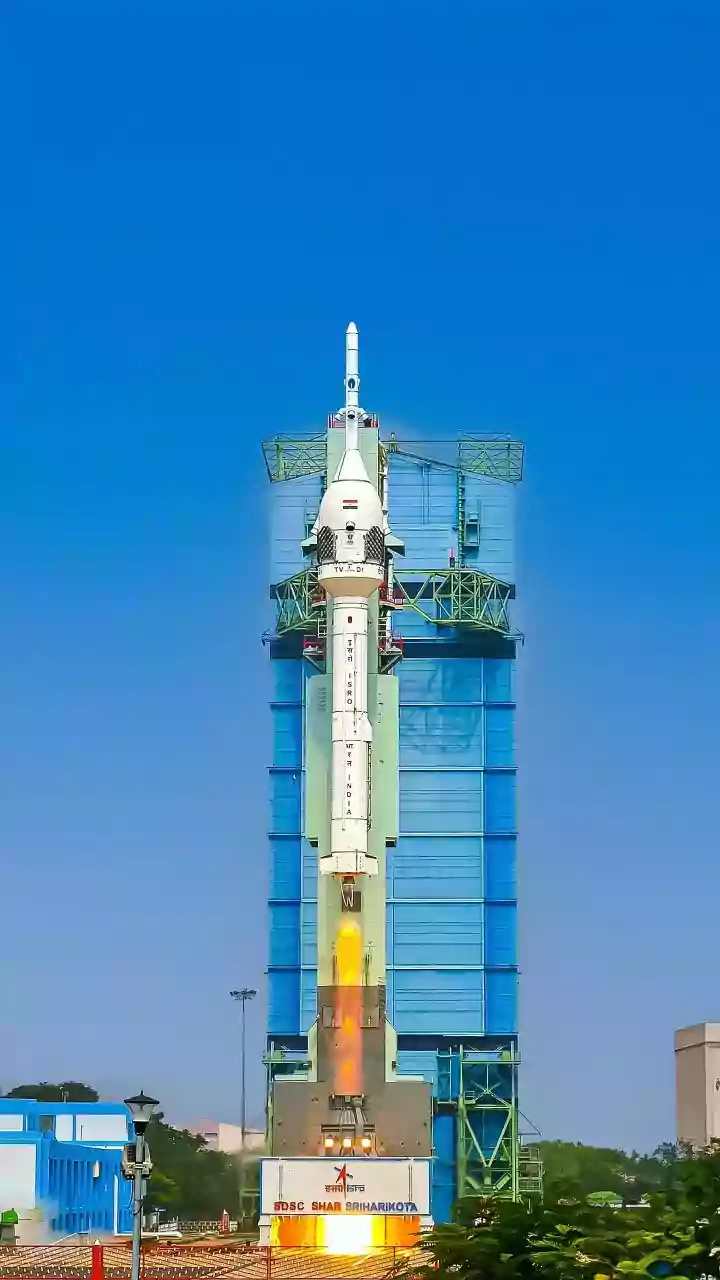
The other half of this dynamic duo is ESA's Proba-3, a mission that is itself a technological marvel. Launched in December 2024 aboard an ISRO PSLV rocket, Proba-3 consists of two spacecraft flying in precise formation 150 metres apart. One spacecraft, the 'Occulter', flies in front and casts a precise shadow over the second, the 'Coronagraph'. This creates a near-perfect artificial solar eclipse in orbit, allowing its ASPIICS coronagraph to study the corona closer to the solar limb with unprecedented clarity. This innovative formation flying allows Proba-3 to observe a region of the corona from about 1.1 to 3 solar radii. This capability perfectly complements Aditya-L1/VELC by capturing how the CMEs expand further out into space.
A Powerful Combination
The synergy between Aditya-L1 and Proba-3 is what makes this research groundbreaking. While the two missions are separate, their instruments have an overlapping field of view, allowing them to observe the same events simultaneously. For the CMEs studied in September 2025, VELC captured the eruptions in their infancy, providing spectroscopic data on the hot gas, including its density and thermal energy. Meanwhile, ASPIICS captured sharp images of the same event slightly further out, allowing for accurate estimates of the eruption's shape, speed, and total mass. By comparing the data, scientists confirmed their estimates of the mass and energy of the CMEs, building confidence in their methods. This dual perspective is crucial for understanding how the energy of an eruption is distributed and how it changes as it travels away from the sun.
Why This Matters for Earth
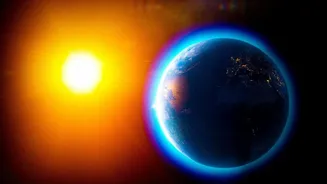
Studying CMEs isn't just an academic exercise. When these eruptions are aimed at Earth, they can trigger geomagnetic storms that pose a significant threat to our technologically dependent world. These storms can disrupt satellite operations, interfere with GPS and communication networks, and even damage power grids on the ground. Understanding the properties of a CME—its speed, density, and magnetic field—as early as possible is the key to accurate space weather forecasting. The joint observations from Aditya-L1 and Proba-3 provide crucial measurements close to the sun, which are vital for models that predict the arrival time and potential impact of a CME at Earth. This collaboration is a major step towards better protecting our critical infrastructure from the sun's violent outbursts.