
The 2027 Milestone: What to Expect
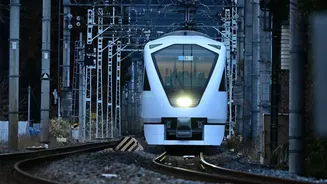
According to Union Railway Minister Ashwini Vaishnaw, the first trial runs of India's indigenous high-speed train are scheduled for May or June 2027. These crucial tests will take place on completed sections of the 508-kilometre corridor, likely beginning
with the Surat to Bilimora stretch in Gujarat. The initial phase of operations is slated to launch in August 2027, just a couple of months after the trials conclude. This phased rollout will see sections like Vapi-Surat and then Vapi-Ahmedabad becoming operational before the entire corridor connecting Maharashtra and Gujarat is completed. The trials will assess the performance of the trainsets, tracks, and the complex signalling systems at operational speeds, ensuring all components work together safely and efficiently before passengers get on board.
A Feat of Engineering and Ambition
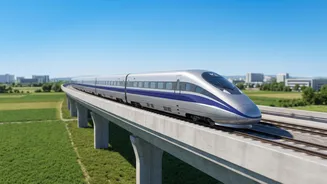
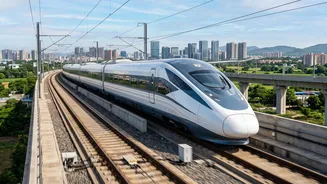
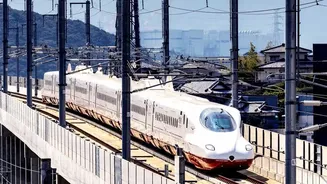
The Mumbai-Ahmedabad High-Speed Rail (MAHSR) project is one of India's most complex infrastructure undertakings. The entire corridor is being built using Japan's renowned Shinkansen technology, known for its exceptional safety and punctuality record. The project involves constructing over 350 km of viaducts, numerous river bridges, and several elevated stations in cities like Thane, Virar, and Boisar. One of the standout engineering marvels is India's first undersea rail tunnel, a 7-km passage being bored beneath Thane Creek in Mumbai. With construction progressing rapidly, recent updates confirm that significant portions of the pier work, girder installation, and track laying are complete, particularly across Gujarat. This visible progress is a testament to the project moving from blueprints to a tangible reality.
The Journey to High-Speed Travel
Launched in 2017, the project initially faced significant delays, particularly with land acquisition in Maharashtra and disruptions from the COVID-19 pandemic, which pushed back the original completion timeline. However, recent years have seen a major acceleration in construction. The National High Speed Rail Corporation Ltd (NHSRCL), the agency implementing the project, has overcome many of these hurdles, with civil works now advancing in both states. The phased commissioning strategy is a practical approach to bring the benefits of high-speed rail to the public sooner. The first commercial run is symbolically targeted for August 15, 2027, on the Surat-Bilimora section. While the full line to Mumbai is expected to be finished by 2029, the 2027 launch will mark India's official entry into the exclusive club of nations with high-speed rail.
More Than Just Speed
The bullet train promises to slash travel time between Mumbai and Ahmedabad from over six hours by road or conventional rail to just about two hours. But its impact goes far beyond speed. The project is a major component of the 'Atmanirbhar Bharat' initiative, with efforts to indigenize manufacturing. The first body frame of the high-speed train has already been completed and sent for structural testing. Economically, the corridor is expected to integrate the key business hubs of Mumbai, Surat, Vadodara, and Ahmedabad, fostering growth and development. Furthermore, the project is a massive generator of employment and is facilitating a significant transfer of advanced technology from Japan, upskilling India's engineering and construction workforce for future infrastructure projects.
The Final Stretch Ahead
While the progress in Gujarat is impressive and the 2027 trials are on track, challenges remain. Completing the more complex sections in Maharashtra, including the undersea tunnel and construction through densely populated urban areas, requires sustained momentum. Ensuring the seamless integration of all systems—from the trainsets and tracks to the power supply and signalling—is the final, critical task. The phased opening allows for meticulous testing and refinement, but the ultimate goal is the full 508-km route. As officials work towards the final commissioning, the 2027 trial run stands as a powerful symbol of progress, bringing a decades-long dream tantalizingly close to its destination.