

The Sun’s Unpredictable Temper
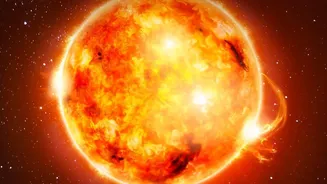
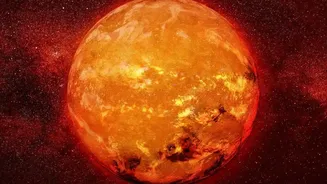
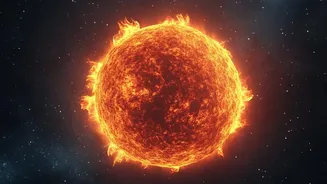
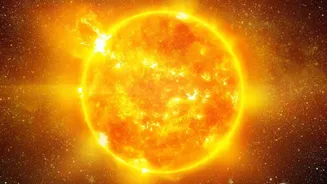
Our modern world runs on technology that is vulnerable to an invisible threat: space weather. The main driver of this threat is the Sun, which can unleash powerful eruptions known as Coronal Mass Ejections (CMEs). These are gigantic explosions of plasma
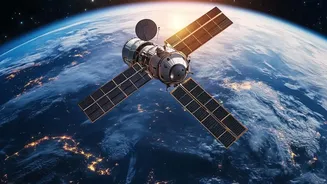
and magnetic fields from the Sun's outer atmosphere, capable of sending billions of tonnes of material hurtling through space at immense speeds. If a CME is aimed at Earth, it can wreak havoc. These solar storms can trigger geomagnetic storms that disrupt satellite operations, scramble GPS and communication signals, and even damage power grids on the ground. For a digitally dependent nation like India, the potential for widespread disruption is significant, making the ability to predict these events more critical than ever.
India’s Sentinel in Space
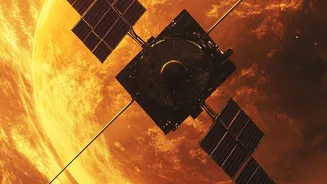
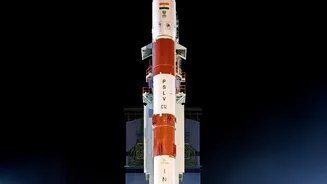
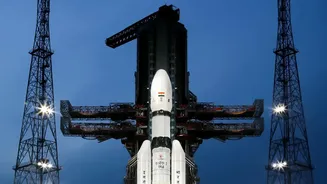
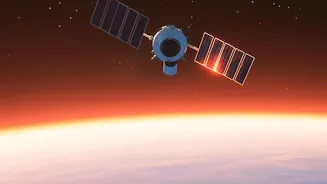
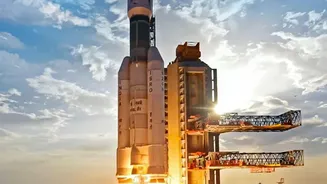
Enter Aditya-L1, the Indian Space Research Organisation's (ISRO) pioneering mission to study the Sun. Launched in September 2023, it is India’s first dedicated solar observatory. The spacecraft is not orbiting the Earth; instead, it travelled 1.5 million kilometres to a special spot in space called the Sun-Earth Lagrange Point 1, or L1. This unique position gives Aditya-L1 an uninterrupted, 24/7 view of the Sun, without any eclipses or atmospheric distortion. From this vantage point, it acts as an early warning system, observing solar eruptions and gathering data on the solar wind—the stream of charged particles flowing from the Sun—long before they reach our planet.
A New Perspective on Solar Storms
For a long time, scientists have often modelled CMEs as if they were perfectly symmetrical bubbles expanding uniformly. Recent findings from Aditya-L1, however, are showing that the reality is far more complex. In a study published in early November 2026, researchers used data from Aditya-L1's primary instrument, the Visible Emission Line Coronagraph (VELC), to analyse a CME. They discovered that the eruption expanded asymmetrically, meaning different parts of the plasma cloud travelled at different speeds, creating an uneven shape. This is a crucial distinction. An unevenly expanding storm interacts with the solar wind differently, which can alter its speed and trajectory on its way to Earth. Understanding this asymmetrical behaviour is key to improving the accuracy of our space weather forecasts.
The Tools for the Job
Aditya-L1 is equipped with a suite of seven sophisticated instruments, each designed to study a different aspect of the Sun. Four payloads, including the VELC and the Solar Ultraviolet Imaging Telescope (SUIT), perform remote sensing, observing the Sun's atmosphere from afar. The other three are in-situ instruments that measure the local space environment at the L1 point, directly sampling particles and the magnetic field of the solar wind. One of VELC's key capabilities is its use of Doppler spectroscopy. This technique allows scientists to measure not just the sideways movement of a CME, but also how fast its material is moving towards or away from the observer—a critical piece of data for building a 3D picture of the eruption and predicting its path more accurately.
Protecting a Digital India
The insights gained from Aditya-L1 are not just academic. They have tangible benefits for protecting India's critical infrastructure. More accurate space weather forecasts mean satellite operators can take preventative measures, power grid managers can prepare for potential surges, and communication networks can be made more resilient. As India continues to expand its satellite constellations for communication, navigation, and Earth observation, the need to safeguard these valuable assets becomes paramount. Aditya-L1's data will provide the crucial information needed to understand the Sun’s behaviour, moving from a reactive to a proactive approach in mitigating the impacts of solar storms. By contributing to a global understanding of space weather, India is not only enhancing its own security but also solidifying its position as a major player in space science.