






An Experiment Raises Alarming Questions
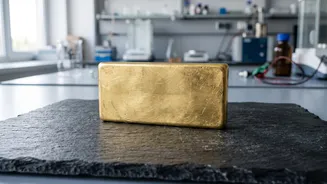
The controversy stems from a media investigation which conducted an experiment in Jodhpur, Rajasthan, to test a troubling claim. Investigators reportedly procured a sample of rhenium powder, a rare industrial metal, allegedly sourced from a supplier in China.
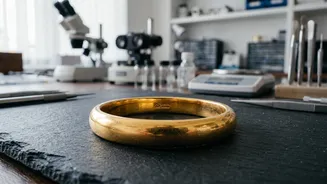
They then worked with a local jeweller to mix one gram of the powder with 7.83 grams of 24-carat gold. The resulting ornament, which should have been around 20-carat purity, was taken to various testing centres. Shockingly, the piece not only passed tests at multiple showrooms but was also reportedly issued a 22-carat (916) hallmark certification, suggesting that standard testing methods failed to detect the adulterant.
What is Rhenium and Why is it a 'Perfect' Adulterant?
Rhenium is a silvery-white, heavy, and rare metal. Its primary legitimate use is in high-performance jet engines and industrial catalysts. What makes it a potent adulterant for gold is its density. Pure gold has a density of around 19.3 grams per cubic centimetre, while rhenium's is even higher, at approximately 21 g/cm³. This similarity means that when mixed with gold, it increases the overall weight without significantly altering the volume or feel of the jewellery, helping it evade simple density checks. Fraudsters can allegedly melt finely ground rhenium powder with gold, creating a homogenous mixture that is difficult to distinguish from pure alloyed gold upon surface inspection.
How Standard Purity Tests Can Be Fooled
The backbone of gold purity testing in India's jewellery market is the X-Ray Fluorescence (XRF) machine. These devices analyse the surface of an ornament to determine its elemental composition. However, the Rajasthan experiment suggests a potential vulnerability. The XRF machine's software may not be calibrated to specifically detect rhenium, especially if it's evenly mixed within the gold alloy. The machine reads the elemental signature from the surface, and if the adulterant is not flagged or its spectral signature is misinterpreted, it can return a false purity reading. While more advanced methods like fire assay (which involves melting the metal) are more accurate, they are destructive and not feasible for every piece of jewellery at a retail counter.
A Wake-Up Call for the Industry and Consumers
This incident is not the first time concerns about sophisticated adulterants have surfaced. In the past, jewellers in markets like Indore have raised alarms about other dense metals like iridium, ruthenium, and osmium being used to inflate gold's weight. The rhenium claim, however, puts a spotlight directly on the hallmarking system, which the Bureau of Indian Standards (BIS) has made mandatory to protect consumers. The system relies on a network of Assaying and Hallmarking Centres (AHCs) to certify purity. If these centres' equipment can be deceived, the integrity of the entire process is at risk. For consumers, this is a cause for concern, potentially leading to significant financial loss. In the Rajasthan experiment, the adulteration could have resulted in a loss of around ₹14,700 per tola for an unsuspecting buyer.
What Can You Do to Protect Yourself?
While the news is concerning, it doesn't mean all hallmarked jewellery is suspect. The incident serves as a crucial reminder for both the industry to upgrade its technology and for consumers to be extra vigilant. Always buy from reputable and trusted jewellers who have a long-standing history. Insist on a proper bill that clearly mentions the Hallmark Unique Identification (HUID) code. This six-digit alphanumeric code is unique to every piece of jewellery and can be verified using the BIS CARE app, which provides details about the jeweller and the AHC that certified the item. While even HUID is only as reliable as the test that was performed, it adds a layer of traceability that is critical in holding the system accountable.