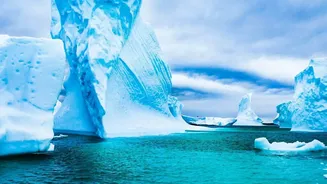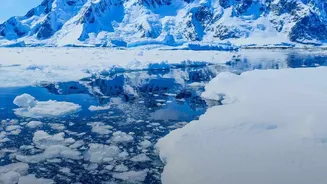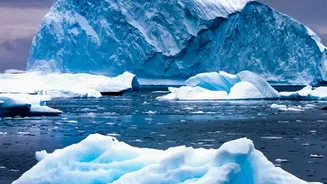






What the New Research Reveals
Recent findings paint a complex but concerning picture of Earth's southern continent. While some reports from early September 2026 noted a surprising, temporary gain of ice in East Antarctica due to unusually heavy snowfall, the overwhelming consensus
points to a significant and accelerating long-term decline, particularly in the west. The West Antarctic Ice Sheet has been identified as a critical area of concern. Studies highlight that glaciers like the Thwaites and Pine Island are retreating rapidly. The Thwaites Glacier, often called the “Doomsday Glacier,” is particularly alarming. If it were to collapse entirely, it holds enough ice to raise global sea levels by over half a metre. New research using satellite data confirms that the rate of ice loss from Thwaites is set to increase significantly over the next few decades. Scientists now believe that even under current climate conditions, the melting of these key glaciers may be unstoppable, locking in significant sea-level rise over the coming centuries.
A Continent on the Brink
For decades, scientists have monitored Antarctica, which holds about 90% of the world's fresh water in its ice. If the entire ice sheet were to melt, it would raise global sea levels by a catastrophic 60 metres (about 200 feet). While a total meltdown is not imminent, the stability of key regions is now in serious doubt. The core problem lies with the warming of ocean water that is melting the ice shelves from below. These floating shelves act like a cork in a bottle, holding back the massive glaciers on land. As the shelves thin and break apart, the land-based ice flows faster into the sea, much like a river without a dam. This process, known as marine ice sheet instability, is at the heart of the concerns for West Antarctica, where much of the ice rests on bedrock far below sea level. Once this retreat starts on a downward-sloping bedrock, it can become a self-sustaining collapse that is very difficult to stop.
Why This Matters for India
The melting of a distant continent may seem like a remote problem, but its consequences are global and dire, especially for India. With a coastline stretching over 7,500 kilometres, the nation is highly vulnerable to rising seas. Major coastal cities, including Mumbai, Kolkata, Chennai, and Surat, are home to tens of millions of people and are critical economic hubs. Even a modest rise in sea level can have devastating effects, leading to more frequent and severe coastal flooding, erosion of land, and saltwater intrusion into freshwater sources and agricultural lands. The impact extends beyond just the coastline. India's economy is deeply connected to its climate-sensitive sectors like agriculture and fisheries. Rising sea levels threaten to inundate fertile deltas and contaminate aquifers, impacting food security and livelihoods for millions. The fate of Antarctica is not an abstract scientific curiosity; it is directly linked to the future safety and prosperity of India's coastal communities.
An Unstoppable Process?
One of the most sobering conclusions from recent research is that some of this ice loss may already be irreversible, regardless of future carbon emission reductions. Some modelling studies suggest that the tipping point for the West Antarctic Ice Sheet's collapse may have already been passed or is very close. This does not mean the glaciers will disappear overnight. The process would unfold over hundreds or even thousands of years, but it commits future generations to a world with radically redrawn coastlines. However, this does not mean that action today is pointless. While some level of sea-level rise is locked in, its ultimate height and the speed at which it occurs still depend heavily on how much warmer the planet gets. Aggressive efforts to cut greenhouse gas emissions can still slow the rate of melt, buying crucial time for communities to adapt and potentially preventing the destabilisation of other, currently more stable, parts of Antarctica. The window of opportunity to avoid the worst-case scenarios is closing, making immediate and sustained climate action more critical than ever.