





A New Kind of Cosmic Object
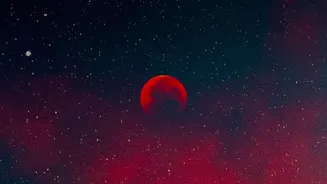
In the vast darkness of the early universe, the James Webb Space Telescope (JWST) spotted an unusually bright, red object. At first glance, it might be mistaken for a star, but its properties are unlike anything documented. The object, spanning the size
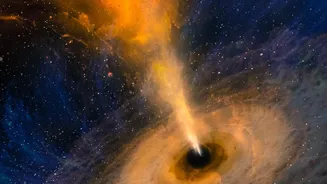
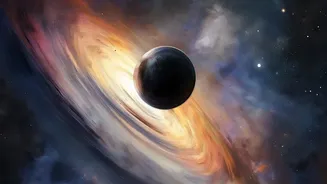
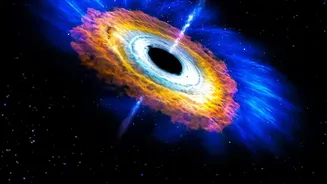
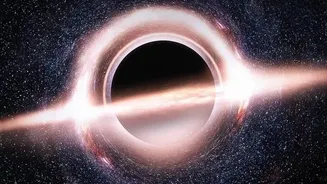
of our solar system, is releasing 100 billion times more energy than any single star physically can. This immense power output is more characteristic of a supermassive black hole actively consuming matter. Researchers have dubbed this new potential class of object a “black hole star” or “quasi-star,” a hybrid that shines like a star but is powered by a black hole at its core.
What is a Black Hole Star?
The concept of a quasi-star is not new, but it has remained purely theoretical until now. Unlike familiar stars such as our sun, which generate energy through nuclear fusion in their cores, a quasi-star’s power comes from a different engine entirely. The theory suggests that in the very early universe, massive clouds of primordial gas could collapse to form a protostar. In some cases, the core of this massive protostar could collapse further into a black hole while the vast outer layers of gas remain intact, absorbing the initial explosive energy. The newly formed black hole then begins to feed on this surrounding envelope of gas, generating an enormous amount of light and energy in the process. This process creates an object that looks like a gigantic, luminous star from the outside.
The Accidental Discovery
The discovery was a case of scientific serendipity. An international team of astronomers was using the JWST, a joint project of NASA, the European Space Agency (ESA), and the Canadian Space Agency (CSA), to study some of the most distant galaxies ever observed. Their primary goal was to understand why many galaxies in the early universe appear so much brighter than models predict. While analyzing images, they focused on a peculiar “little red dot” that didn’t quite fit. Further analysis of its light signature revealed it wasn't red because of intervening dust, as is common, but because of its intrinsic properties, leading to the startling new hypothesis.
Solving a Cosmic Riddle
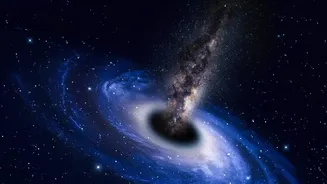
If confirmed, the existence of black hole stars could solve one of the biggest puzzles in cosmology: how did supermassive black holes get so big, so fast? At the center of most large galaxies, including our own Milky Way, lies a supermassive black hole millions or billions of times the mass of our sun. According to standard models, it would take a very long time for a typical stellar-mass black hole to grow to such a size. However, observations show these giants already existed when the universe was very young. Black hole stars offer a potential shortcut. They could have served as the initial “seeds,” born big from the collapse of massive gas clouds and growing rapidly by consuming their stellar envelopes, providing a pathway to the supermassive black holes we see today.