




The Age-Old Problem of Onions
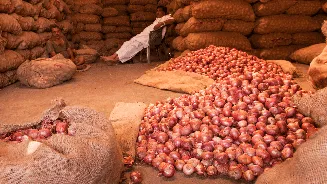
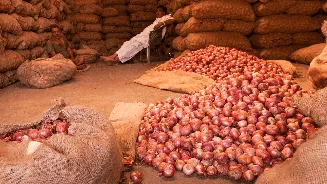
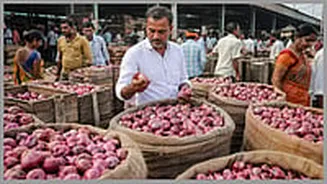
For farmers in Nashik, Maharashtra—home to Asia's largest onion market, Lasalgaon—the onion is both a livelihood and a source of constant anxiety. They cultivate vast quantities of the kitchen staple, yet often struggle to get a fair price. The journey
from farm to city is long and fraught with challenges. Transporting produce via truck is slow and expensive, with a significant portion of the perishable crop spoiling en route. This inefficiency creates a frustrating paradox: farmers receive low prices, while consumers in cities like Delhi, Chennai, and Kolkata pay inflated rates. In August 2026, for example, the all-India average retail price for onions surged by 59% compared to the previous year, highlighting the volatility that plagues the market.
Enter the Kanda Express
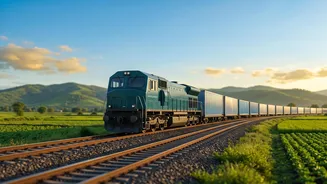
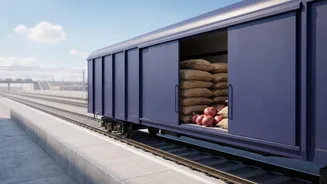
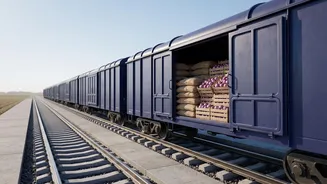
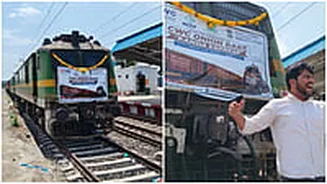
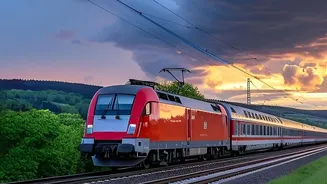
To tackle this supply-chain bottleneck, the central government has rolled out the 'Kanda Express'—a special train service designed to transport bulk quantities of onions from Nashik to major consumption hubs across India. This isn't just a regular goods train; it's a targeted intervention using the government's buffer stock, procured under the Price Stabilization Fund, to cool down prices in markets where they are rising sharply. In late August 2026, a 21-bogie train carrying hundreds of metric tonnes of onions departed Lasalgaon for Delhi. Similar dispatches are planned for other cities, including Chennai, Madurai, Kochi, and Guwahati, moving thousands of tonnes via the railway network.
How Rail Bridges the Gap
The logic behind the Kanda Express is simple: rail transport is faster, cheaper, and more efficient for moving large volumes over long distances compared to road transport. A goods train can cover the distance from Nashik to Delhi in around 24 to 30 hours, significantly reducing transit time and the risk of spoilage. This initiative is an expansion of the broader Kisan Rail scheme, which was launched in 2020 to create a seamless national market for perishable agricultural goods. By using dedicated rakes, the government can move massive consignments directly to major mandis, increasing supply and putting downward pressure on wholesale prices. For consumers, this intervention brings immediate relief, with the government selling these buffer stock onions at subsidised rates through agencies like NAFED and NCCF.
Teething Troubles and Quality Concerns
The initiative, however, has not been without its challenges. The first Kanda Express service to Delhi faced significant delays. It was originally planned to carry 840 metric tonnes, but this was reduced to 450 tonnes due to issues with packing and grading the onions on time. More serious concerns were raised about the quality of the onions being transported. Reports from warehouses in Lasalgaon suggested that a large portion of the stored buffer stock had spoiled due to unexpected rains. This led to protests by local farmers, who alleged that rotten, undersized onions were being sent to Delhi, defeating the purpose of providing quality produce to consumers and ensuring fair value.
A Blueprint for the Future?
Despite the initial hurdles, the Kanda Express represents a critical shift in managing India's agricultural logistics. The core idea of using the vast railway network to connect farmers with markets is powerful. The initiative has seen significant scaling, growing from just 14 rakes in its first year (2024-25) to 86 rakes transporting nearly 88,000 tonnes to 16 cities in 2025-26. For it to be truly successful in the long term, logistical issues around storage, grading, and timely dispatch must be ironed out. If these challenges can be overcome, the Kanda Express could serve as a model not just for onions, but for a wide range of perishable goods, ensuring better prices for farmers and more stable supplies for consumers nationwide.