

The Challenge of Staring at the Sun
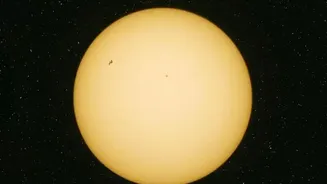
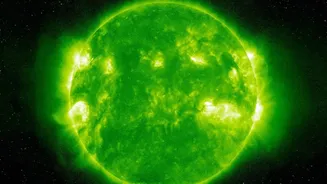
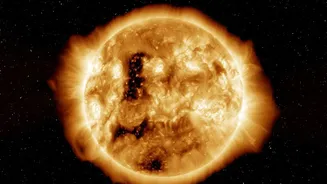
Observing the Sun's atmosphere, or corona, is notoriously difficult. The Sun's surface is so blindingly bright that it completely washes out the much fainter light of the corona, which is millions of times dimmer. It's like trying to spot a firefly next
to a searchlight. For centuries, the only reliable way to see the corona from Earth was during the fleeting moments of a total solar eclipse, when the Moon perfectly blocks the solar disk. These events, while breathtaking, are too short and rare for continuous scientific study. To solve this, scientists developed coronagraphs—specialised telescopes that use an internal or external disk to create an artificial eclipse, blocking the Sun's direct light to reveal the ghostly halo of the corona. This is where Aditya-L1 and Proba-3 come in.
Aditya-L1: India's Unblinking Eye
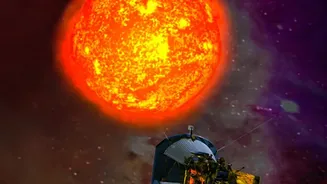
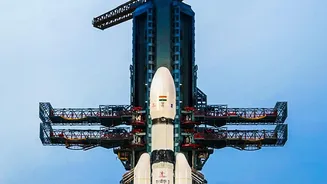
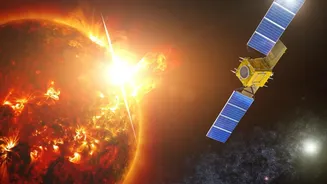
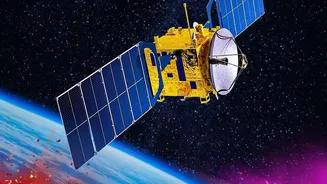
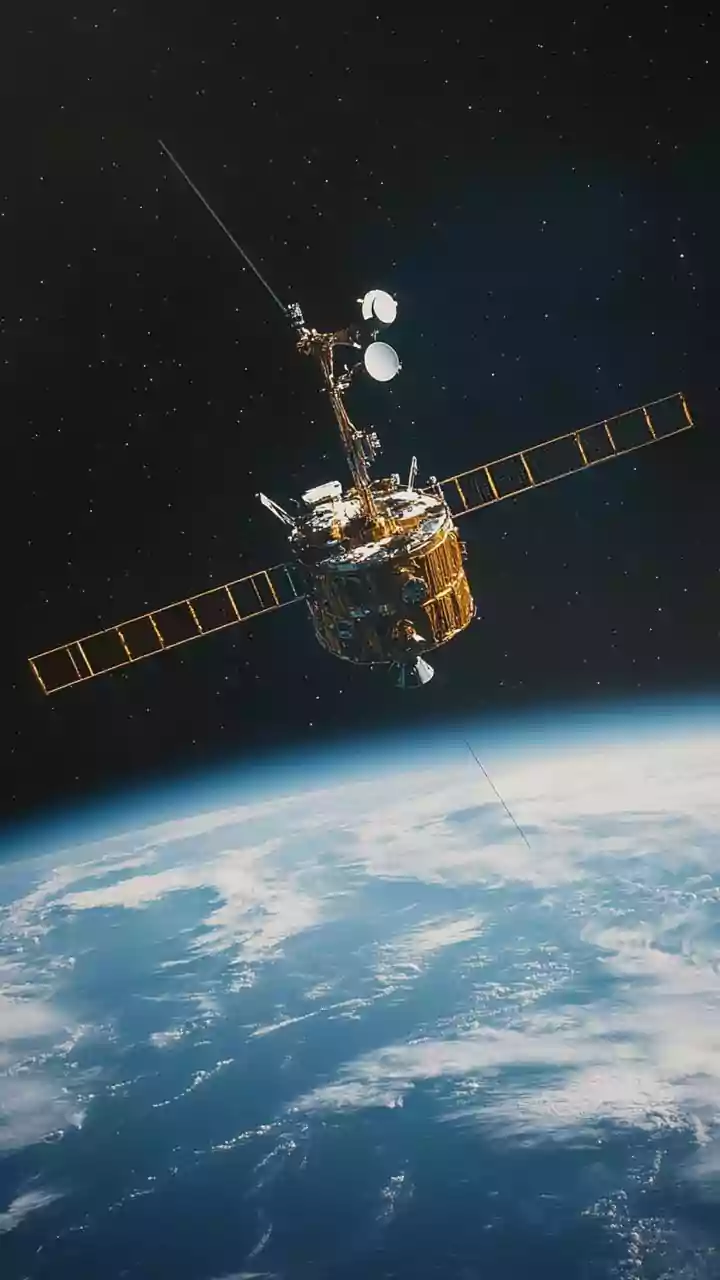
Launched by ISRO on September 2, 2023, Aditya-L1 is India's first dedicated solar observatory. It is positioned 1.5 million kilometres from Earth at a special spot called Lagrange Point 1 (L1), where it can watch the Sun continuously without any interruption from Earth or the Moon. Its primary instrument for studying the inner corona is the Visible Emission Line Coronagraph (VELC). VELC is an internally occulted coronagraph, meaning a small disk inside the instrument blocks the Sun's glare. This allows it to see extremely close to the solar surface, observing a region from 1.05 to 3 solar radii. More importantly, VELC performs spectroscopy, which breaks down the corona's light to measure the temperature, velocity, and density of the superheated plasma.
Proba-3: Europe's Formation-Flying Eclipse
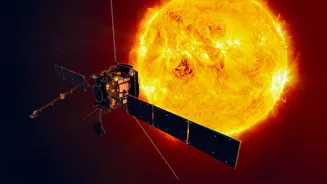
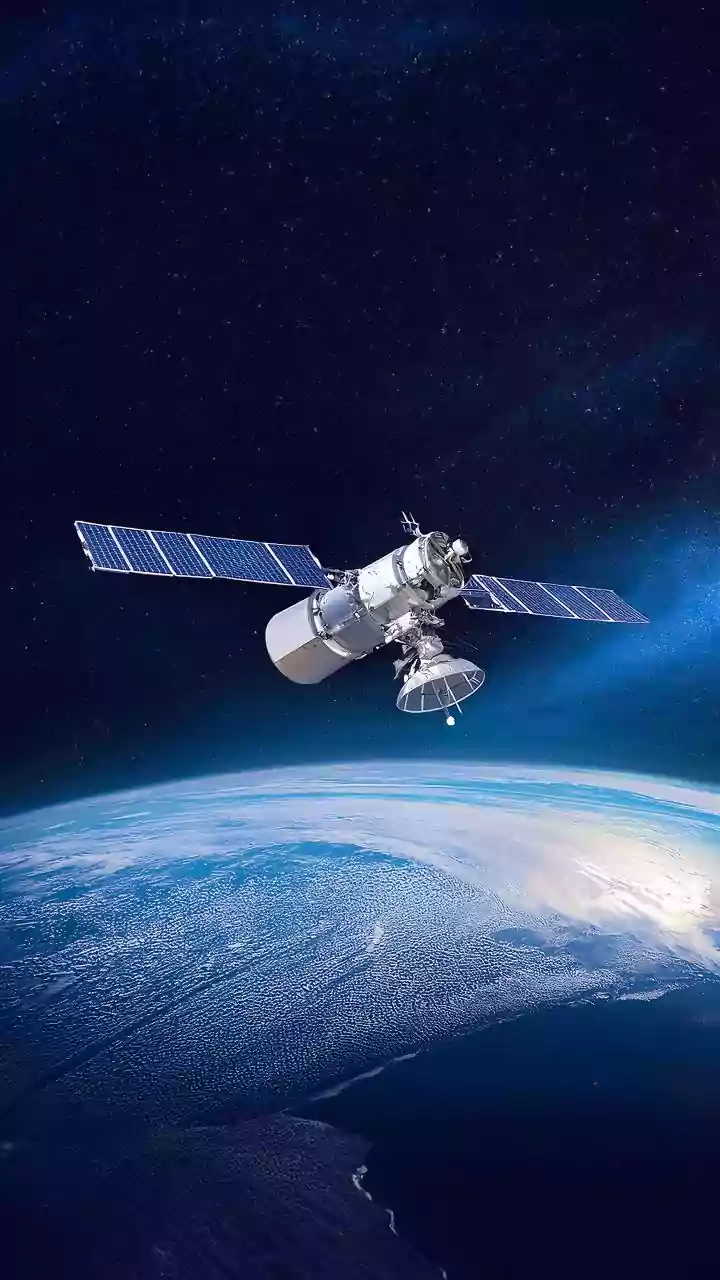
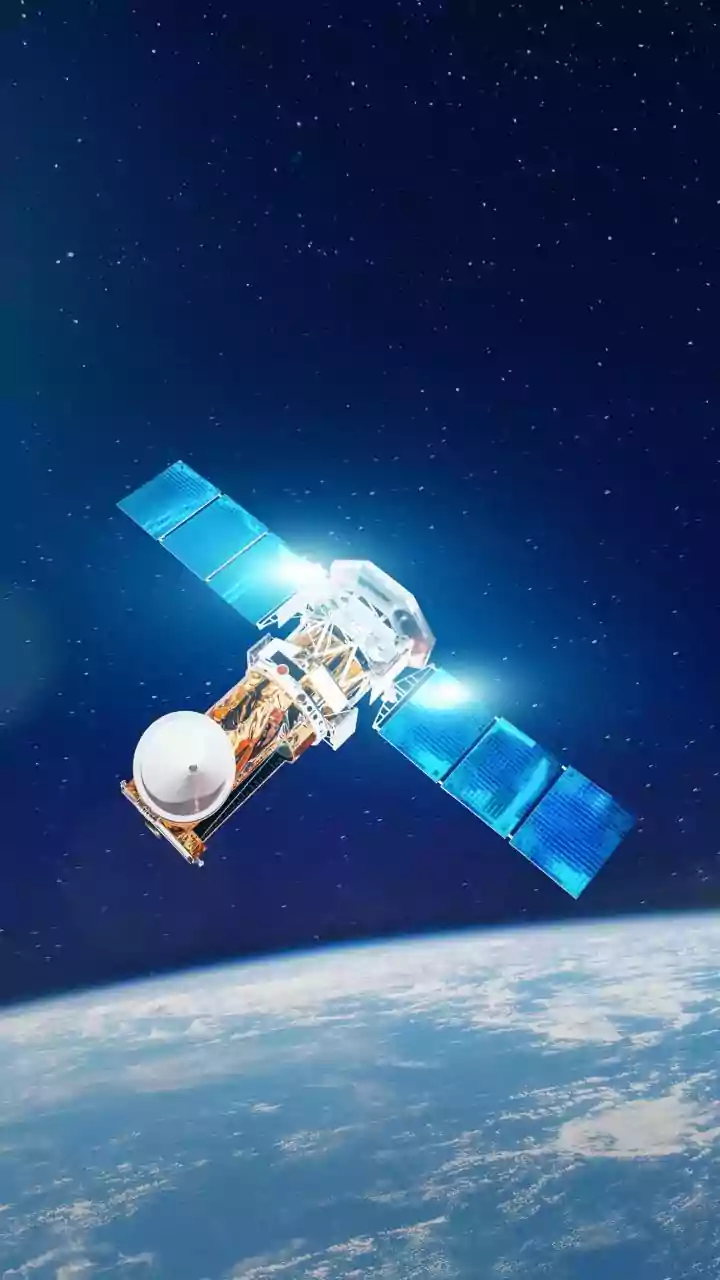
The European Space Agency's Proba-3 mission, launched in December 2024, takes a revolutionary approach. Instead of one spacecraft, it is two, flying in perfect formation about 150 metres apart. One satellite, the 'Occulter', flies in front and uses a 1.4-meter disk to cast a precise shadow over the second satellite, the 'Coronagraph', which carries the ASPIICS instrument. This creates a near-perfect artificial eclipse that can last for up to six hours at a time, allowing for incredibly clear images of the corona with very little stray light. ASPIICS captures sharp images of the corona's structure and movement in a field of view from about 1.1 to 3 solar radii.
Stronger Together: A Tale of Two Views
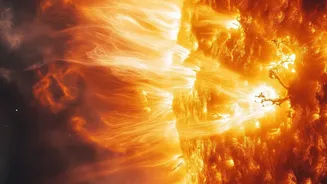
While both missions study the corona, their methods are different but highly complementary. Aditya-L1's VELC excels at spectroscopy, providing detailed physical data about the 'what' (temperature, density) of the plasma in the innermost corona. Proba-3's ASPIICS, with its external occulter, provides pristine, wide-angle images of the 'where' and 'how' (shape, mass, movement) of solar eruptions as they expand outwards. For the first time, scientists have combined data from both missions to study the same coronal mass ejects (CMEs). A recent study examined two CMEs from September 2025, using VELC to catch their earliest moments and ASPIICS to track their shape and mass. This dual approach allows for cross-checking results and building a much more complete physical picture of these violent solar events than either mission could achieve alone.