







More Than Just a Dip
In Indian cuisine, chutneys are not an afterthought; they are an essential part of the culinary philosophy. The word itself is derived from the Hindi 'chatna', meaning 'to lick'. Far from being simple sauces, they are complex condiments designed to balance
and elevate a dish. Their primary role is to provide a counterpoint of flavour and texture—adding a spicy kick to a mild dish, a cooling freshness to a fried one, or a sweet and tangy note to a savoury snack. This concept of balance is central to the Indian palate. Chutneys can be fresh or cooked, smooth or coarse, and their recipes vary dramatically across regions, households, and even street vendors, reflecting the incredible diversity of Indian food culture.
The South Indian Staple: Coconut Chutney
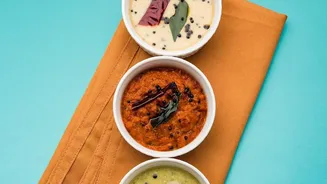
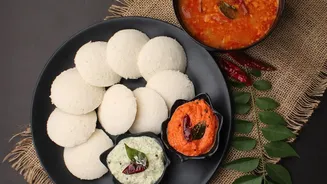
If there is one chutney synonymous with a South Indian breakfast, it is the classic white coconut chutney. Served generously with idli, dosa, and vada, this chutney is creamy, mild, and refreshing. It's typically made by grinding fresh or frozen grated coconut with green chillies for a bit of heat, ginger for sharpness, and often a small amount of roasted chana dal or fried gram, which lends a nutty flavour and thicker consistency. The final, crucial step is the 'tadka' or tempering: mustard seeds, curry leaves, and sometimes dried red chillies are sizzled in hot oil and poured over the chutney. This not only adds a burst of aroma but also layers of flavour, transforming simple ground coconut into an iconic condiment.
The All-Rounder: Mint & Coriander Chutney
The vibrant green mint and coriander chutney, often simply called 'hari chutney', is perhaps the most versatile of them all. While a staple with North Indian snacks like samosas and pakoras, it frequently appears on breakfast plates across the country. This uncooked chutney is celebrated for its bright, herbaceous flavour. It is made by blending fresh mint and coriander leaves with green chillies, ginger, and a souring agent like lemon juice or tamarind. Its fresh, cooling properties make it the perfect foil for rich, fried foods. Some variations include coconut or yogurt to add creaminess, making it an excellent accompaniment for everything from parathas to dhokla.
The Sweet & Sour Star: Tamarind Chutney
No discussion of street-side chutneys is complete without mentioning the dark, glossy tamarind chutney, also known as 'imli chutney' or 'saunth' (because it traditionally includes dried ginger powder). This condiment is the undisputed star of the chaat world but also finds its way alongside breakfast items like kachoris and bread pakoras. Its signature flavour is a perfect balance of sweet and tangy, achieved by cooking tamarind pulp with a sweetener like jaggery or dates. Spices like roasted cumin powder, red chilli powder, and ginger powder add warmth and complexity. This chutney’s role is to cut through richness and spice, providing a sweet and sour contrast that makes you come back for another bite.
The Fiery Companion: Red Chilli-Garlic Chutney
Often found sitting next to the milder coconut chutney is a fiery red counterpart, designed for those who crave a serious kick of spice. Known as 'kara chutney' in the south or 'lehsun ki chutney' (garlic chutney) in other parts, its primary ingredients are dried red chillies and garlic. The red chillies are typically soaked in hot water to soften them and reduce some of their intense heat before being ground into a paste with pungent garlic cloves, salt, and a little lemon juice or vinegar to balance the flavours. This chutney is potent and used sparingly. It's the perfect condiment to wake up the palate and adds a powerful, savoury punch to milder breakfast dishes like idli or uttapam.