



An Evening Star's Big Moment
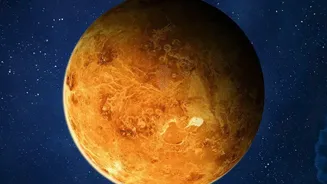
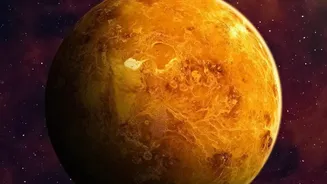
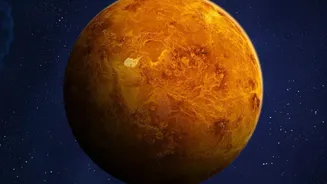
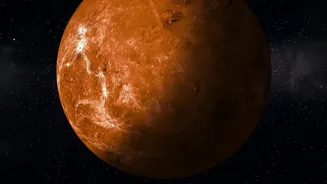
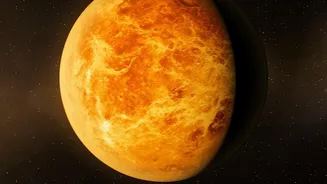
On August 15, 2026, Venus will be at what astronomers call its “greatest evening elongation.” This sounds complicated, but the idea is simple. Venus is an inner planet, meaning its orbit is closer to the Sun than Earth's. Because of this, from our perspective,
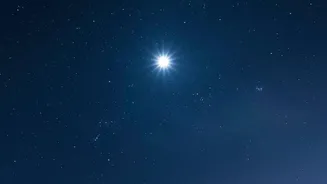
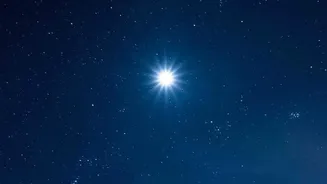
Venus never strays far from the Sun in our sky. It's always seen either in the west after sunset or in the east before sunrise. Greatest elongation is the point in its orbit when Venus appears farthest from the Sun on the sky's dome. For this event, it will be a significant 46 degrees away from the Sun. Shining at a dazzling magnitude of -4.4, it will be the brightest object in the sky besides the Moon and Sun, easily visible even in the fading twilight.
The Paradox of Being Low
Here is the curious part of this celestial event. You might think that being at its farthest point from the Sun would mean Venus would be high in the sky, offering a spectacular, lingering view. However, the opposite will be true for observers in the Northern Hemisphere, including India. Venus will be noticeably low, hugging the western horizon after sunset. This happens because of the angle of the ecliptic—the path the Sun, Moon, and planets appear to follow across the sky. During late summer in the Northern Hemisphere, the evening ecliptic makes a shallow angle with the horizon. So, even though Venus is at its maximum angular distance from the Sun, much of that distance is horizontal rather than vertical, keeping it low.
A Celestial Dance of Geometry
Think of the solar system as a mostly flat disc. All the planets orbit the Sun on roughly the same plane, which we see as the ecliptic. The angle this plane makes with our local horizon changes with the seasons and our latitude. When the ecliptic is steep, a planet far from the Sun appears high in the sky. When the ecliptic is shallow, that same planet appears low. For this August 15th event, Venus's position to the south of the Sun on the celestial sphere further contributes to its low altitude for northern observers. This makes the event timely not just for its date, but as a perfect, real-world demonstration of how this cosmic geometry plays out in our evening sky.
How to See Venus on 15 August
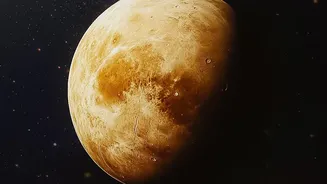
Viewing this event from India is straightforward. About 30 to 45 minutes after sunset on August 15th, find a spot with a clear, unobstructed view of the western horizon. Look for an intensely bright, unwavering point of light—that will be Venus. You can't miss its brilliance. On the evenings of August 14 and 15, the sight will be even more special as a slender crescent Moon will be visible near Venus, making for a beautiful pairing. While you won't need a telescope to see the planet, binoculars will enhance the view and might even help you spot the nearby star Spica. If you have a small telescope, you can resolve Venus into a tiny, half-lit disc, similar in phase to a quarter moon.
A Moment of Connection
Beyond the science, there's a simple wonder to watching the planets. As a day of national significance draws to a close across India, taking a moment to look up offers a connection to the grander mechanics of our solar system. The same orbital dance that has been going on for billions of years will be putting on a quiet, beautiful display. That bright light low in the west isn't just a planet; it's our planetary neighbour, revealing the elegant and predictable laws of the cosmos. This August is a busy month for sky-gazers, with the Perseid meteor shower also peaking around August 12-13, making it a great time to be looking up.