


The Dream of Indian Human Spaceflight
The Gaganyaan programme is India's ambitious endeavour to demonstrate human spaceflight capability by launching a crew of three into a 400 km orbit for a three-day mission and bringing them safely back to Earth. Officially approved in 2018, the project
positions India to become only the fourth nation in the world—after the United States, Russia, and China—to independently send humans into space. Managed by the Indian Space Research Organisation (ISRO), the mission is not just a technological demonstration but a major leap for the nation's scientific and strategic capabilities, paving the way for a sustained Indian presence in space, including a future space station.
The Anatomy of a Landmark Mission
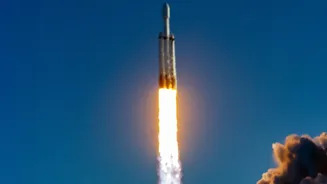
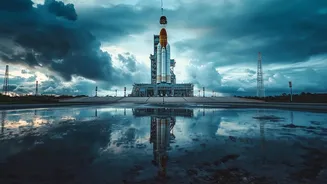
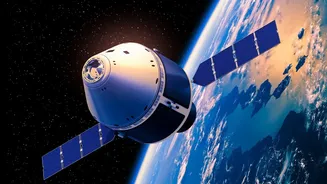
At the heart of Gaganyaan is a powerful, human-rated launch vehicle and a sophisticated spacecraft. The launcher is a modified version of ISRO's most reliable rocket, the LVM3 (Launch Vehicle Mark-3), which has been enhanced with safety systems for crewed flight. The spacecraft, or Orbital Module, consists of two main parts: the Crew Module and the Service Module. The Crew Module is a habitable space with a life support system designed to provide an Earth-like environment for the astronauts. The Service Module powers the spacecraft with its propulsion systems. A crucial component is the Crew Escape System, a failsafe designed to jettison the crew to safety in case of an emergency during launch.
Paving the Way with Uncrewed Tests
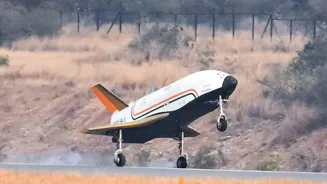
Before astronauts strap in, every system must be proven safe and reliable. This is achieved through a series of uncrewed test flights. These missions are designed to validate the performance of the launch vehicle, the crew escape system, and the spacecraft's re-entry and recovery procedures. ISRO has planned multiple precursor missions to test these critical technologies. A significant milestone was the Test Vehicle Abort Mission-1 (TV-D1), which successfully demonstrated the crew escape system. According to ISRO Chairman V. Narayanan, the first full uncrewed orbital flight, Gaganyaan-1 (G1), is targeted for the end of 2026. This will be followed by further test flights to ensure all systems are ready for the final, crewed mission.
Meet Vyommitra: The Humanoid Test Pilot
A key player in the uncrewed missions is Vyommitra, a female-presenting 'half-humanoid' robot developed by ISRO. The name translates from Sanskrit as 'space friend'. Vyommitra is designed to fly on the uncrewed missions to simulate human functions and test the cabin environment. It can monitor module parameters, operate switch panels, and communicate with the ground control centre. By using a humanoid, ISRO can gather crucial data on how life support systems perform and how the crew module withstands the stresses of launch and re-entry, all without risking human life. This makes Vyommitra an essential bridge between automated tests and the first crewed flight.
Training the 'Gaganyatris'
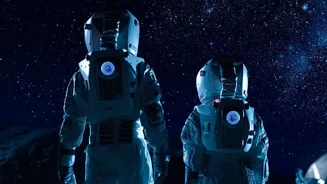
The human element is, of course, the most critical. India has selected four decorated Indian Air Force test pilots for the historic mission: Group Captains Prasanth Balakrishnan Nair, Ajit Krishnan, Angad Pratap, and Wing Commander Shubhanshu Shukla. These astronaut-designates, or 'Gaganyatris', have undergone extensive training, both in Russia and at ISRO's own Astronaut Training Facility in Bengaluru. Their training covers everything from academic courses and simulator training to survival drills and microgravity familiarisation. To ensure a continuous pipeline of talent for future missions, ISRO is also establishing a comprehensive training facility in India, called Gaganyaan Nivas.