




Safety Over Speed: A Non-Negotiable Priority
When the skies open up, Indian Railways prioritises safety above all else. Heavy rainfall poses numerous threats to the expansive rail network. Waterlogging on tracks can obscure potential defects and, in severe cases, compromise the stability of the track bed.
The soil beneath the tracks can get washed away, a phenomenon known as ballast erosion, weakening the entire structure. In hilly and coastal regions like the Konkan route, the risk of landslides and boulder falls becomes acute. To mitigate these dangers, railways implement a 'monsoon timetable', typically from June to October. This involves imposing speed restrictions, sometimes reducing a train's maximum permissible speed from 120 kmph to 75 kmph or even lower in highly vulnerable sections. Loco pilots are instructed to operate at 40 kmph in conditions of low visibility and to halt services if water levels rise more than 100mm above the rails. These precautions are supported by intensive patrolling, with thousands of personnel monitoring tracks around the clock.
The Ripple Effect on Passengers and Schedules
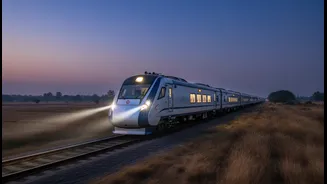
For passengers, these necessary restrictions translate into longer journey times, schedule revisions, and even reduced service frequency. A trip that takes eight hours in the dry season might take ten or more during the monsoon. Premium services, including the Vande Bharat and Tejas Express, are not immune. For instance, services on the Mumbai-Goa route, famed for their speed, see their schedules adjusted, with some trains running on a reduced tri-weekly basis instead of daily. These delays and cancellations are a direct consequence of prioritising safe passage through treacherous conditions. The cascading effect of one delayed train can impact the punctuality of several others on a congested network, leading to widespread disruptions that test both the system's resilience and passengers' patience.
A Hurdle for High-Speed Ambitions
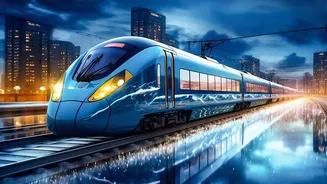
The annual monsoon slowdown presents a significant challenge to India's high-speed rail ambitions. The country is investing heavily in faster trains like the Vande Bharat series and upgrading tracks to handle speeds of 160 kmph and beyond. However, the reality of India's geography and climate means that for several months a year, these high-speed capabilities must be reined in. The very routes that are most scenic and popular during the monsoon, such as the journey through the Western Ghats, are also the ones that require the most stringent speed controls. This creates a paradox: the push for faster year-round travel clashes with the unchangeable realities of seasonal weather. It forces planners to confront a critical question: how do you build a world-class, high-speed network in a country where nature regularly demands a slower, more cautious approach?
Engineering the Future of Rail Travel
In response, Indian Railways is rethinking its long-term infrastructure strategy. The solution isn't just about building faster trains, but about building more resilient tracks. Engineering solutions are at the forefront of this shift. In flood-prone areas, this involves raising track levels, improving drainage with larger culverts and micro-tunnelling, and even using ballastless tracks that are less susceptible to being washed away. In landslide-prone zones, efforts include stabilising slopes with soil nailing, rock bolting, and installing protective netting. Furthermore, technology is playing a bigger role. Drones are being used for aerial surveys to identify vulnerable spots before the monsoon hits. Water-level monitoring systems are installed on critical bridges, automatically alerting officials when rivers swell to dangerous levels. These long-term investments aim to create an all-weather rail network, where the impact of the monsoon is managed through superior engineering rather than just operational restrictions. This represents a fundamental reshaping of priorities, moving from simply coping with the monsoon to actively engineering against its most disruptive effects.