




The Science of a Shooting Star's Colour
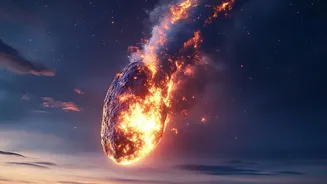
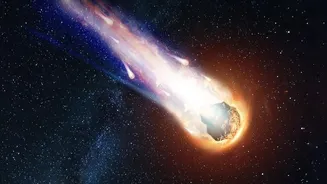
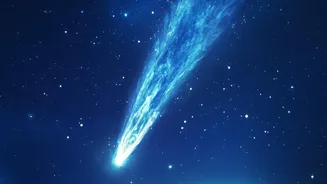
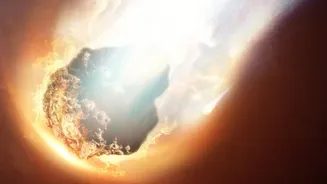
When a tiny piece of space debris, called a meteoroid, smashes into Earth's atmosphere, it's travelling at incredible speed. The intense friction generates enormous heat, causing the particle to vaporise and the air around it to glow. This is the flash
we call a meteor, or shooting star. For decades, scientists have understood that the colour of this flash acts like a chemical fingerprint. The meteoroid's composition and its interaction with atmospheric gases determine the hue we see. A meteor rich in sodium glows orange-yellow, while one with magnesium can appear blue-green. The gases in our own atmosphere, primarily nitrogen and oxygen, typically contribute a reddish glow. The speed of the meteor also plays a critical role; faster meteors can create more intense and sometimes different colours as they ionize the air.
NASA's Unprecedented New Image
On August 3, 2026, NASA featured a remarkable photograph as its Astronomy Picture of the Day. Captured during the lead-up to the annual Perseid meteor shower, the image shows a meteor streaking through the sky with an unusually vibrant and distinct magenta or violet hue. The Perseids are known for producing fast, bright, and colourful meteors, but this particular image, taken with advanced spectroscopic equipment, offered a level of detail that has excited astronomers. The clarity of the colour and its specific shade challenged the simple one-to-one correlation between an element and a colour, hinting at a more complex process at play in the upper atmosphere.
A Deeper Look at Colour Mixing
While violet is often associated with the presence of calcium in a meteor, the intensity and specific shade in the new image suggested something more. According to scientists analysing the data, the vibrant magenta is not the signature of a new, mysterious element. Instead, it is a brilliant example of how different light sources combine under extreme conditions. The image provides the clearest evidence to date of how the violet light from vaporised calcium blends with the red glow of superheated nitrogen and oxygen in the atmosphere. The extreme velocity of the Perseid meteor created the perfect conditions for this light to 'mix' in a way that produced a pure, intense magenta that our current models didn't fully predict. This shifts the interpretation from a simple checklist of elements to a more nuanced understanding of atmospheric physics and chemistry.
Why This Discovery Matters
This new context is more than just a beautiful astronomical footnote. By refining our understanding of how meteor colours are produced, scientists can more accurately determine the chemical makeup of the meteoroids themselves. It's like moving from a standard definition camera to high definition; the details become much clearer. This allows for a more precise analysis of the composition of comets and asteroids, which are the parent bodies of these meteoroids. Understanding what these celestial objects are made of gives us crucial insights into the formation and history of our solar system. Furthermore, being able to accurately identify the composition of an object burning up in our atmosphere from its colour alone is a powerful, non-invasive tool for planetary science and defence, helping to distinguish natural visitors from man-made space debris.