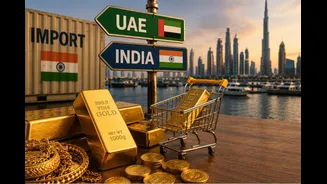









Deconstructing the Domestic Gold Price
When you check the price of gold, you're seeing a number shaped by a host of global and local forces. The primary driver is the international price, typically set in US dollars. But that's just the starting point. For the price to be determined in India,
the international rate is converted into rupees, meaning the USD-INR exchange rate plays a crucial role. A weaker rupee makes imported gold more expensive, even if international prices are stable. On top of this, the government imposes a significant customs duty, which was sharply increased to 15% in May 2026 to curb imports. Add local taxes like GST, and you arrive at the final retail price, which is considerably higher than the raw international rate.
India's Unshakeable Import Habit
India is the world's second-biggest gold consumer after China, but produces almost none of its own. This means the nation's immense demand, for everything from wedding jewellery to investment bars, must be met through imports. Gold is one of the country's largest import items by value, second only to crude oil. In the 2025-26 fiscal year, India's gold imports hit a record $71.98 billion, a 24% increase from the previous year. This surge in the value of imports occurred even as the actual volume of gold imported fell, a direct result of soaring international prices. This heavy reliance on imports creates a significant economic vulnerability, especially during times of global uncertainty.
The 'Atmanirbhar' Conundrum
The government’s 'Atmanirbhar Bharat' or self-reliant India campaign directly clashes with the country's high gold imports. When India spends tens of billions of dollars buying gold, it widens the Current Account Deficit (CAD), which is the difference between the value of goods and services a country imports and what it exports. A large CAD can put pressure on the rupee and drain foreign exchange reserves. This is why Prime Minister Narendra Modi has repeatedly appealed to citizens to curb non-essential gold purchases, framing it as an act of economic nationalism to strengthen the domestic economy. The message is clear: money spent on imported gold is money that isn't circulating within and boosting the local economy.
A Delicate Policy Balancing Act
For policymakers, managing gold is a tightrope walk. The primary tool used to control imports is the import duty. In May 2026, the government hiked the duty from 6% to 15% to make imports more expensive and discourage buying. However, this move has had limited success in curbing the overall value of imports and has had an unintended side effect: a potential increase in the 'grey market' or illegal smuggling of gold to evade the high taxes. Recognizing this, the government is reportedly considering a reduction in the duty. This highlights the core dilemma: high duties may encourage illicit trade, while low duties can lead to a surge in legal imports, widening the trade deficit. The government also promotes financial alternatives like Sovereign Gold Bonds (SGBs) to channel investment demand away from physical metal.
What Does This Mean for You?
This high-level economic and policy conflict has a direct impact on every Indian who wants to buy or invest in gold. The high import duties mean you pay a premium over global prices. The constant tension between encouraging and discouraging imports leads to policy volatility, which can affect prices unpredictably. Furthermore, the Prime Minister's appeals might influence market sentiment, with some consumers opting to exchange old jewellery instead of making new purchases. This trend, if it grows, could slightly increase the availability of recycled gold in the domestic market, but it is unlikely to fundamentally alter the country's dependence on fresh imports to meet its massive annual demand.