





The Cloud’s Insatiable Thirst
For years, the story of data centres was about electricity. But their demand for water is just as significant. To prevent servers from overheating, most large facilities rely on evaporative cooling, a process that can consume millions of gallons of water daily.
A single large hyperscale facility can use between one to five million gallons per day, an amount comparable to the daily water usage of a small city. While data centres account for a small fraction of total national water use, their concentration in specific areas creates intense local pressure. This has always been a point of concern, but the fundamental equation is now changing dramatically.
The AI Accelerant
The next phase of this story is being written by artificial intelligence. Training and running large language models (LLMs) and other AI applications is vastly more computationally intensive than traditional data processing. More intensity means more heat, and more heat requires more cooling. The result is a startling surge in water consumption. Google's water use, for example, climbed 34% in 2025 alone, an increase the company links directly to AI expansion. Estimates suggest that by 2027, global AI demand could drive annual water withdrawals into the trillions of gallons. This explosive growth is the primary accelerant pushing the issue of data-centre water use from a background concern to a frontline conflict.
From Local Concern to Global Conflict
As tech companies race to build new AI-focused data centres, they are increasingly colliding with an immovable object: water scarcity. This is no longer a theoretical problem. In places like Visakhapatnam, India, a planned Google data hub has faced significant local protests and legal challenges from residents concerned about its impact on an already-strained water supply. Similar scenes are playing out across the globe, from Arizona in the US to other water-stressed regions where communities are questioning whether the economic benefits of a data centre are worth the environmental cost. Protesters have adopted slogans like, "We cannot drink DATA," highlighting the fundamental tension between digital infrastructure and essential human resources. This growing opposition represents a significant risk for the multi-trillion-dollar AI expansion.
The Race for a Waterless Future
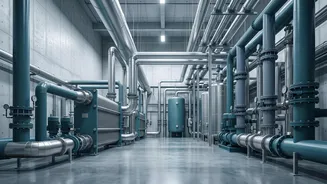
In response to both public pressure and physical limitations, the industry is scrambling for solutions. The next frontier in data-centre design is focused on radically reducing, or even eliminating, water from the cooling process. Companies are now championing their Water Usage Effectiveness (WUE) metrics, a measure of litres used per kilowatt-hour. The most promising innovations involve closed-loop liquid cooling, where coolant is circulated internally without any water loss to evaporation. Microsoft has piloted facilities with this technology, projecting massive savings per site. Other approaches include direct-to-chip cooling with specialised fluids and designing facilities that can operate at higher temperatures, reserving water-based cooling for only the hottest days. These technologies represent a trade-off, as waterless cooling can sometimes be more energy-intensive, but they are becoming essential for building the next generation of AI infrastructure sustainably.