





What Are These 'Rivers in the Sky'?
Imagine a conveyor belt in the atmosphere, thousands of kilometres long but only a few hundred wide. Instead of carrying goods, it transports huge amounts of water vapour from the warm tropics toward the colder poles. This phenomenon is called an atmospheric
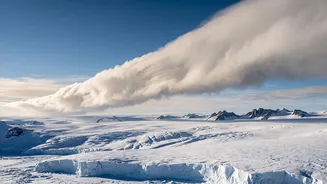
river. On average, four or five of them are active on Earth at any given time. A strong atmospheric river can carry more water vapour than the Amazon River. When this band of moisture makes landfall, especially over mountains or a vast ice sheet, it releases this moisture as intense rain or snow. While they are not a new phenomenon, scientists are increasingly focused on them as they are responsible for moving about 90 percent of the moisture from the tropics poleward, playing a huge role in weather patterns and extreme events worldwide.
A Surprising Discovery in Antarctica
The latest research has provided a fascinating and seemingly contradictory picture of their impact on the southern continent. One recent study highlighted a surprising short-term event: between 2021 and 2023, the Antarctic Ice Sheet actually gained a massive amount of ice—around 695 billion metric tons. This was the largest short-term gain recorded since satellite observations began in 2003. The cause was unusually heavy snowfall over East Antarctica, fed by intense atmospheric rivers. These events were so significant that they temporarily slowed global sea-level rise. However, scientists caution this was a temporary anomaly, not a reversal of the long-term trend of ice loss. By 2025, ice levels had already returned to their pre-2021 state, confirming that the continent's overall melting continues.
A Double-Edged Sword for Ice
Atmospheric rivers have a complex, two-faced relationship with Antarctica's ice. On one hand, they are responsible for a huge portion of the continent's precipitation, with some studies suggesting they contribute between 30% and 60% of total snowfall. This snowfall helps to add mass to the ice sheet, partially offsetting losses from melting glaciers. On the other hand, these systems also transport warm, moist air. This warmth can cause surface melting and even rainfall on the ice, which can destabilise the ice shelves that fringe the continent. Therefore, whether an atmospheric river builds up the ice sheet with snow or helps tear it down with heat and rain depends on the specific conditions of each event.
The Link to Global Climate and Sea Levels
Understanding this delicate balance is critical for the rest of the world. The Antarctic Ice Sheet holds enough water to raise global sea levels by over 57 metres. While ocean-driven melting from below is currently the main driver of ice loss, the influence of atmospheric events is growing. As the planet warms, the atmosphere can hold more moisture, which is expected to make atmospheric rivers more frequent and intense. Some models predict these events could double in number over Antarctica by the end of the century, bringing far more precipitation. While this may mean more snowfall in the short term, the associated warming could accelerate melting in the long run. This adds a major layer of uncertainty to projections of future sea-level rise, which directly impacts coastal communities across the globe, including in India.